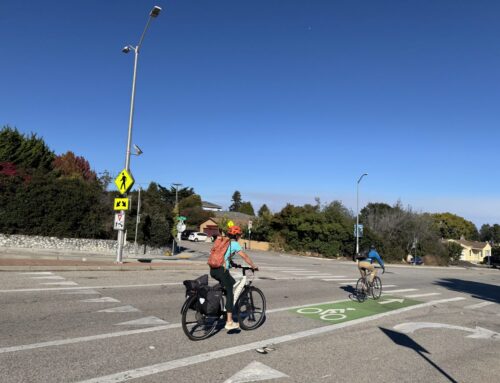
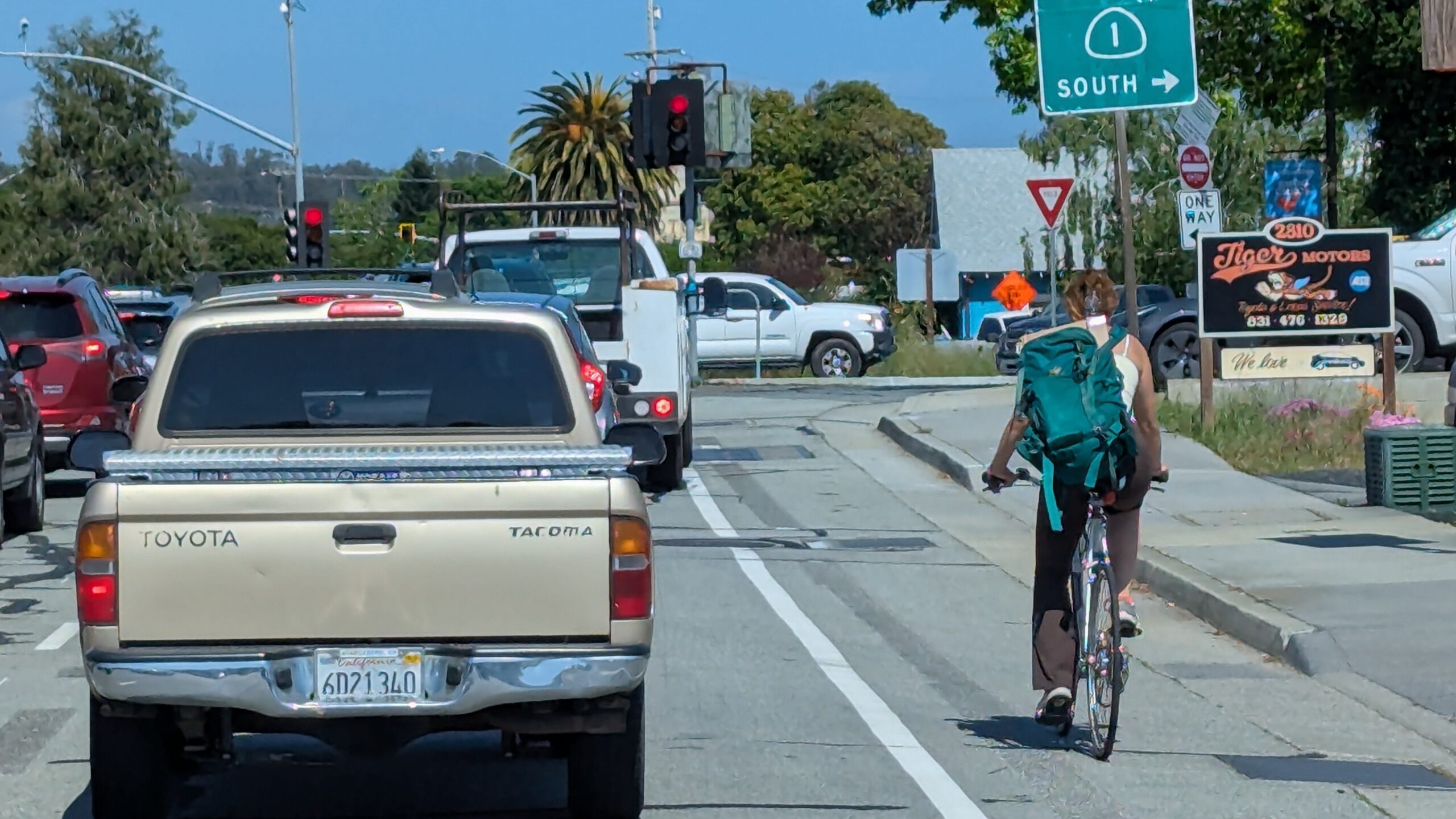
En 2023, el condado de Santa Cruz ocupó el último lugar del estado en cuanto al número de fallecimientos y lesiones de ciclistas registrados, según la Oficina de Seguridad Vial de California. (Stephen Baxter — Archivo de Santa Cruz Local)
Reunión sobre Transporte y Obras Públicas de Santa Cruz
- Lunes 17 de agosto a las 18:00 h
- Sala de sesiones del Ayuntamiento de Santa Cruz, 809 Center Street, Santa Cruz
- Si quieres enviar tus comentarios antes de la reunión, envía un correo electrónico a [email protected] a más tardar a las 12:00 del lunes 17 de agosto.
SANTA CRUZ >> Con el objetivo de reducir el número de heridos y fallecidos en accidentes de tráfico, los responsables de planificación del transporte de la ciudad de Santa Cruz proponen reducir los límites de velocidad en las zonas escolares y en los barrios con mucho tránsito peatonal. La velocidad de los vehículos es un factor determinante en la probabilidad de que los peatones y ciclistas fallezcan en caso de accidente.
Este lunes, la Comisión de Transporte y Obras Públicas de Santa Cruz tiene previsto examinar el Plan de Acción de Seguridad Vial de Santa Cruz y recomendar al Ayuntamiento que apruebe una serie de medidas para reducir la velocidad.
Las recomendaciones de la comisión incluyen reducir los límites de velocidad de 25 mph a 15 mph en las zonas escolares cuando haya niños presentes, y de 30 mph a 20 o 25 mph en calles con mucho tráfico peatonal, como Pacific Avenue y Laurel Street.
Los datos de las fuerzas del orden sobre accidentes de tráfico en la ciudad de Santa Cruz entre 2020 y 2024 indican que la velocidad excesiva fue el factor principal en el 17 % de los accidentes que provocaron lesiones o la muerte, según el Plan de Acción de Seguridad Vial de Santa Cruz de la ciudad.
La capacidad del ayuntamiento para reducir los límites de velocidad se deriva de una ley estatal aprobada en 2021, que otorgaba a las ciudades y condados de California la posibilidad de reducir los límites de velocidad en las zonas escolares y residenciales para contribuir a la reducción de los accidentes mortales. Santa Cruz elaboró el plan de acción de seguridad ese mismo año.
Ahora que ha vuelto a empezar el curso, los riesgos para la seguridad son aún mayores, ya que muchos alumnos van andando o en bicicleta.
«Creo que reducir la velocidad, sobre todo cerca de los niños en las zonas escolares, hace que los barrios sean más accesibles para los peatones y los ciclistas», afirmó la concejala Renee Golder, que también es directora de la escuela primaria Bay View.
La escuela primaria Bay View se encuentra en la esquina de las calles Mission y Bay. La calle Mission, que también es la carretera 1, es un punto conflictivo en cuanto a accidentes de tráfico mortales; de hecho, en enero se produjo uno en el que falleció un peatón al ser atropellado cerca de la calle Bay.
Dado que Mission Street es una de las calles prioritarias para los responsables locales de planificación del transporte, otras vías en las que la comisión pretende introducir mejoras son Water Street, Soquel Avenue y Center Street.
La comisión también tiene previsto poner en marcha la campaña «20 is Plenty», un movimiento ciudadano que surgió originalmente en el Reino Unido y que aboga por la reducción de los límites de velocidad en las calles residenciales, especialmente para garantizar la seguridad de los ciclistas.
En 2023, el condado de Santa Cruz ocupó el último lugar del estado en cuanto al número de fallecidos y heridos entre ciclistas registrado, según la Oficina de Seguridad Vial de California. Los datos estatales no recogen el número de personas que utilizan la bicicleta de forma habitual.
Aunque en un principio estaba previsto que el plan de acción estuviera terminado en 2030, se le asignó una nueva fecha prevista de finalización, el año 2050, después de que la ciudad reconociera que «quedaba más trabajo por hacer» y que era necesario establecer un «calendario más realista», según el borrador del plan de acción.
¿Tienes alguna pregunta o comentario? Envía un correo electrónico a [email protected]. Santa Cruz Local cuenta con el apoyo de sus socios, principales donantes, patrocinadores y subvenciones para la financiación general de nuestra redacción. Nuestras decisiones periodísticas se toman de forma independiente y no se basan en el apoyo de los donantes. Obtén más información sobre Santa Cruz Local y cómo nos financiamos.

Como periodista especializada en la rendición de cuentas de las instituciones públicas, Erika Zaro ofrece reportajes de fondo y de investigación sobre las instituciones locales que influyen en la vida cotidiana de los ciudadanos. Sus artículos analizan las principales decisiones gubernamentales, hacen un seguimiento de las promesas de los cargos electos e investigan las irregularidades.