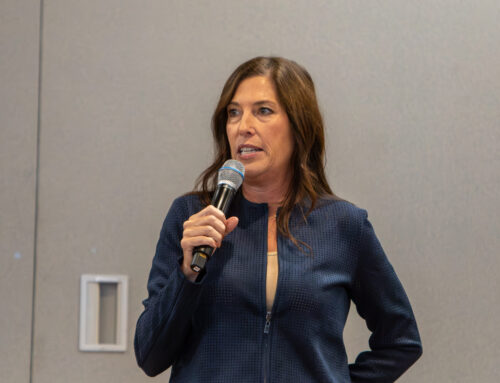

A Driscoll’s employee asked Santa Cruz Local to leave the company’s Watsonville offices after being buzzed in, apparently by mistake, on Sept. 2, 2025. (Nik Altenberg — Santa Cruz Local file)
WATSONVILLE >> The CEO of Watsonville-based Driscoll’s Inc., the largest berry company in the world, has stepped down after less than three years in the role.
The company announced Tuesday that Soren Bjorn will be replaced by Brie Reiter Smith, effective immediately. Smith is the great-granddaughter of one of Driscoll’s co-founders and the daughter of former CEO J. Miles Reiter.
“While I may not have followed the traditional path to this role, no one believes in our company’s mission more than me,” Smith said in a press release. Smith assumed the role of vice chair of the company’s board of directors in January, and has worked in various roles across the company for more than a decade.
Bjorn could not immediately be reached for comment and Driscoll’s did not answer follow-up questions.
The change comes as the company has faced lawsuits and heightened scrutiny of their pesticide practices, led by local activists who oppose the use of pesticides near schools, and are calling for more fields to be converted to organic. State law limits pesticide use within a quarter-mile of schools, but gaseous fumigants can drift on the wind for miles if there is a leak from the tarps meant to trap the fumes.
For years, activists have demanded Driscoll’s do more to protect Pajaro Valley farmworkers and school children from the pesticides used to boost yields of profitable crops like strawberries and blackberries.
In recent months Driscoll’s, and Smith specifically, have directly engaged with activists, an unusual move for leaders of the tightly guarded company. She published a full-page opinion letter in the print versions of the Santa Cruz Sentinel on June 16 and June 17, asking activists to stop targeting Driscoll’s and its leaders and owners.

A sign warns to keep out of a strawberry field recently treated with pesticides on San Juan Road near Pajaro in June 2025. (Nik Altenberg — Santa Cruz Local file)
“The story being told about Driscoll’s, my family, and the farming community feels so disconnected from the reality I have experienced my entire life,” she wrote, according to a copy of the letter shared with the press. “We continue to expand organic production, [and] are actively investing in ways to reduce our reliance on traditional pesticides.”
Heightened pressure followed claims by some activists that pesticide use in the Pajaro Valley had led to elevated childhood cancer rates. But the data cited by activists was for all of Santa Cruz County, not just agricultural areas, and does not prove causes of the cancer.
Responding to the growing pressure, the Santa Cruz County Health Services Agency conducted a review of cancer data and released a report in July. It found elevated cancer rates among non-Hispanic white children from 2018-2022 in the county as a whole. It found no elevated rates of cancer in South County specifically.
Decades of research have shown links between certain pesticides and cancer, as well as learning disabilities, lowered IQ and other neurological effects.
Providence Martinez Alaniz, a Watsonville resident and advocate for limiting the use of pesticides, responded to Smith’s letter in the Sentinel by writing an open letter to Driscoll’s on Aug. 10.
“As a Watsonville commercial grower managing acres of land, and as a caretaker, let me clear up that confusion for you. We are not ‘disconnected from reality’; we are living it every single day,” Alaniz wrote. “Holding corporate leadership accountable is not a ‘personal attack’ — it is democracy and community defense.”
When reached by phone Tuesday, Alaniz said she was glad Smith was now the CEO, and “I’m really looking forward to talking to her in person. And I hope that she can get a hold of me because I’ve been trying to get a hold of her, and I haven’t been successful.”
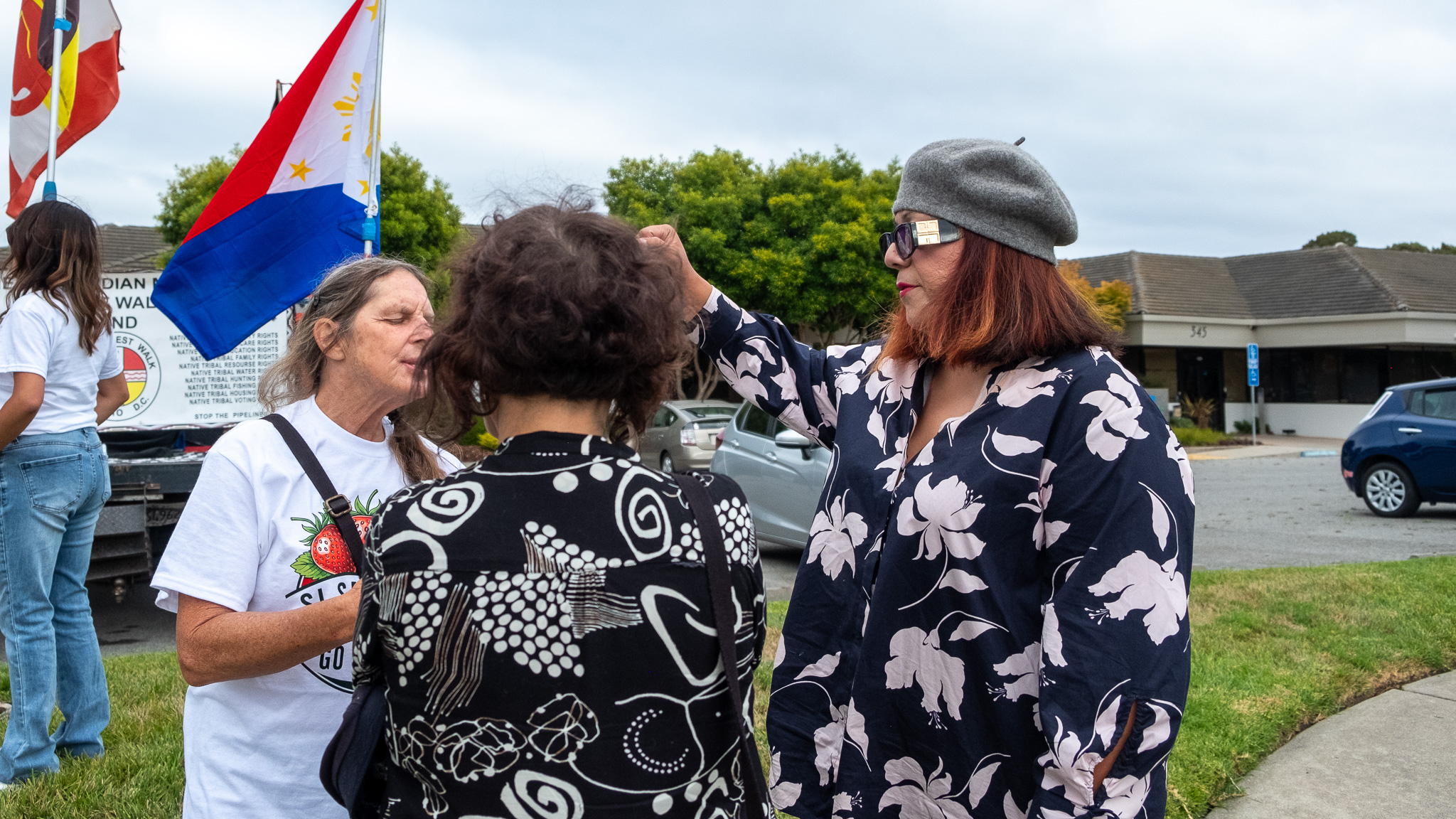
Providence Martinez Alaniz, right, undertook a hunger strike in September 2025 to protest the use of pesticides near schools in the Pajaro Valley. (Nik Altenberg — Santa Cruz Local file)
Last year, Alaniz joined pesticide activist Omar Dieguez in a hunger strike to bring attention and public pressure to the issue. She was hospitalized and had to stop her fast after roughly two weeks. Dieguez continued his fast for 30 days.
Dieguez, when reached by phone Tuesday, said he was in contact with Smith and planned to meet with her on Thursday.
“I’m coming in with an open mind and to see what she has to say, and we’ll see what happens after that,” Dieguez said.
Read more of Santa Cruz Local’s coverage of pesticides.
Questions or comments? Email [email protected]. Santa Cruz Local is supported by members, major donors, sponsors and grants for the general support of our newsroom. Our news judgments are made independently and not on the basis of donor support. Learn more about Santa Cruz Local and how we are funded.

Nik Altenberg is a bilingual reporter and assistant editor at Santa Cruz Local. Nik Altenberg es reportera bilingüe y editora asistente para Santa Cruz Local.