
Santa Cruz Mayor

Ami Chen Mills and Ryan Coonerty are facing off in a runoff election for Santa Cruz Mayor.

Meet the candidates

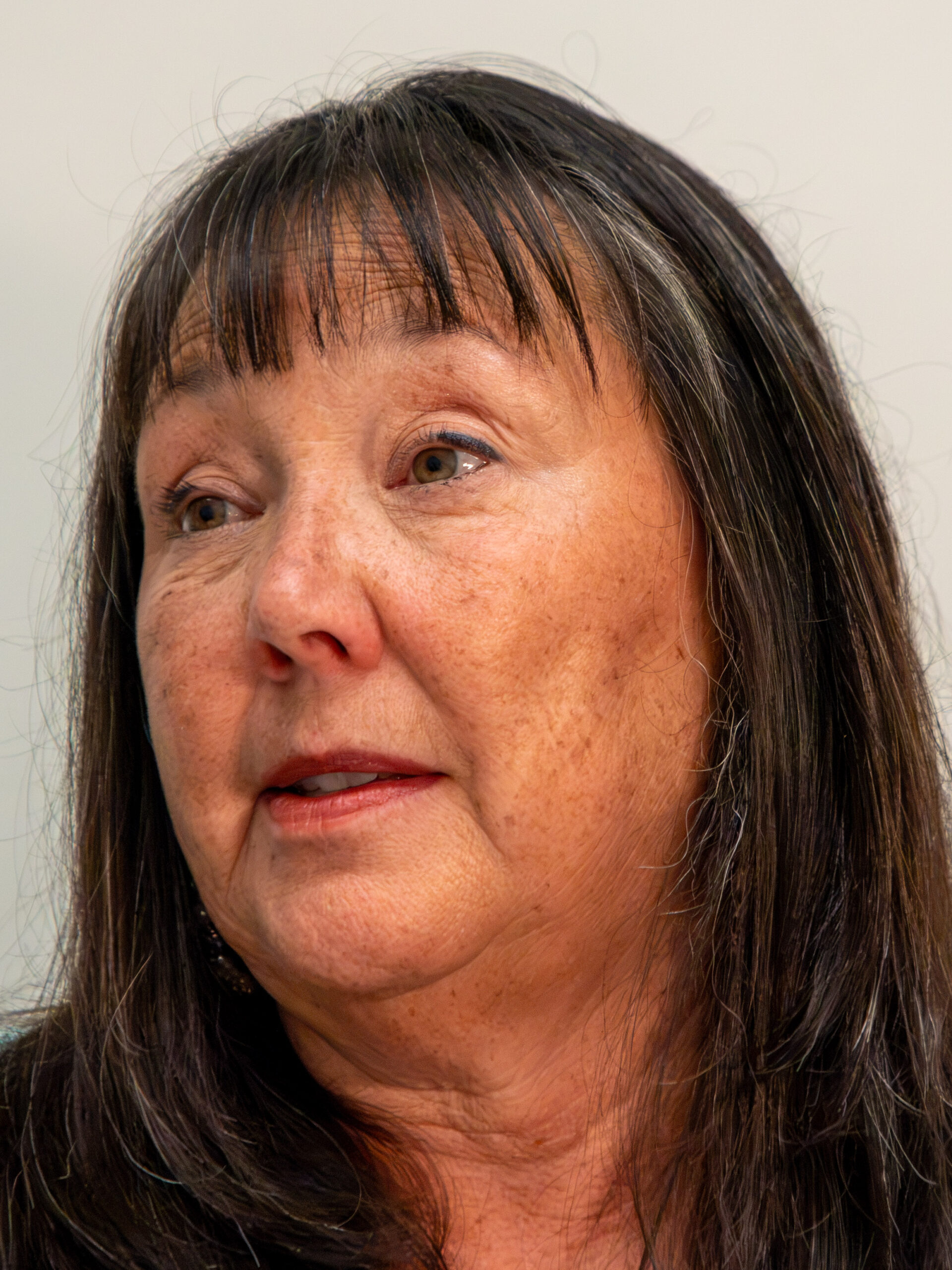
Ami Chen Mills

Age: 58.
Occupation: UC Santa Cruz educator and resilience coach.
Political background:

  • Get The Flock Out anti-surveillance work.
  • Ran for Santa Cruz County supervisor in 2022.
  • Served on a city advisory committee on homelessness in 2019 and 2020.

Ryan Coonerty

Age: 52.
Occupation: Educator at Leon Panetta Institute and UC Santa Cruz and CEO of nonprofit Leadership Santa Cruz County.
Political background:

  • Former Santa Cruz Mayor and Santa Cruz City Council member 2004-2012.
  • Santa Cruz County Supervisor for two terms, 2015-2023.

Quick comparison

Ami Chen Mills Ryan Coonerty
Large housing developments
  • Bring resident concerns to developers, while being realistic about the city’s limited power.
  • Consider legislation to force developers to support displaced businesses.
  • Pursue legal options to block projects residents oppose.
  • Convince state lawmakers to count student housing towards production targets.
Renters
  • Consider a city mediation program for tenants and landlords. 
  • Educate tenants about their rights.
  • Track data on the city’s housing market, including housing production, trends in rental costs, and vacancy rates.
  • Build more affordable housing to take pressure off of the entire rental market.
  • Fund rental assistance programs with Measure C money.
  • Enforce state renter-protection laws.
  • Create more well-paying jobs that allow people to afford rent.
Civic engagement
  • Hold office hours ahead of council meetings to go over the meeting agenda and answer questions. 
  • Hold monthly or bi-monthly town halls, rotating between the city’s electoral districts.
  • Hold events where neighbors work together on a beautification project, like weed pulling or community art.
  • Do specific outreach to underrepresented groups.
  • Give council members the support of city staff to do outreach.
Flock Safety automated license plate readers No. Maybe, under a different presidential administration.
Taxes
  • Consider raising the tax on hotels and short-term rentals.
  • Consider a tiered registration tax or a gross receipts tax on businesses.
Instead of creating new taxes, raise tax revenue by supporting a new Downtown hotel and filling vacant storefronts.
Homelessness
  • Provide unhoused people “a place to be” during the day.
  • Offer more types of emergency and interim housing, including safe parking programs and small managed encampments.
  • Make the county’s Homeward Bound more flexible to help people connect with relatives or other out-of-county support. 
  • Mandate treatment for people with serious mental illness or substance use disorders.
  • Enforce camping bans for people who refuse shelter and other support.

Candidates on the issues

We interviewed and surveyed residents in Santa Cruz about their priorities for mayor. The following questions are based on what we heard.

How would you try to change large projects you don’t think fit in Santa Cruz?

Chen Mills has advocated for “thoughtful” projects that preserve open space and aren’t out-of-scale with the city. But she is pragmatic about the city’s ability to unilaterally block or change developments with large community pushback, such as the Seabright housing project. “I don’t want to blow smoke up peoples’ butts,” she said.

Chen Mills plans to:

  • Bring community feedback to developers as early as possible to help push for changes neighbors would support. 
  • Consider legislation to force developers to support businesses displaced by new development.
  • Strengthen anti-displacement policy for renters, especially Downtown in the South of Laurel Street area.
  • Push for change at the state level, but be realistic about the city’s ability to counteract the prevailing pro-housing production attitude among state legislators.


Ahead of the June primary, Coonerty said that the city must be pragmatic about its ability to stop or change big projects. 

But in light of recent developments, including a divisive six-story proposal in Seabright, he now believes “the city has to be more aggressive in pursuing legal options” to stop or curtail projects with large amounts of community pushback. 

Coonerty plans to:

  • Work with state and private colleges and universities to ask that state lawmakers count student housing towards the city’s mandated housing goals. That could allow the city to demand smaller developments on some sites in the city, he said.
  • Consider local policies that could compel developers to change their plans. “It would be irresponsible for either mayor candidate to talk about those tools four months before we get into office” in case state legislators pre-empt those strategies, he said.

Would you propose any new taxes? How else would you raise money for city services?

Chen Mills said she doesn’t want more “regressive” sales or parcel taxes.

Instead, she said she would consider:

  • Raising the transient occupancy tax on hotels and short-term rentals. The tax is 12% for hotels and 14% for short-term rentals. A ballot measure under consideration in Scotts Valley would raise their hotel tax to 13%.
  • Creating a new tax on businesses, such as a tiered business registration tax similar to one in Scotts Valley, or a gross receipts tax similar to one in San Francisco. 
  • Holding extensive conversations with residents ahead of any tax proposal, similar to those coordinated by Santa Cruz Mayor Fred Keeley ahead of Measure C.

Coonerty said he wants to give residents and businesses “a break” from new taxes and instead bring in more money from existing taxes — especially those that target out-of-towners.

Coonerty said he wants to:

  • Support the development of a new hotel in Downtown Santa Cruz to bring in more money through the city’s existing transient occupancy tax. More hotel residents will also drive more sales tax revenue as tourists buy from local businesses, he said.
  • Reform the city’s permitting process to allow new businesses to more easily open in vacant Downtown spaces, driving more local spending and more sales tax revenue. 

What changes would you propose to the city’s homeless policy?

Chen Mills said she wants to ensure the city is cultivating personal relationships with people living outside. “And then once we know everybody, then we have a better sense of what can be done,” she said. Chen Mills said she wants to:

  • Prosecute crimes and allow short-term psychiatric holds, but not expand long-term forced treatment or conservatorship. Instead, service providers should repeatedly offer resources to build trust, she said.
  • Provide unhoused people “a place to be” during the day, possibly Downtown or near the Housing Matters Coral Street campus.
  • Offer more types of emergency and interim housing, including safe parking programs and small managed encampments.
  • “Be realistic” about the possibility of pressuring the county or other cities to host more homelessness services. 

Coonerty is open to expanding emergency shelter for homeless residents, but first wants to focus on moving people in shelter into permanent housing or other facilities more quickly.

Coonerty said he wants to:

  • Expand the county’s Homeward Bound program, which offers homeless people a bus ticket to a community where they have secured housing. The program could become more flexible, for example to help pay for food or utilities for a family member who could provide housing. 
  • Help people relocate to places in the state with a lower cost of living or more job opportunities.
  • Use state laws to expand the ability to conserve or mandate treatment for people with serious mental illness or substance use disorders.
  • Strengthen county court programs for repeat offenders of drug and property crimes.
  • Enforce camping bans for people who refuse shelter and other support services.
  • Pressure other jurisdictions in Santa Cruz County to provide more homelessness services, including by prioritizing city residents for emergency shelter and other opportunities. 

How would you promote the civic engagement of those least heard by elected leaders?

Chen Mills said she wants to offer opportunities for civic engagement that go beyond dry meetings. “If we don’t make politics a little more community-minded and have some spirit about it, and have some fun, have some music or art, like it’s too boring for people,” she said.

  • Hold office hours ahead of council meetings to go over the meeting agenda and answer questions. 
  • Hold monthly or bi-monthly town halls, rotating between the city’s electoral districts.

Coonerty said he wants to hold events where neighbors work together on a beautification project, like weed pulling or community art.

“Not only will we be showing people tangible results and an impact in their neighborhood from city action,” he said, “but we can also hear about intersections that aren’t working, or safe routes to school, or encampments in the neighborhood.”

How will you address the needs of renters?

“I am deeply concerned about renters — renters are living on the edge here,” Chen Mills said. At the same time, “I don’t want to be anti-landlord when landlords are doing good things and helping tenants,” she said.

Chen Mills said she wants to:

  • Form a task force to determine what to do with funds raised by the city’s Measure C parcel tax and property transfer tax. 
  • Consider a city mediation program for tenants and landlords. 
  • Educate tenants about their rights, and allow them to easily file a complaint for illegal rent increases.
  • Track data on the city’s housing market, including housing production, trends in rental costs, and vacancy rates.

Coonerty said he wants to:

  • Produce projects like the Downtown library affordable affordable housing and child care center to provide below-market-rate homes and take pressure off of the entire rental market.
  • Fund rental assistance programs with Measure C money.
  • Enforce state laws that prevent unlawful evictions, dangerous housing and illegal rent increases.
  • Create more well-paying jobs that allow people to afford rent. Supportive of Joby, and wants to lure other South Bay companies to set up satellite campuses in Santa Cruz.

Would you support reinstating a contract with Flock Safety or a different automated license plate reader company?

Chen Mills staunchly opposes ALPRs, whether operated by Flock or another company — even under a different presidential administration. 

The technology is “a constitutional violation of the Fourth Amendment” against unreasonable search and seizure, she said. “I am not willing to give up our constitutional rights.”

Notwithstanding the potential use of the data from the federal government, “We’ve got 50 officers across the country who have now been either suspected or convicted of tracking ex partners and women,” with license plate cameras, she said.

Coonerty said he would not be in favor of reinstating a Flock contract under the Trump Administration. “While we have a federal administration that is frankly acting in unconstitutional, unethical, and illegal ways, I don’t think we can install systems like this,” he said.

“If and when we get a different federal government and we have protections that prevent, you know, bad law enforcement agencies or actors from accessing it, I think it can be a right tool.”

What do you see as your main differences from your opponent?

Chen Mills said she is running as a true progressive focused on the needs of the community. Coonerty, she said, is “aligned with developers, aligned with real estate folks for years.”

Coonerty endorsed his former employer, San Jose Mayor Matt Mahan, in the California gubernatorial race. Mahan in turn accepted major donations from tech industry leaders, including some with ties to surveillance technology. Chen Mills said she sees the connection as an indication of Coonerty’s priorities. 

“I’m deeply concerned,” about Coonerty’s and Mahan’s campaign contributions, Chen Mills said. “I think that that’s happening nationally, where progressive Dems and DSA [Democratic Socialists of America] candidates and so forth are saying, ‘look, we’re not going there. We’re not going to take these donations, and we want to, we want to side with the people, and not with these billionaires who literally are buying our country.’”

“The primary difference that I see is, one, I have experience of 16 years in city and county government,” he said. “The problems that we face now, where we have chaotic federal, chaotic and cruel federal policies, ever changing state laws” and complex local issues, requires that kind of expertise, he said.

Coonerty said he is:

  • Focused on supporting creating jobs in this community, on working with folks like Joby in order to create those opportunities. 
  • Comes from a background of small business, so he understands what the small businesses need, “and I’m ready to partner” with them.
  • Has broad support, including from state and local elected officials and major labor groups, which will allow collaboration towards shared goals.

Campaign donations

Ami Chen Mills — $42,733 total reported contributions for 2026, as of Sept. 19.

  • Total Expenditures: $26,053.
  • Cash on hand: $17,345.

Ryan Coonerty — $125,828 total reported contributions for 2026, as of Sept. 19.

  • Total Expenditures: $95,774.
  • Cash on hand: $36,208.

On their records

You’ve never held office, and if elected you will be the most progressive voice on city council. How will you gain support on the city council to site future homelessness services?

“It is very important that we build consensus around anything that we do,” Chen Mills said. Her work with Get the Flock Out has given her experience working towards that consensus, she said. The work also taught her that some of the members of city council “are more progressive than maybe the public understands,” she said. Likewise, she said, she’s had conversations with homelessness activists about the kinds of proposals and rhetoric that is likely to win them support from city leaders. 

But Chen Mills said she recognizes that building out more homelessness services, including day services or emergency housing, “would be very difficult.” She said she’s open to working with sites near the existing Housing Matters Campus, if those would be more acceptable to other members of the community. She said she is also in favor of advancing small-scale projects that are easier to advance. “I think we shouldn’t be coming out with the most extreme solution,” she said, “but something that we can sort of launch as a trial and feel good about.” 

You supported Measure O, which would have stymied the new library and low-income housing building under construction. Do you stand by that position?

Chen Mills said she supported Measure O, because, like many people, she assumed that with bond money approved by voters in 2016 with Measure S, the city would keep the existing building. “We could have just remodeled that damn library and had a new library pretty quickly,” she said.

While the project is “a done deal” and she appreciates the new affordable housing, she said she would have preferred to keep some of the former parking lot as open space and retain the magnolia trees that have since been cut down.

How will you balance your past work with developers — many of which have donated to your campaign — with your future work deciding which projects move forward?

Coonerty has worked as a consultant on a proposed Downtown hotel, the UCSC Redtree development on the west side, and worked pro-bono for the proposed Warriors stadium redevelopment. He doesn’t see a conflict of interest with his potential role as mayor. “I see it as really relevant experience,” he said.

As a consultant, “my role was to work with the city, when relevant with UCSC, and with the building owner to get to a solution,” that would allow the project to move forward, he said. “In some ways, that’ll be the same thing that I’ll be doing, but on behalf of the residents.”

He added, “there are projects and developers that I have turned down over the years working with because I don’t believe they’re doing the right thing.”

“If some developer who I believe in general does good projects gives me a $250 donation, that will not set policy,” he said.

You were the founding government relations official for the predictive policing startup PredPol, which investigative reporting has alleged to be inaccurate and biased. Has that changed your views on using technology to fight crime? 

Coonerty left PredPol in 2013, and has since donated his stock to the Community Foundation of Santa Cruz County. He said he would not change the city’s ban on predictive policing. 

The idea behind the technology was to “have less people going into the criminal justice system and less crime,” he said.

But the predictive policing industry treated the technology “as a magic box where this information went in and then [predictions] would come out,” he said. “You need independent oversight and evaluation, and the industry didn’t provide that.”

He added, “If you cannot have the faith of the community in policing, there’s no point in having the tool.”

About the mayor

The Santa Cruz Mayor represents the city for four years. The mayor has a vote equal to city council members. Together, the council decides how the city spends its money and what policies guide the city’s response to homeless encampments, storefront vacancies and other issues. State laws often limit the policies local officials can enact — especially ones that block housing development.

The mayor, along with city staff, drafts meeting agendas and helps determine if and when the council addresses certain issues. The seat can also serve as a “bully pulpit” for leaders to advocate for policies to county or state officials.

Five candidates ran for mayor in the June primary election. Because no candidate secured more than 50% of the vote in June, the top two vote-getters face off in a runoff in November.