
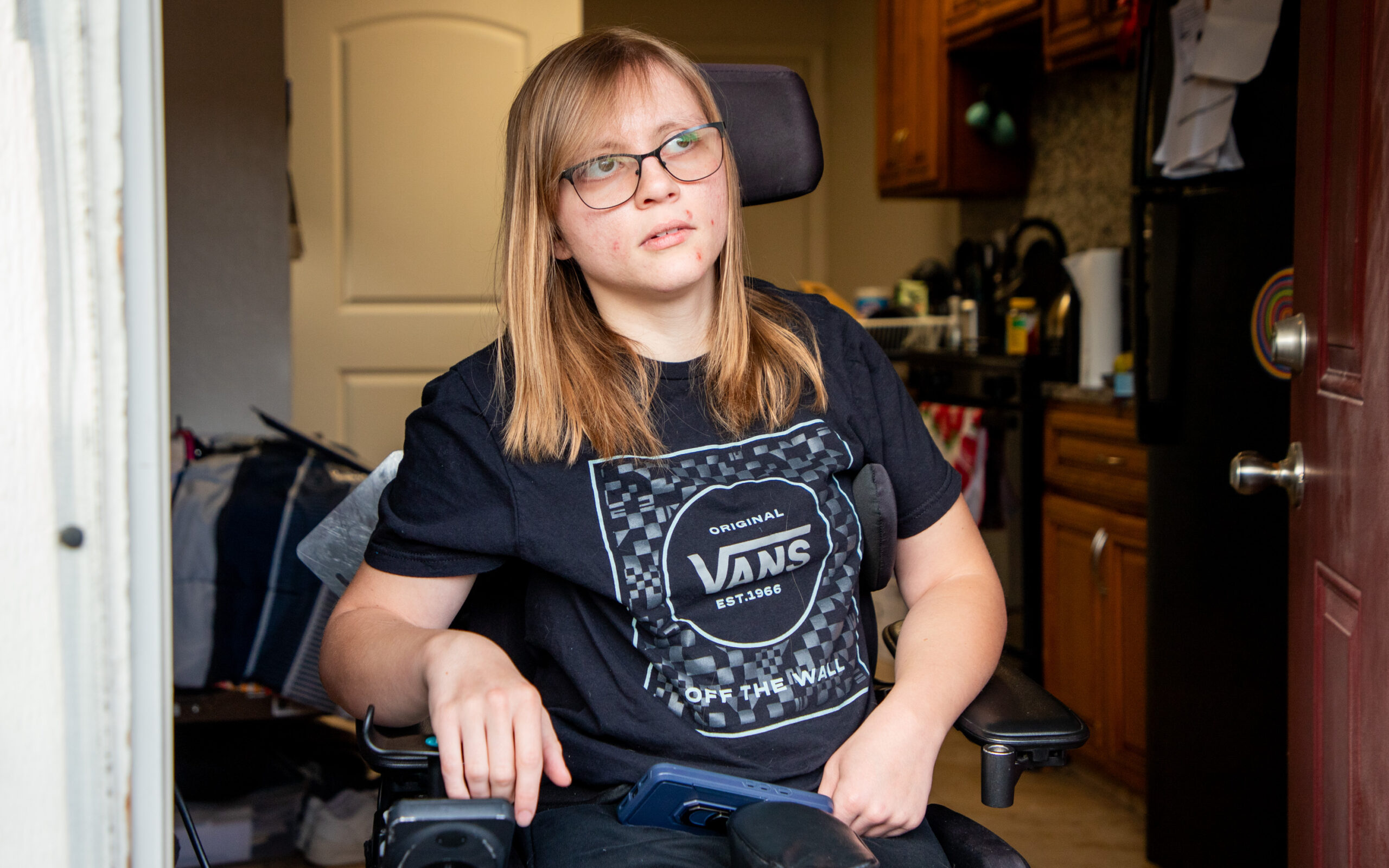
Blair Bareiszis, who holds an emergency housing voucher for a subsidized apartment, worries she may return to homelessness as federal funding for the vouchers runs out. (Amaya Edwards — Santa Cruz Local/CatchLight Local)
SANTA CRUZ >> After three years in a home of her own, Mary Martin said she finally feels safe enough to leave the lights off at night.
Her housing instability began in 2017, when she said she left an abusive marriage of 24 years. She shuffled between hotel rooms, rehab facilities for alcohol addiction and homeless shelters. For years, she contended with theft, assault, seizures and hallucinations from a schizoaffective disorder triggered by stress.
In 2023, Martin caught a break — she received an emergency housing voucher that gave her a subsidized apartment from the Housing Authority of the County of Santa Cruz. Since then, she’s been able to attend to her health and prepare to re-enter the workforce after decades without a job. Her one-bedroom apartment in Downtown Santa Cruz has become her sanctuary.
Soon, she may lose it.
Martin holds one of 280 emergency housing vouchers granted to households in Santa Cruz County as part of a federal program to house people most vulnerable to homelessness. In December, funding for the program will prematurely run out. Although local agencies are trying to find new homes for those losing assistance, some may be left behind.
“I’m finally starting to make some progress…the carpet’s been pulled out underneath me.”
—Mary Martin, emergency housing voucher recipient
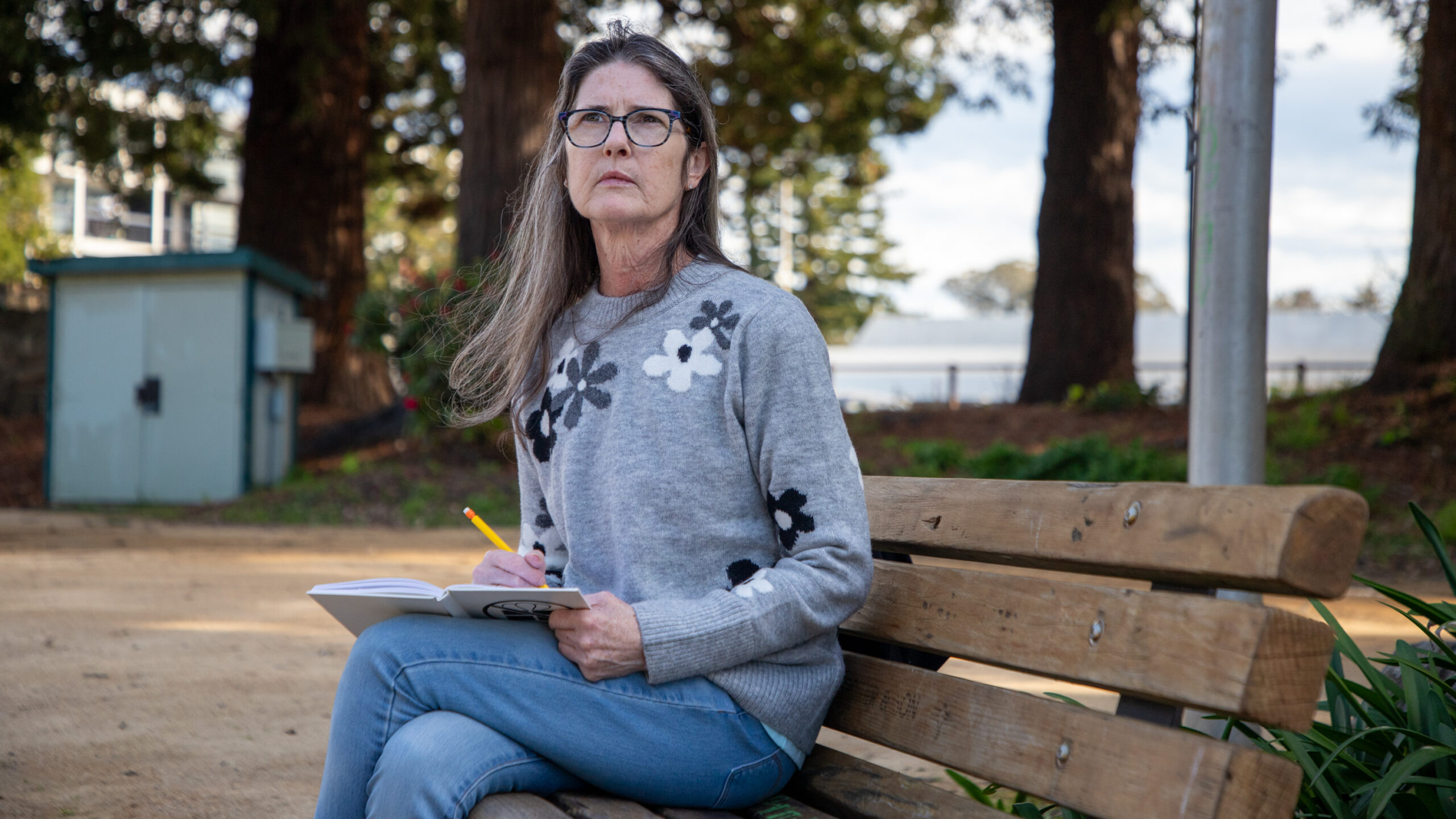
Mary Martin, a formerly homeless woman, finally found stability after receiving an emergency housing voucher in 2023. (Amaya Edwards — Santa Cruz Local/CatchLight Local)
Vouchers
The emergency vouchers are managed by the Housing Authority of the County of Santa Cruz and are similar to Housing Choice Vouchers, commonly known as Section 8. Like Housing Choice Vouchers, the emergency vouchers enable tenants to pay a third of their income toward rent, while federal funds cover the rest. But unlike Housing Choice Vouchers, the emergency vouchers don’t provide long-term rent subsidies.
The emergency voucher program was established in 2021 as part of the American Rescue Plan Act, a year into the COVID-19 pandemic. It has housed people who were homeless, at risk of homelessness, or fleeing domestic violence, sexual assault, or human trafficking.
The program was allocated $5 billion in funding intended to last 10 years. But five years in, rents nationwide have risen more quickly than expected, and the money has prematurely run out. Federal lawmakers haven’t granted it more funding — leaving more than 55,000 households nationwide in danger of homelessness.
Jenny Panetta, executive director of the local housing authority, said at a Tuesday meeting of the Santa Cruz Board of Supervisors that 250 households in Santa Cruz County still hold the emergency vouchers. She hopes to provide each of those with new federally funded vouchers before the end of the year, she said.
But the housing authority’s ability to continue to support all of the emergency voucher holders will depend on how much federal money the local agency receives, which Panetta isn’t expecting to know until late March. She said she’s expecting a 1% reduction in funding from last year, which with inflation represents a 6% cut.
“I’m cautiously optimistic we can avoid a catastrophe,” she said.
In addition to Housing Choice Vouchers, which can be used anywhere in the county, another type of permanent voucher is Project Based Vouchers, which are tied to specific developments and used to incentivize developers to build more affordable housing. Both can usually be renewed if tenants still qualify for assistance and abide by the rules of the program.
“There’s probably people with kids that are scared right now. There are just a lot of us that are really scared.”
—Blair Bareiszis, emergency housing voucher recipient
Under the best-case scenario, all new vouchers will likely be dedicated to “just preserving rental assistance for those who are currently already housed,” Panetta said.
That means an even longer wait for the roughly 2,000 households on the housing authority’s list, which has been closed since 2019.
“It’s been common for families to wait between seven and 10 years” for a voucher, she said.
In an interview last year, Panetta told Santa Cruz Local that the housing authority was planning to open the waitlist for new applicants sometime this year, but after seeing the expected funding cuts in the state budget, she said that was no longer possible.
The housing authority is also bracing for potential new federal regulations for rental assistance that would exclude anyone without legal immigration status, including about 270 households in the county. Currently, households are eligible for partial assistance if anyone in the household is a citizen or legal resident. The proposed rule is open to public comment for the next 55 days.
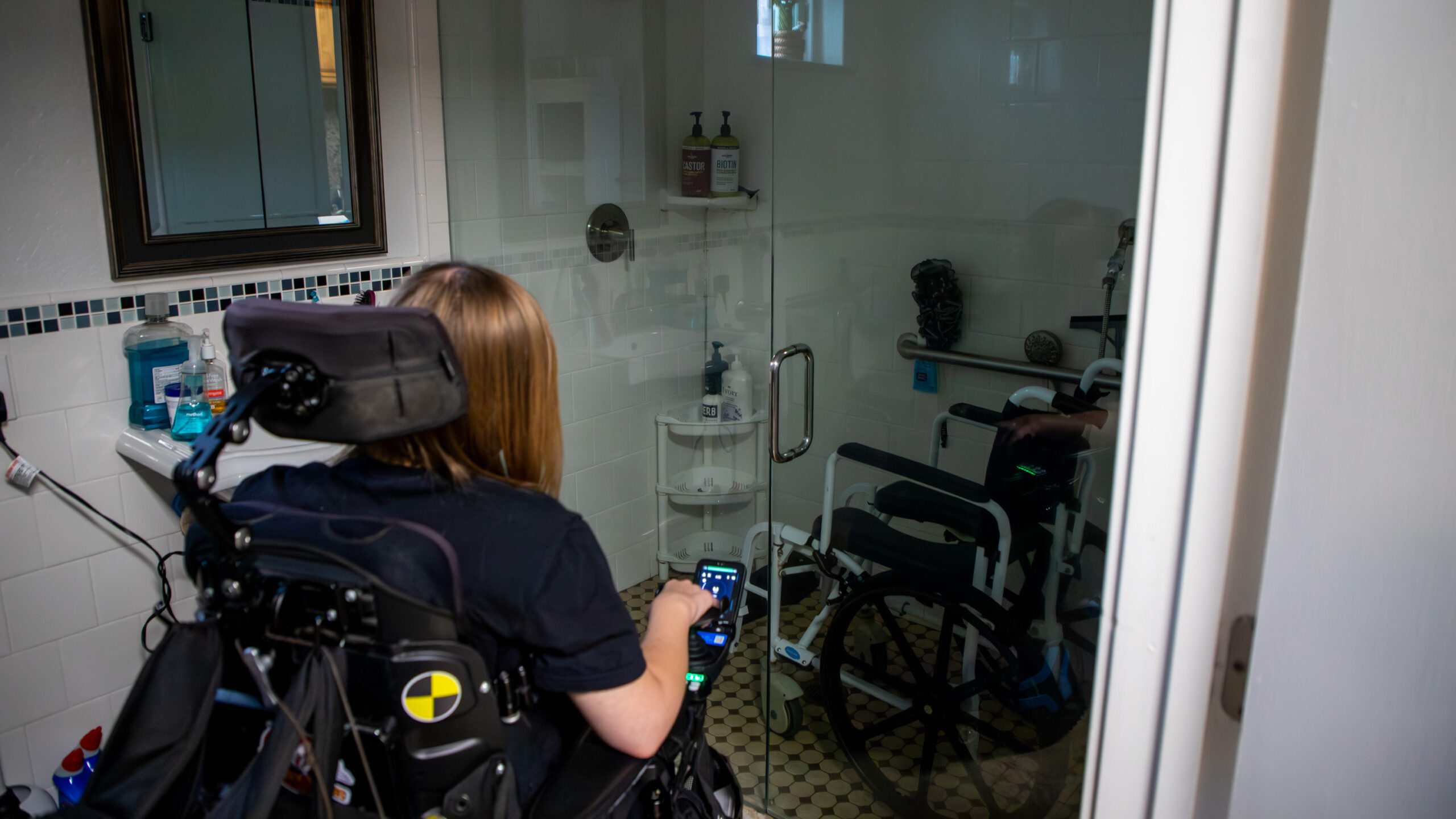
Blair Bareiszis, who holds an emergency housing voucher, depends on her wheelchair-accessible apartment to shower without assistance. (Amaya Edwards — Santa Cruz Local/CatchLight Local)
Uncertain future
After three years of homelessness in Santa Cruz, emergency vouchers gave Blair Bareiszis a chance at stability. After a severe episode of domestic violence, she secured an emergency voucher and a job at a mental health nonprofit.
In August, she lost her job. As her health declined, Bareiszis planned to apply for federal disability benefits for her cerebral palsy and continue her studies at Cabrillo College for computer science. After learning her voucher would expire, that plan collapsed.
“Here I am trying to figure out how to get my life back together after losing my job of four years, and then I find that out,” she said.
There are few homes in Santa Cruz County that Bareiszis could afford —- and even fewer that could accommodate the power chair she depends on to get around. Her home right now is set up to accommodate her disability. Her chair fits through all the doorways, into the shower, next to the toilet and under the kitchen sink.
Even if she finds a new home, she said she’s worried she’ll be forced to depend on her support worker for basic hygiene. She currently has a government-funded support worker for 40 hours per week through In-Home Supportive Services.
“If I couldn’t get into the bathroom the place that I’m living in — can you imagine? I’d have to hold it when my IHSS worker is not there,” she said.
There are two new affordable housing projects opening this year, Harvey West Studios and Pacific Station North, and both will include 37 wheelchair-accessible apartments, Panetta said in a Feb. 24 email.
Now, Bareiszis’ days are filled with trying to secure her disability benefits, finding a part-time job, and looking for an accessible, affordable apartment. There’s no time or energy left to go to school.
“Some mornings, I just wake up and I stare at the ceiling and I go, ‘How am I even going to do all of this today?’” she said.
Although her disability has made her vulnerable in a different way than others with emergency vouchers, Bareiszis is also thinking of the hundreds of others left in uncertainty.
“There’s probably people with kids that are scared right now,” she said. “There are just a lot of us that are really scared.”
Questions or comments? Email [email protected]. Santa Cruz Local is supported by members, major donors, sponsors and grants for the general support of our newsroom. Our news judgments are made independently and not on the basis of donor support. Learn more about Santa Cruz Local and how we are funded.

Jesse Kathan is a staff reporter for Santa Cruz Local. They hold a master's degree in science communications from UC Santa Cruz.