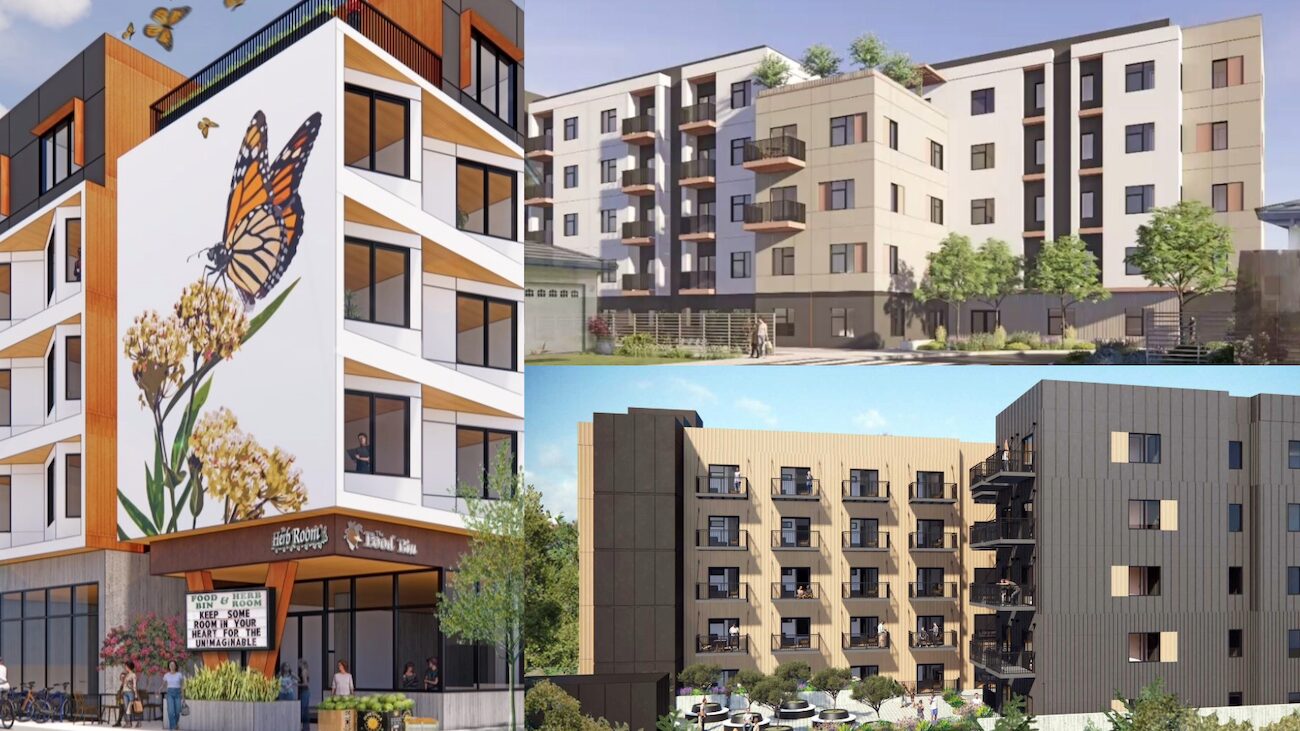
Three apartment proposals from developer Workbench are embroiled in legal challenges. (Workbench)
SANTA CRUZ >> Among local developers, Santa Cruz-based Workbench has been arguably the most prolific at advancing multi-story apartment buildings — and among the most likely to have its projects end up in court. Three separate Workbench housing proposals in Santa Cruz County are currently ensnared in litigation, tying up more than 200 proposed apartments, including 19 below-market-rate homes.
Workbench’s founders have said the projects are necessary to address the county’s severe housing crunch. Some residents have fiercely opposed the potential developments, arguing the proposed homes are mostly unaffordable and the scale of the projects would strain local resources and infrastructure like water, traffic and parking. One of the projects, near Dominican Hospital, has generated public health and safety concerns.
While California laws meant to address the state’s housing crisis have largely stripped power from local authorities to deny or change proposals for housing, some local leaders have pushed back amid their constituents’ ire.
Here are the Workbench projects currently in court and how the outcomes of these lawsuits could affect future development in Santa Cruz County.
Acrimony over ADUs
In May 2024, the Santa Cruz City Council approved a five-story, 48-unit project at the site of the Food Bin and Herb Room at 1130 Mission St. But the city council rejected the inclusion of storage spaces that Workbench intended to convert into 11 accessory dwelling units, or ADUs, which would make the total units 59. State law allows developers to convert unused space into ADUs to squeeze more units into an existing building.
Workbench and the Food Bin’s co-owner, Douglas Wallace, sued the city over the denial of the ADUs, alleging the city violated state housing laws that promote density and prevent local jurisdictions from imposing changes that would require a redesign.
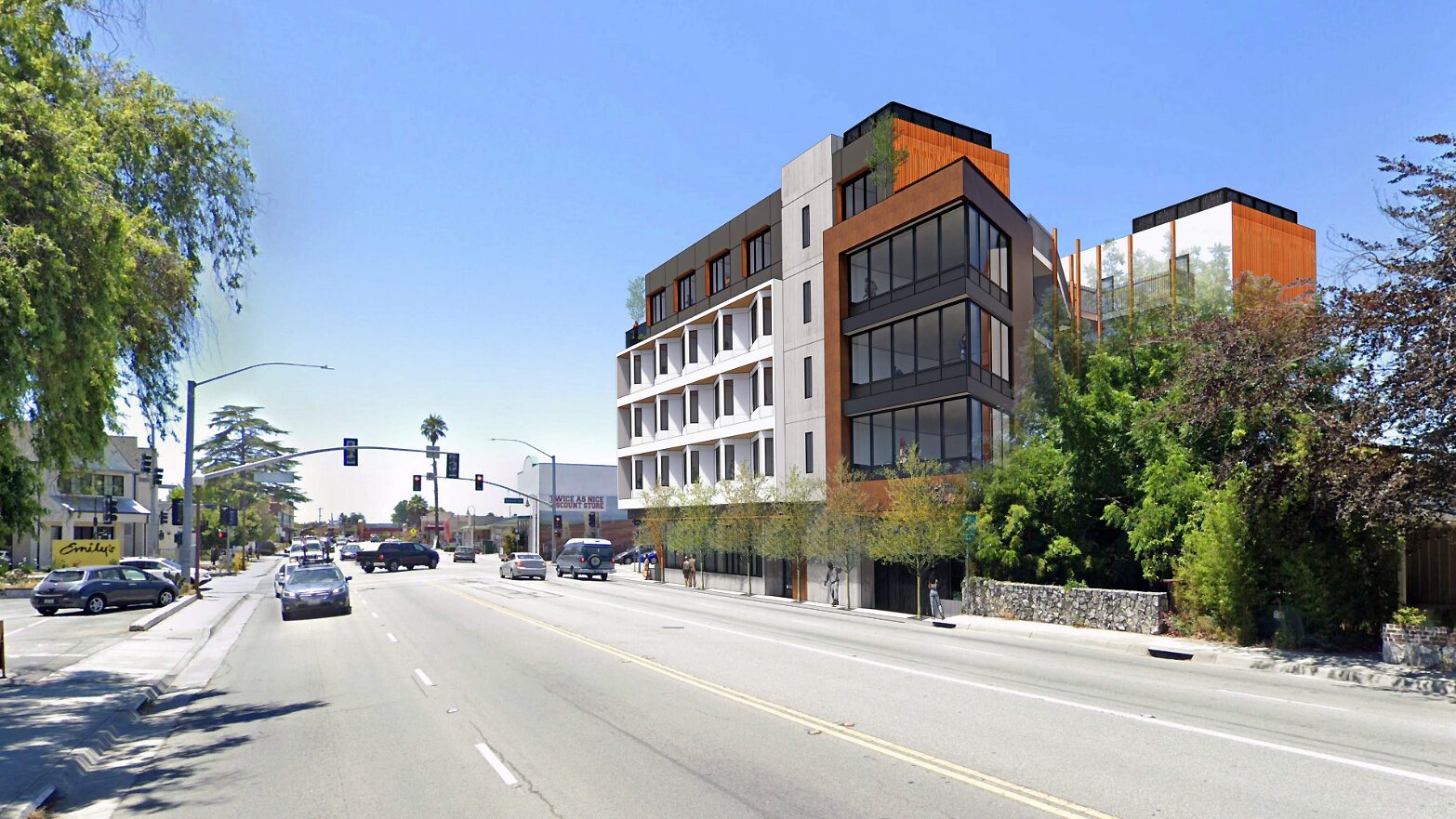
An apartment complex on the Food Bin site approved by the Santa Cruz City Council in May has been stalled by a lawsuit over 11 in-law units. (Workbench)
After Judge Rebecca Connolly ruled against Workbench and Wallace in August, they appealed the case. In an opening brief filed in February, Workbench’s lawyers alleged the city council “buckled to public pressure” from angry neighbors and that this case “demonstrates why housing in California remains the most expensive in the nation.”
“The city is arguing that it simultaneously did not remove housing units from the project while also arguing from the other side of its mouth that it did not remove non-housing amenity spaces,” Ryan Patterson, a San Francisco-based attorney representing Workbench, said last week. “Either way it broke the law. We look forward to the court of appeal seeing through the city’s charade.”
City of Santa Cruz spokesperson Ashley Hussey said, “The city has no comment on this matter as it is pending litigation.”
Workbench has said it will not start construction on the apartments, geared toward college students without cars, unless the ADUs are approved.
Litigation around the Food Bin project likely influenced another Workbench project: the Clocktower Center at 2020 N. Pacific Ave. In August, the Santa Cruz City Council approved the 178-unit project, including amenity spaces that can be converted to 46 additional ADUs, which would bring the total to 224 units.
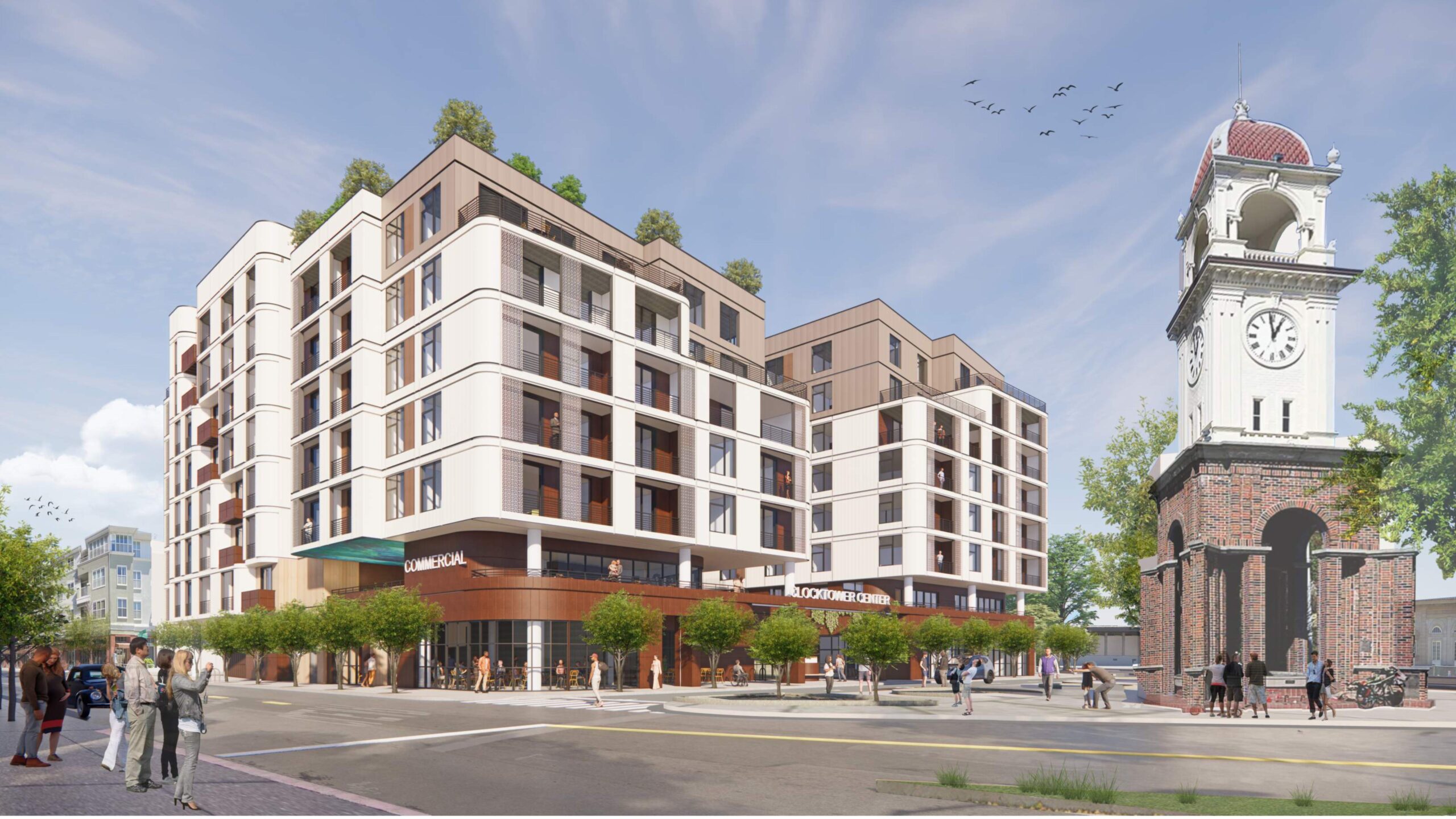
Santa Cruz City Council approved the 178-unit Clocktower Center project, with some spaces labeled with uses such as a steam room, a chef’s kitchen and a music room. (Workbench)
In the Food Bin project, Workbench labeled the storage spaces as future ADUs. In the Clocktower Center project, the spaces were labeled with uses such as a steam room, a chef’s kitchen and a music room. Because cities cannot apply local building rules that effectively block the building as designed, city attorney Tony Condotti said they could not force a redesign.
Condotti said at the time that Workbench “obviously learned its lesson from the Food Bin case.”
The use of conversion ADUs to maximize units in a new development is increasingly common, said William Fulton, editor of California Planning & Development Report and former mayor of Ventura and planning director of San Diego. “But I have not seen that litigated significantly,” Fulton said.
He said the state has adopted dozens, if not hundreds, of housing laws in the past decade or so in an attempt to boost development. In places like Santa Cruz, he said, “basically everyone under 40 is boxed out of the ownership market” because home prices are so high in part due to the paucity of new construction. Many of these state laws have yet to be fully tested in the courts, and case law will set precedents that influence how far cities and developers can push the boundaries of the law.
Builder’s Remedy brawl
Two more lawsuits involving Workbench projects were filed last month and center around the Builder’s Remedy, part of a state law which allows developers to largely bypass local zoning requirements if a county or city lacks a state-approved housing plan, called a Housing Element.
Confused about housing jargon?
Read Santa Cruz Local’s housing glossary to learn common words, phrases and laws.
For decades, Fulton said, hardly anyone used the Builder’s Remedy, which was adopted in 1990 and amended in 2024. But in recent years Builder’s Remedy projects have proliferated.
Across California, “it is not uncommon for cities [and counties] to resist application of Builder’s Remedy, or be either confused or unprepared about how to respond to a Builder’s Remedy application,” Fulton said.
The County of Santa Cruz, responsible for planning for new housing in areas outside the four cities, failed to finish and get certified its latest Housing Element by a December 2023 deadline. Until the state issued a letter certifying the county’s plan in April 2024, Builder’s Remedy rules were apparently in effect.
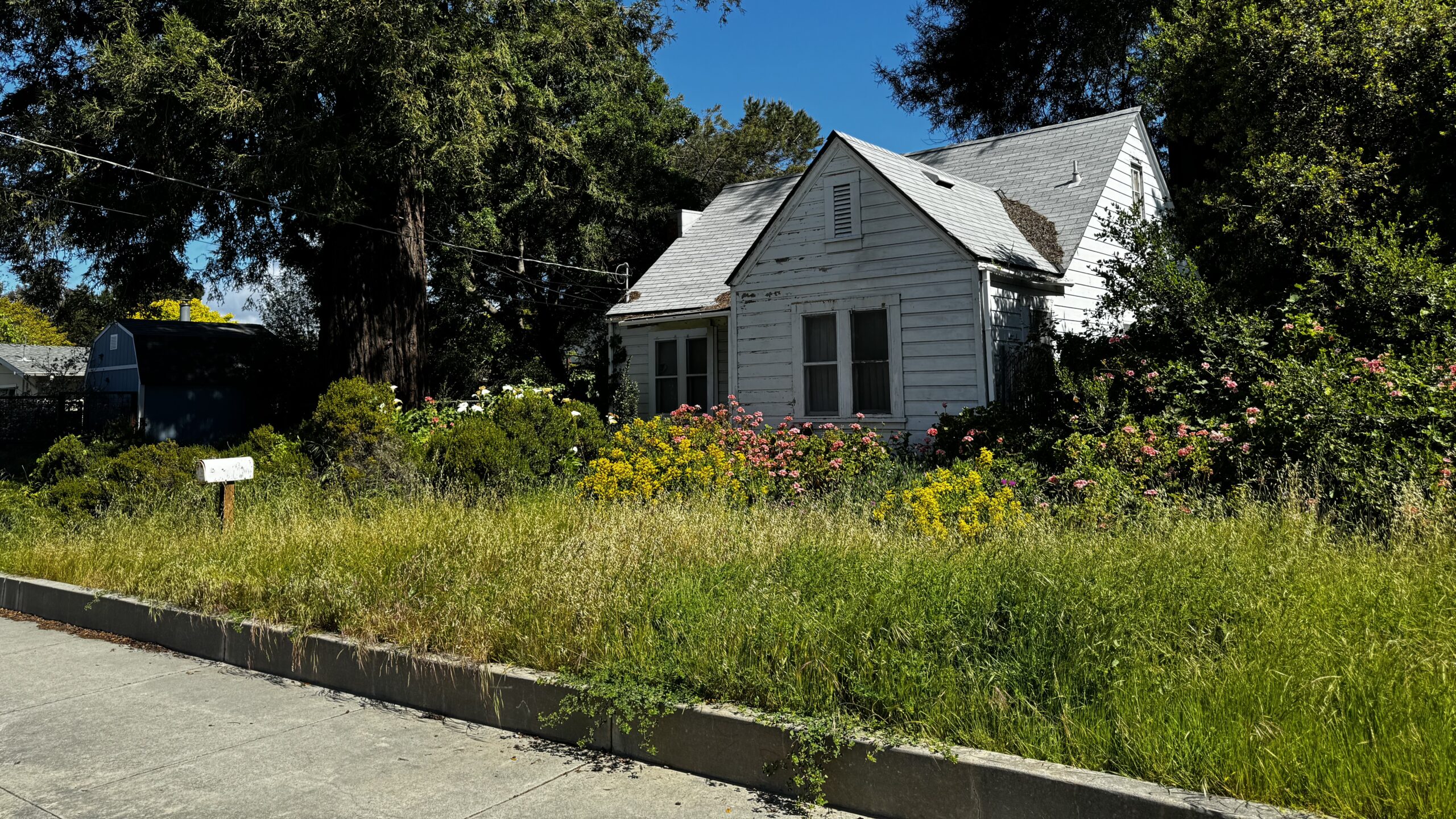
A house at 841 Capitola Road in Live Oak could be redeveloped into 57 apartments. (Jesse Kathan — Santa Cruz Local)
Now, some neighbors who oppose the 841 Capitola Road project have sued, alleging that Workbench invoked Builder’s Remedy too late and that regardless the county’s approval of the proposed development should be invalidated on constitutional grounds.
The suit cited documents showing that no “substantive review” of the county’s Housing Element was conducted after March 15, 2024.
The Board of Supervisors appears to agree with the neighbors’ interpretation. In a recent letter, supervisors asked the state to “correct the certification record” and determine the county to be in compliance as of that date.
“If we prevail, the project will be subject to the same development standards that apply to everyone; it will not be able to bypass them by exploiting a loophole,” Mark Wolfe, a San Francisco-based attorney for the group of neighbors, said in a statement. The lack of a formal certification letter by March 15, 2024, was a “result solely of internal bureaucratic delay,” he added.
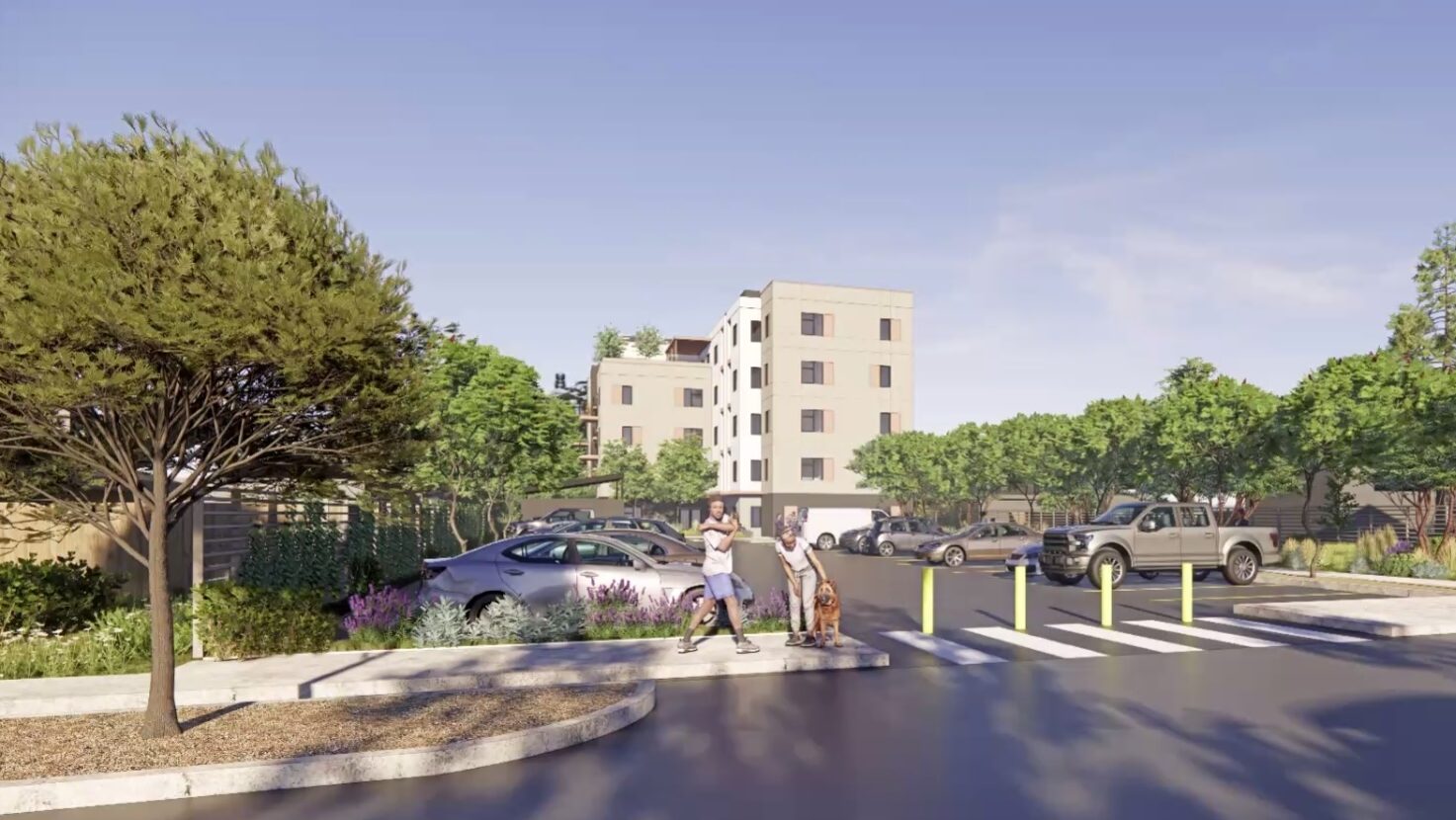
Workbench proposed a five-story, 57-unit apartment complex at 841 Capitola Road. (Workbench)
Workbench has argued that informal communications don’t constitute formal approval, and that a determination otherwise would leave the Builder’s Remedy process muddled in uncertainty. Patterson, Workbench’s attorney, said the county “did the right thing in approving this project.”
“Unfortunately, NIMBY opposition never stops,” he said. “We look forward to successfully defeating their lawsuit in short order.”

The Santa Cruz County Planning Commission approved the proposal at 841 Capitola Road on Oct. 22, 2025. Neighbors of the project appealed it to the Santa Cruz County Board of Supervisors. (Amaya Edwards — Santa Cruz Local/CatchLight Local)
Similar Builder’s Remedy lawsuits disputing Housing Element dates have also been filed elsewhere in the state.
“The biggest unanswered legal question is whether or not the state housing department has to actually approve a Housing Element for it to be valid,” said Fulton, the housing expert. He added that he expected the state legislature or state Supreme Court to eventually weigh in.
The outcome of the lawsuit could determine the fate of another Builder’s Remedy project in Santa Cruz County: The Haven, which was also proposed in April 2024.
The Haven is a proposal for 123 single-family homes and 34 townhouses across more than 25 acres of undeveloped land across Graham Hill Road from Henry Cowell Redwoods State Park Campground. The proposal has drawn skepticism and concern from residents and county leaders alike but has yet to come before the county planning commission for a formal hearing.
Workbench sues county over delayed approval
Unlike the Capitola Road project, county officials have thus far balked at approving Workbench’s Paul Sweet Road project, which has been vigorously opposed by neighboring Dominican Hospital and Dominican Oaks senior housing residents.
Last month, amid unresolved fire safety and sewer issues, Workbench sued prior to going before the county planning commission for a second time. The suit alleged that the commission and the county unlawfully failed to make a timely decision and that the project was therefore automatically approved “by operation of law.”
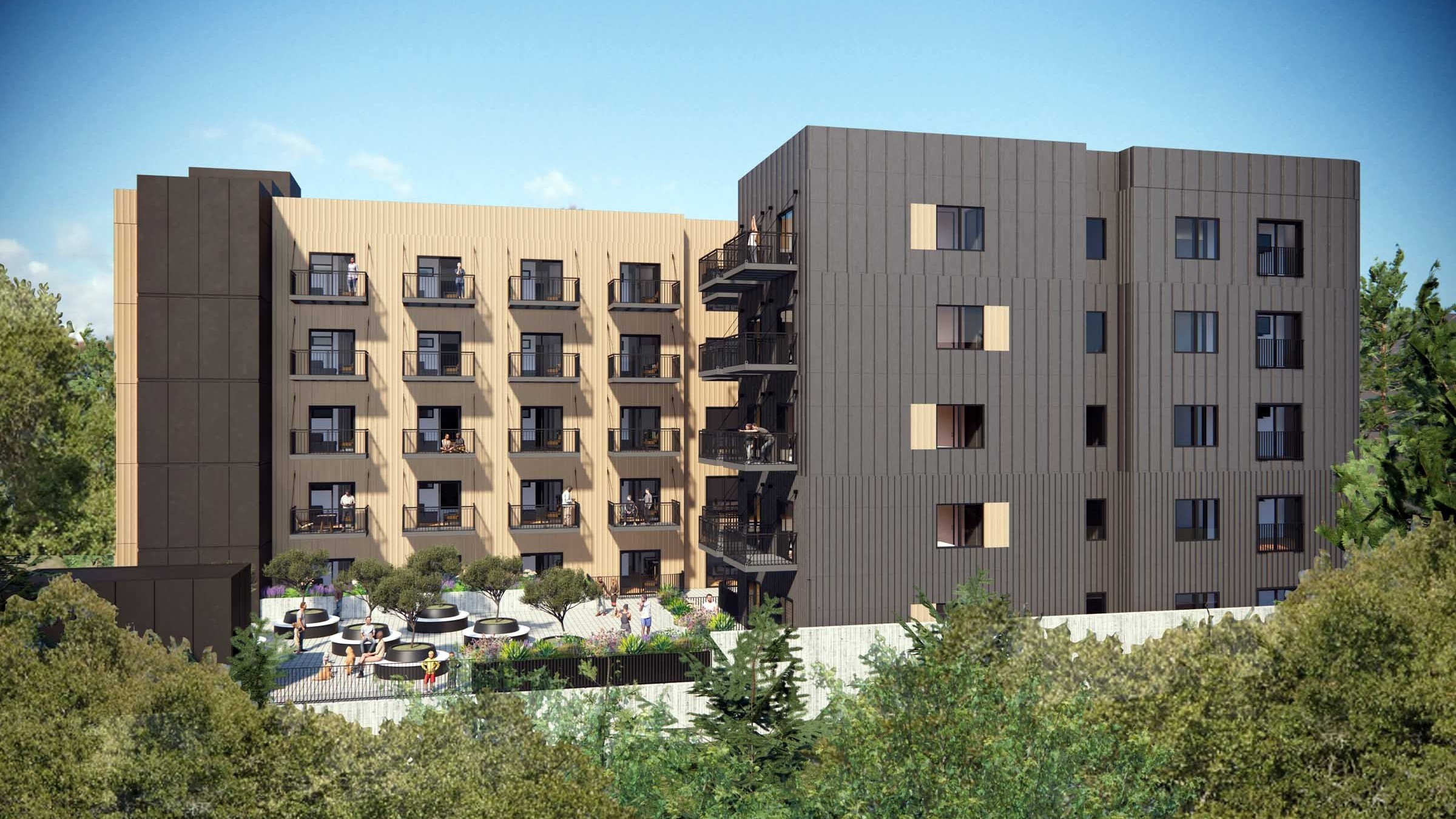
At 3500 Paul Sweet Road near Dominican Hospital, 105 apartments are proposed. (Workbench)
“This is a straightforward case of the county failing to make a decision by its deadline,” Patterson said. “The consequence is clear.”
The county thus finds itself in the position of being sued for one Builder’s Remedy project it approved on Capitola Road and another it hasn’t on Paul Sweet Road.
“It’s disappointing that taxpayer resources will now be utilized in litigation over projects the county did not bring forward, involving a law the county did not write,” Santa Cruz County spokesperson Jason Hoppin wrote in an email. “We look forward to a speedy resolution.”
In the Paul Sweet Road case, Workbench and the county will present their arguments at a hearing set for June 12.
Clarification: This story has been updated to reflect that the project at 841 Capitola Road was first proposed as a 28-unit, three-story apartment complex.
Questions or comments? Email [email protected]. Santa Cruz Local is supported by members, major donors, sponsors and grants for the general support of our newsroom. Our news judgments are made independently and not on the basis of donor support. Learn more about Santa Cruz Local and how we are funded.

Jesse Greenspan is a freelance journalist who writes about history, science and the environment. His work has appeared in The New York Times, Scientific American, Audubon and other publications.