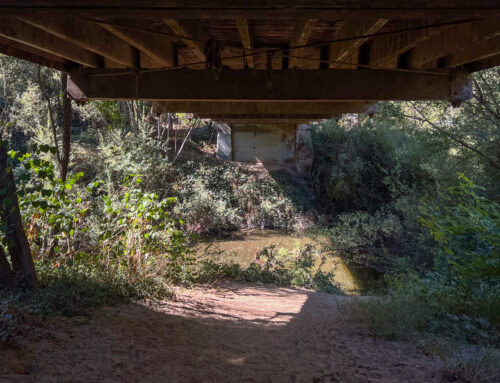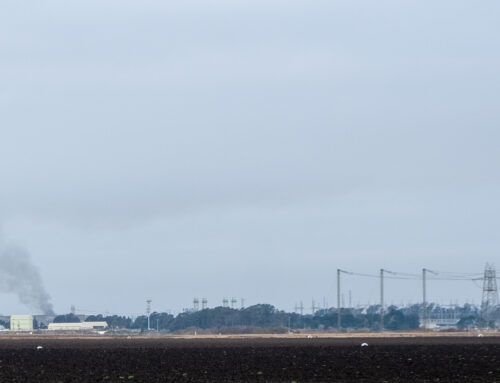
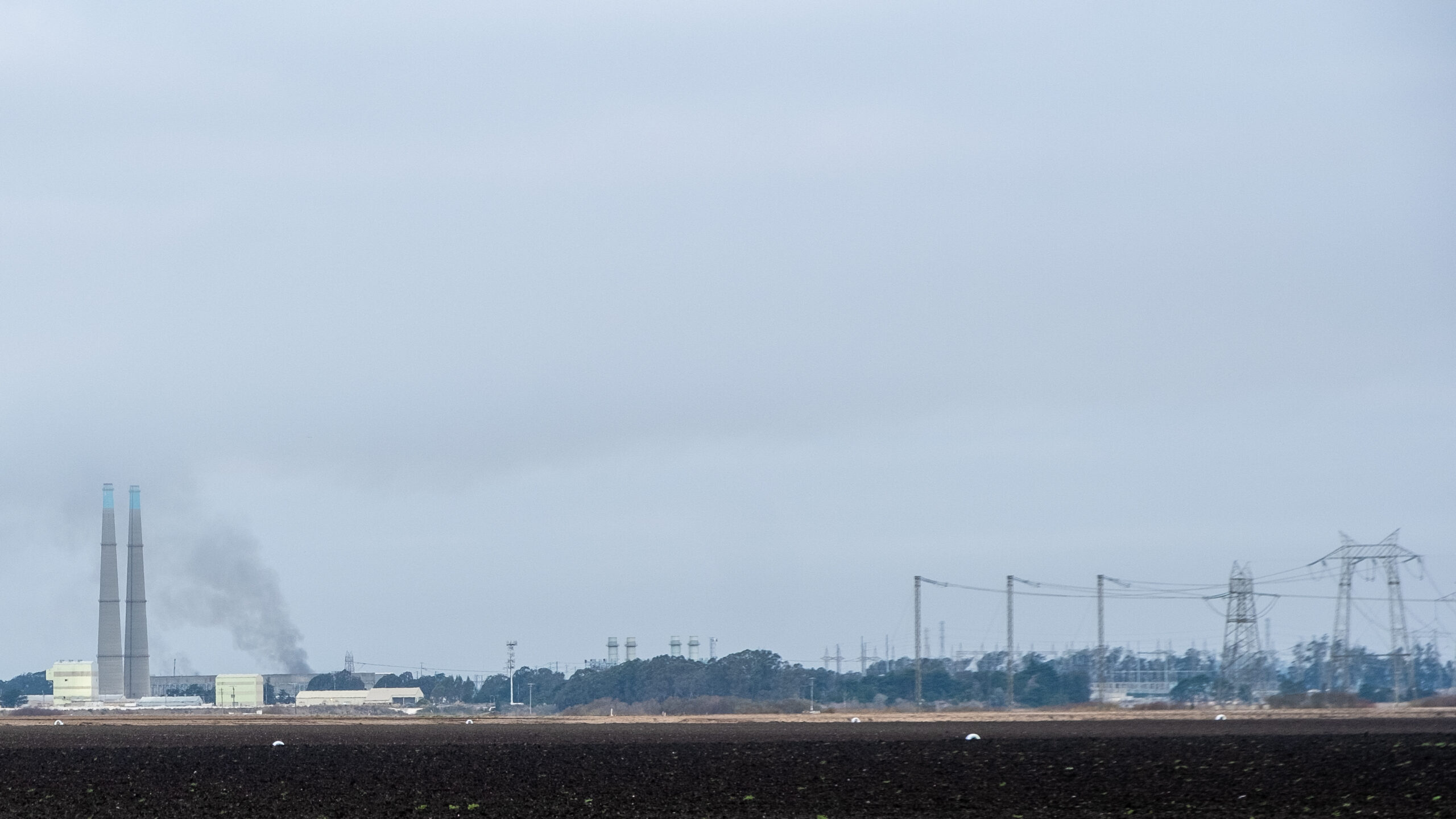
In the wake of the Moss Landing battery facility fire in January, a proposal for a new facility in Santa Cruz County faces hurdles. (Nik Altenberg — Santa Cruz Local file)
Santa Cruz County Commission on the Environment meeting
- 5-8 p.m. Wednesday, Aug. 20.
- Attend at Santa Cruz County Board of Supervisors chambers, 701 Ocean St., 5th floor, Santa Cruz. A webcast link is expected on the commission’s website.
SANTA CRUZ >> Battery storage industry experts tried to address some residents’ safety concerns Wednesday in the second of three public hearings of the Santa Cruz County Commission on the Environment.
Battery storage has been a hot-button issue in Santa Cruz and Monterey counties since a Vistra Corp. lithium battery facility in Moss Landing caught fire Jan. 16. The blaze prompted evacuations, school closures and contamination of Elkhorn Slough. Some residents fiercely oppose large-scale lithium battery storage sites, and Wednesday’s meeting aimed to provide some information and context.
Battery facilities store solar and wind energy and are a key part of California’s plan to be carbon neutral by 2045. No such facilities exist in Santa Cruz County, but New Leaf Energy Inc. has proposed building a 200-megawatt battery storage site on an apple orchard at 90 Minto Rd., near Pinto Lake outside Watsonville.
That proposal has drawn the ire of activists who consider it an environmental and safety risk. Some have wondered whether sodium-ion batteries, or another technology, could be used instead of lithium-ion batteries.
Sodium-ion batteries have recently been manufactured for use in a small number of electric vehicles, but they have not yet been manufactured for use by utilities, said Scott Murtishaw, executive director of the California Energy Storage Alliance. The group is a nonprofit trade association that advocates for renewable energy storage.
Of the roughly 15,700 megawatts of stationary energy storage in California, more than 99% comes from lithium sources, Murtishaw said.
“It’s not an easy period just yet for alternatives to lithium storage,” Murtishaw said. He cited the lower cost, durability and energy density of lithium. “Lithium-ion is dominant. It’s very dominant.”
He said non-lithium storage technologies should become more cost competitive over time, particularly for longer-term energy storage. But he said the state needed battery storage sites now to fight climate change and as a safeguard against blackouts.
“Doing nothing is not an option,” Murtishaw said. He added that he considered modern lithium-ion battery sites to be generally safe, though not without some risk. Sodium-ion is considered more stable than lithium, he said, but still has some safety concerns.
Murtishaw said the problem with Moss Landing is that 100,000 lithium-ion batteries were stacked together in a single building. “We have clearly learned the lesson that that’s not the way to design these facilities,” Murtishaw said.
Newer facilities tend to separate batteries into rows of shipping-like containers, which is meant to stop a fire from spreading. The Minto Road proposal, for example, calls for hundreds of double-walled steel containers, each with 40 lithium-ion batteries, according to New Leaf representatives.
The Minto Road proposal would also use lithium-iron-phosphate batteries, which New Leaf asserts are far more stable than the nickel-manganese-cobalt batteries used at Moss Landing.
Michael Nicholas, a battery energy storage and fire safety consultant with Hiller Companies and a former Kern County firefighter, said Wednesday the industry’s safety record has vastly improved in recent years. Grid-scale battery “failure” incidents fell sharply from 2018 to 2023, according to the Electric Power Research Institute. Nicholas attributed this in part to more rigorous codes and improvements in manufacturing.
He pointed out that lithium-ion batteries are ubiquitous. “They’re in our homes, they’re in our pockets,” Nicholas said. “If you’ve ever felt your cell phone hot from charging, that’s technically a thermal abuse of sorts.”
Nicholas added that there “are very real concerns” regarding battery storage, but that “we’re always looking at things through the lens of risk versus gain.”
Around a dozen activists from Never Again Moss Landing and Stop Lithium B.E.S.S. in Santa Cruz County attended Wednesday’s workshop of Santa Cruz County’s Commission on the Environment. Some attendees took issue with the safety claims.
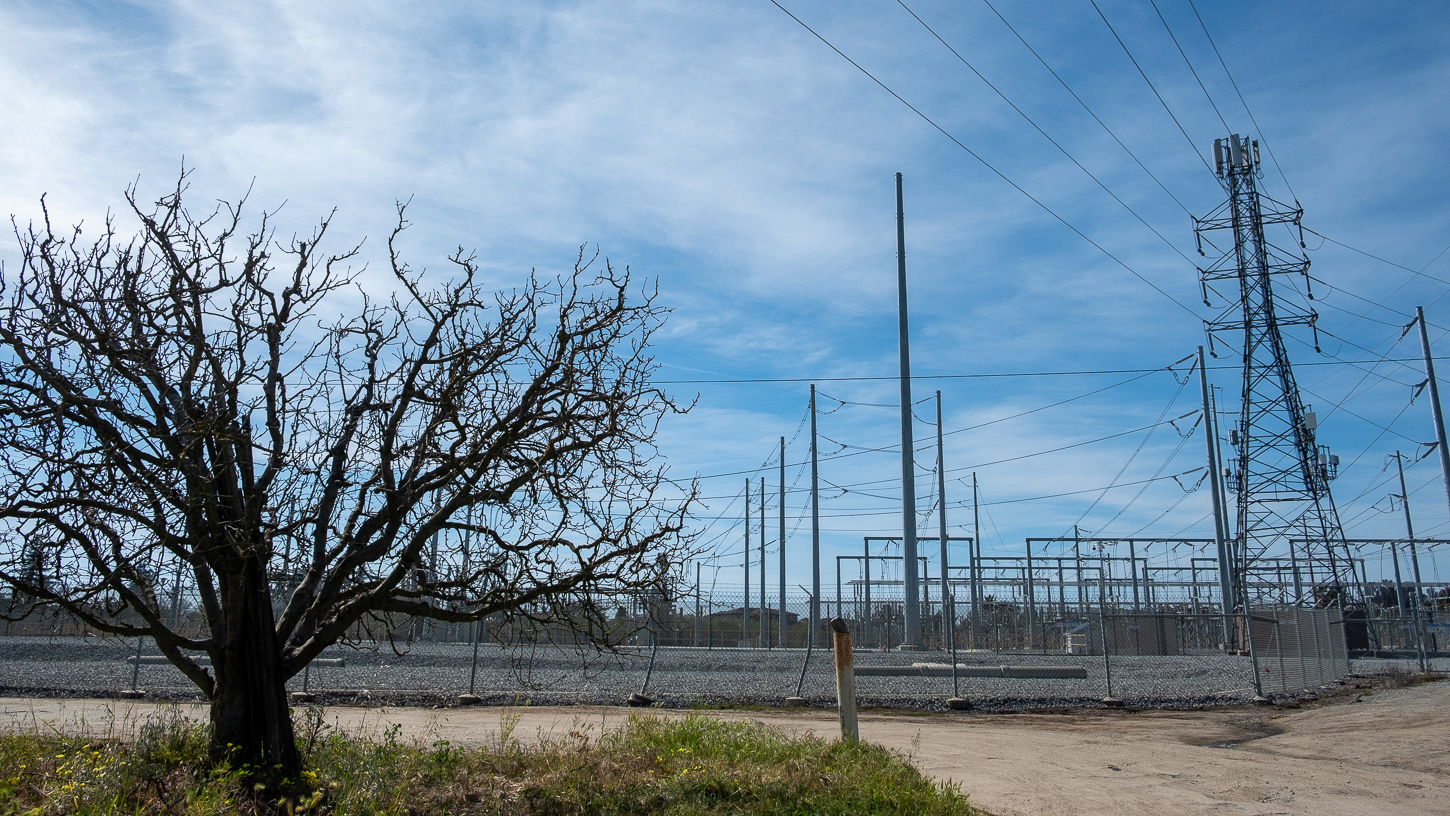
A lithium battery storage facility is proposed at an apple orchard on Minto Road near Watsonville. The site is next to a Pacific Gas an Electric Co. substation. (Nik Altenberg — Santa Cruz Local file)
“I completely disagree with everything this speaker just said,” Becky Steinbruner, a frequent critic of county policy, said in reference to Murtishaw. “This is not an isolated one-off thing that happened in Moss Landing. These fires are happening all the time.” Lithium battery fires — many smaller than in Moss Landing — have been reported in San Diego, in Arizona and elsewhere in recent years.
The Commission on the Environment is an advisory body with no voting powers. Kris Damhorst, the commission’s chair, said these workshops would not discuss specific projects or land use and zoning proposals, which he called under the purview of the Santa Cruz County Planning Commission and the Board of Supervisors.
Yet the Minto Road project was clearly on the minds of those attending the meeting. One woman said she feared that her home value would drop if it is built.
When New Leaf filed an application for the project in December, it initially attracted little attention. But that changed following the Moss Landing fire.
Since the Moss Landing fire, scientists from various organizations have been conducting air, water and soil tests. So far, no public health or food safety concerns have been detected, according to state, county and federal officials.
Yet many residents of Santa Cruz and Monterey counties have reported symptoms from the fire, including metallic tastes in their mouths, shortage of breath, watery eyes and nosebleeds.
Meanwhile, a cleanup of Moss Landing has been slowly advancing. On July 17, the Environmental Protection Agency reached an agreement with Vistra to remove damaged batteries from the site. About 55% of the 100,000 lithium-ion batteries were damaged in the fire, the exact cause of which was still being investigated, EPA officials wrote in a statement.
The third and final Commission on the Environment battery storage workshop will take place online and in person 5-8 p.m Aug. 20 at 701 Ocean St., top floor, Santa Cruz.
Read more
- Lithium battery storage proposal near Watsonville faces hurdles — March 27, 2025
- How pesticides endanger pregnant farmworkers in Pajaro Valley — July 8, 2025
Questions or comments? Email [email protected]. Santa Cruz Local is supported by members, major donors, sponsors and grants for the general support of our newsroom. Our news judgments are made independently and not on the basis of donor support. Learn more about Santa Cruz Local and how we are funded.

Jesse Greenspan is a freelance journalist who writes about history, science and the environment. His work has appeared in The New York Times, Scientific American, Audubon and other publications.