

Scotts Valley City Council
Three candidates are vying for two seats on the Scotts Valley City Council.
Meet the candidates
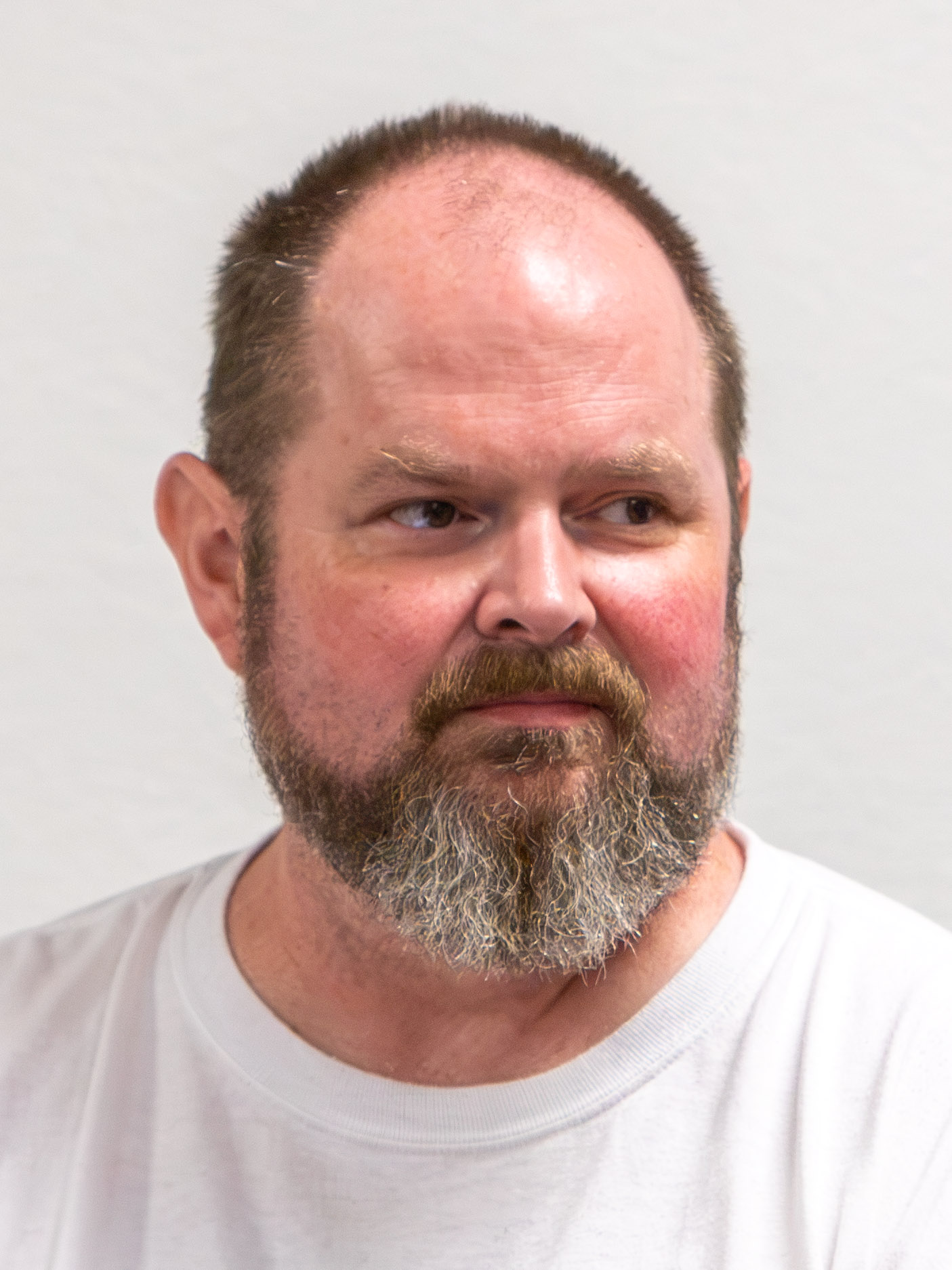
Danny Reber
Age: 52.
Occupation: Executive Director of Valley Churches United.
Political background: Scotts Valley Water District board member, Executive Director of the Scotts Valley Chamber of Commerce.

Greg Wimp (incumbent)
Age: 49.
Occupation: Owner of three Togo’s sandwich shop franchises in Santa Cruz County.
Political background: Incumbent Scotts Valley City Councilmember.
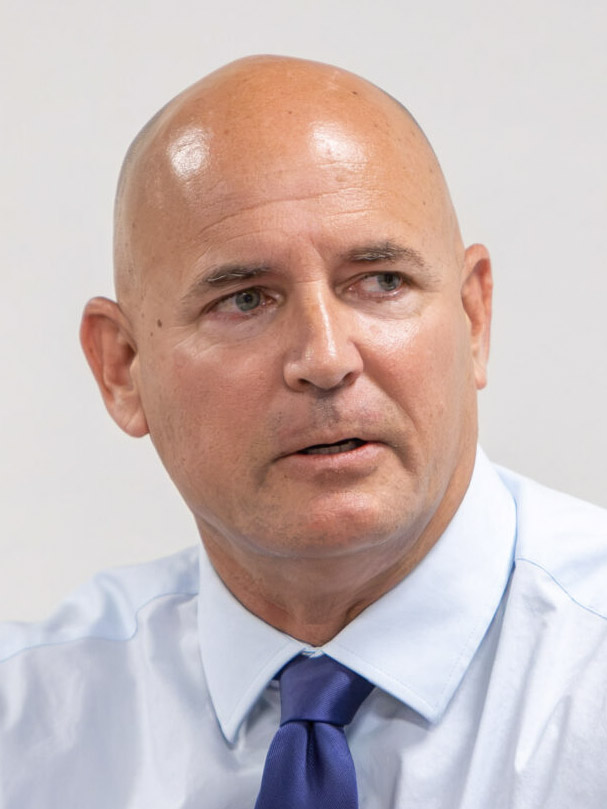
Michael Zeller
Age: 48.
Occupation: Director of Programming and Project Delivery at the Transportation Agency for Monterey County.
Political background: First time political candidate.
Quick comparison
Candidates on the issues
We interviewed and surveyed Scotts Valley residents about their priorities for council candidates. The following questions are based on what we heard.
What will you do to help advance the Town Center, and what will you prioritize in your conversations with developers?
Reber said the project has been a long time coming, and was delayed by the 2008 financial crisis, the rise of online shopping, and other factors.
“A lot of the heavy lifting has already been done on the biggest obstacles that were holding it up. So there’s been a lot of, a lot of meetings already with getting community engagement and community input, and working with the developer,” Reber said. “There’s a balance of making it work for the developer. You know, having a housing component in there, but then also making the retail component work, but then making it also feel like a Town Center where, you know, it actually does feel like a, you know, a community gathering place.”
Reber added, “We’ve heard from residents, like we’ve done listening sessions leading up to this, just trying to get, gauge what people want to know. We’ve heard from residents that they support more affordable housing, but the look and feel of new projects don’t necessarily match the existing aesthetic of the city here.”
“People have been trying to get it done for the past 30 years or so. But we’re finally at a point where we’re farther along than we ever have been, for sure, as far as getting all the pieces together, and so yeah, so with the developers, you know, definitely work with them to put money into the community. As far as like, and we’ve done that with some other developments around town, we’re put money for our infrastructure and parks and and our services, and so definitely would want to see that get done, especially for this large project, but even our smaller projects, and there have been some local developers that have done some projects recently on Scotts Valley Drive, and they have contributed to local organizations because they were a local developer, such as Apple Homes, which you know we’d like to see more of that, not just contributing to like the infrastructure and parks, but for those community groups in town.”
“The city has prepared a specific plan for its ideal vision for what the Town Center would look like. The developer can present a different proposal as well, but we would like to try to get those things as aligned as possible.”
In particular, Zeller said, he wants to see open spaces and commercial space.
“If we have new people moving in, we need to give them places to shop, places to go to restaurants, you know, places to help spend their money to boost the local economy. So making sure that all of those things are incorporated are really important.”
He also said he wants to ensure a well-designed internal circulation plan so people can get around the Town Center without having to get onto Mount Hermon Road, where there are already challenges with traffic congestion.
“I think also there is a big opportunity to, not only just with the senior center, but also make sure that there’s senior housing that’s included in the Town Center, and I would love to see that.”
How do you plan to address the concerns of new housing projects not matching the existing aesthetic of Scotts Valley?
“That’s a tough one because the demographic has changed in Scotts Valley since I’ve lived here too. And I’ll just I’ll start by saying even my wife and I are the poster child on why there should be a need for for affordable housing. Our very first house we bought, which was back in 1998, we, it wasn’t a house, it was a two-bedroom condo, and we would have never been able to afford it off of our incomes with not for a little bit of help,” Reber said. The city used to offer first time homebuyers assistance that allowed them to “get our foot in the door,” but that program is now defunct.
“Without that opportunity, there’s we wouldn’t be living in Scotts Valley right now, and so it’s very personal to me because I, you know, I want my daughters and my grandkids to be able to afford to live here as well, but there is a frustration of local control versus some of the mandates by the state. So, you know, ideally it should make sense and fit with the neighborhood.”
Reber said the solution is “working with the state — that’s where the problem came from.” He said the state should recognize when a city is on track to meet its housing goals and offer “some kind of incentives” to those cities.
“I’m not sure which developments people are referring to, but like I’m not sure, like it’s necessarily the specific aesthetic of new developments that like, is the biggest concern. I think it’s more concerns over like buildings being out of scale for neighborhoods”
Wimp said that “somebody in an office somewhere” who doesn’t live in the community, might not understand the impact of a very tall building in a neighborhood of single-family homes that lacks adequate infrastructure for the development.
“I would say it’s more of the scale, and so I would say you know we urgently do need to address the bills that are being applied for some of these projects, just that would have more guardrails with the bills because it’s not necessarily that the bill is bad. It’s just when somebody created it and wrote it, they didn’t think of all the scenarios that it might be applied to.”
“If you’re familiar with the 125 Bethany proposal that came in, you know, I think one of the the big things that people were concerned about was the the height of that development being you know upwards of seven or eight stories I believe and just the the densities without the you know appropriate parking, it was basically about one spot per unit, and so just concerns about where that overflow parking is going to go.”
He said there is a need to make sure “that when these developments come in, that they’re done in such a way that it’s not just maximizing the densities, which then you know in turn leads to the the profitability for the developers. You know, there should be some consideration to you know putting in things that actually look and feel like the surrounding neighborhoods. It’s not like you know just a thumb that’s sticking out, right?”
What will you do to encourage new below-market-rate housing development, preserve existing low-cost housing and stabilize rents?
“Incentives to developers I think would be a big deal, and, and hopefully some, some reason and help from the state. So, as a council member, I think you know the first step would be working with our state representatives, John Laird and Gail Pellerin, and, and seeing if we can find some synergy with what the state needs. And housing, don’t get me wrong, is, is a huge problem here. You know, my, my previous job was the chamber of commerce, and the No. 1 problem for businesses is finding staff, and not just staff, but good staff. And most of the good staff can’t afford to live in the town they’re working in, and that’s frustrating.
Reber continued, “We can’t just have million-dollar homes. We need to also have some starter homes and some opportunities, like I mentioned, that my wife and I have, so people can just get their foot in the door. So, definitely in favor of any, any place we can find some more opportunities and work with the state to offer some incentives to developers to make it work for everybody.”
“I’m not an expert on as far as how do you maintain low costs. Like, but I think all the develop — those developments have like timeframes of 40 or whatever years, and so I guess when those come up for renewal, I don’t know what the process is to keep those projects like low cost, but you know definitely work with, I guess, the owners of the properties to keep those low cost.”
Wimp said he’d like to see a diversity of affordable housing programs, like for first-time homebuyers “to give opportunities for people to get into a home that they can purchase and build equity.”
“I think there’s programs that you can do, where it’s like, you know, help with like down payment, or so it’s either low cost or no interest kind of loans to help with that. And so setting up a fund, either local and/or state, federal money to help with that part of that, so that’s something I think we can definitely, can do because we did have a program like that before, and I’m not sure. I’m sure it was just a funding thing that went away. I’d like to restart that.”
“I fully support affordable housing and understand, appreciate the need for it here in Scotts Valley to help with affordability issues,” Zeller said. At the same time, he said he does not support developments that utilize AB 2011, a law which streamlines housing proposals on commercial property and removes local control.
“Developers are increasing densities beyond what is reasonable in some instances,” he said, adding that while 100% affordable is great, it also means the city loses property tax revenue needed to fund services and infrastructure. “What I would like to see us do is try to offer a better financial model for developers to come to the table. There are state-level joint powers authorities that offer investor-backed developer bonds that developers can only get access to that by partnering with a city.”
He said the city could then negotiate:
- “Perhaps getting an equity stake in the development, so that when you sell in the future, we get a portion of that upside back.”
- “Making sure that densities, setbacks, the esthetics of the development are in line with the community’s focus.”
“Instead of trying to, you know, fight back legally in ways that are costly and not likely to be successful, I’d like to try to use more incentives to bring them to the table to get to the end goals that we would like to see.”
How would you make Scotts Valley safer for cyclists and pedestrians, while addressing the traffic concerns of drivers?
Reber said there are upgrades underway to improve safety on Scotts Valley Drive but he thinks there could be improvements on “making sure it’s conducive to businesses and traffic.”
“There’s some wiggle room for adjustment, where the cutouts are in those delineators, where businesses’ driveways are, to make sure that the businesses can still get their deliveries, but also still make sure it’s clear and safe for bicycles.”
Reber also mentioned “how great it would be if kids could ride their bikes to school,” and said that for Vine Hill Elementary School and Scotts Valley Middle School it’s doable but “the high school is a little trickier because of Glenwood Drive. It is possible if you took the Vine Hill School Road around and went through Schugart Park, but most of the kids are along Glenwood Drive, and there’s not really much shoulder there.”
He added, “I think there’s been some good progress made, and you know, I think it needs a little bit of fine tuning, and that’s, you know, been a process of listening to the community along the way that I hope will continue.”
“I think continuing some of the work we’re doing already, like we did a big I don’t know what you call it, but project on Scotts Valley Drive, where we did — it’s just wrapping up now. They’re finishing up like smoothing out the road right now. So expanded the bike lane buffer for the bike lane and narrowing the lanes, the middle lane and the two lanes on each side. And so that does create more safety, and also there’s a traffic calming features to slow down traffic a little bit.”
Wimp said he likes to run and feels safe on Scotts Valley Drive and has ridden a bike on it as well.
“I think it’s nice, especially with the changes. So, and I’ve heard some of that feedback from cyclists recently that they appreciated the updates. And we get quite a bit of student traffic on Scotts Valley Drive because the middle school’s right there, and the high school and Vine Hill. So there’s quite a bit of pedestrian and cyclist traffic.”
“Over the last 10 years, Scotts Valley’s pedestrian, you know, three-quarters of our pedestrian injuries and collisions, and two-thirds of our bicycle injuries and collisions have been on our two main corridors of Scotts Valley Drive and Mount Hermon Road, which makes sense. I mean, we’re essentially just those two thoroughfares, but you know we need to make those safer.”
Zeller mentioned the improvements on Scotts Valley Drive and said ne’d like to see similar changes on Mount Hermon Road, plus high-visibility crosswalks, updated signal timing to relieve traffic and “targeted use of roundabouts in certain areas.”
He continued, “I would love to see us do more safe routes to school improvements” and “start a program” for seniors similar to Monterey County’s Independent Transportation Network. “Somebody can request a ride and a volunteer driver would show up, take you door through door to your appointment, shopping, whatever it is, wait for you and bring you back. The cool thing is that when, if you’re a senior that is giving up your vehicle, you can donate it to the nonprofit. They’ll sell it and then turn that into credits for you to use for rides.”
What will you do to create affordable after school programs for students and young people who say there is nowhere for them to go?
“I was a kid in the ’80s, and there really was nothing. I think we had McDonald’s, Taco Bell, Burger King and Special Effects Arcade, and other places to get in trouble around town more than not. So in the time I’ve lived here, I’m happy to see things come a long way,” Reber said. “But there is a need, definitely, for after school programs, especially when a lot of parents work and don’t get home in time till the kids are out of school.”
Reber said the city “should continue to support the Boys and Girls Club. That’s the low-hanging fruit.” He mentioned local businesses like Lightspeed Martial Arts, Haven Play Lounge and Kumon Math and Reading Center.
“Encouraging all of those programs, supporting those businesses, and yeah, especially the Boys and Girls Club, I think is a gem that we haven’t always had in our community.”
“Continue to support and extend relationships with the school district any way we can, and then also the same line, the Boys and Girls Club continuing to support them and make sure they’re successful, and because they have a a great after-school program that they provide transportation to after school, and but then also yeah, like just gathering places for young people too. Like you know, we have great parks, like Sky Park. Just making sure there’s good facilities there in the Town Center project.”
Wimp said he’s supported the Boys and Girls Club since they opened and brought sandwiches from his sandwich shop to the grand opening.
Zeller said the city is fortunate to have several private businesses that cater to youth and publicly funded programs.
“I think where the city council and the city can help with those programs is that, in particular, with the Boys and Girls Club, they have a proposal to expand their clubhouse that’s on Scotts Valley Drive. They’re in a fundraising mode right now, but they do have some plans submitted. I would like to see our community development, our planning department, our planning commission, all the way up to city council, helping to streamline that process for them to get that project approved when it’s ready to move forward.”
How do you plan to bring more community engagement opportunities to Scotts Valley for residents to feel more connected to the growing city?
“My previous job for over a decade was running the chamber of commerce, and you know, for a small chamber of commerce for such a small town,” Reber said. “I would say the most important thing that I feel like was true then, and is just as true when it comes to our city, our relationships, and engaging our community stakeholders.”
Reber described it as “like a wheel, and if it’s if that’s a good strong wheel and can get through the weather and survive all the trials and tribulations, the, you know the city ideally at its best is the hub of that wheel, and the spokes, the stakeholders are the spokes, and that’s where the community comes in.”
He added, “my, I guess, long answer to that is relationships, engaging community stakeholders, and those are relationships I already have from being a lifelong resident, in my previous job at the chamber, and other community service I’ve done here since I’ve lived in Scotts Valley.”
“One way is to work with community groups such as the Senior Center, Boys and Girls Club, and youth sports organizations, and community theater and the library, for example. Just see how we can expand those relationships and remove roadblocks for them for their programming, and I’ve already been successful with restarting like the support for the Santa Cruz Arts Council with Scotts Valley.”
Wimp said there are also plans in the works to have an Open Studios event in Scotts Valley next year that would feature artists from Scotts Valley and the San Lorenzo Valley.
“I do value art, and you know it is a kind of community health issue.”
Zeller said Scotts Valley is a “welcoming, open community” and he wants to make sure that residents’ concerns over new development doesn’t transfer negativity to new residents when they move in.
“I want to make sure that we’re setting out a positive vision for what the future of Scotts Valley looks like, and that we can maintain our small town feel, our community openness and welcomeness, and still accommodate growth at the same time. That we can do both things, and I think you know at the heart of that is looking at the potential for the future Town Center. I think that’s the greatest near-term opportunity that we have to both accommodate new growth into the city as well as creating essentially a civic heart for Scotts Valley, where we’ll have community open spaces, we’ll have wide sidewalks, a permanent amphitheater.”
About the city council
The Scotts Valley City Council is a five-member elected body that creates city laws, sets the city’s budget and oversees city functions including police, fire and parks. Council members serve four-year terms and are elected to serve at-large, meaning the council does not have elected districts. The mayor and vice mayor are appointed by the council each year, but do not gain any further voting power than the rest of the council. The mayor represents the city during ceremonial and official events.
What we heard from voters
Santa Cruz Local talked to Scotts Valley-area residents during community listening sessions and individual interviews in August. Their most common questions and concerns related to city government were taken to the candidates.
The top themes raised by residents were:
- Traffic and congestion (Mt. Hermon Rd and Hwy 17 access).
- Infrastructure: the need for the Town Center and maintaining the current aesthetic of Scotts Valley when building new housing.
- Resources and recreational opportunities for youth, especially affordable afterschool programs.
- Having easier access to local elected leaders.