
Construction crews work on a housing development on Pacific Avenue in August 2025. (Amaya Edwards —Santa Cruz Local/CatchLight Local file)
SANTA CRUZ COUNTY >> California ballots have 14 voter propositions, many of which could have significant direct or indirect impacts on Santa Cruz County.
Santa Cruz Local identified three measures with particularly strong local effects on taxes, development and health care. For a more detailed non-partisan state voter guide, visit CalMatters’ 2026 voter guide.
For more details about Santa Cruz County measures and races, see our election guide.
Prop 43 could stymie Metro tax
What it is
Prop 43 would raise the voter-approval threshold for some local taxes to two-thirds majority. Currently, a local “special tax” set aside for a specific use requires more than 50% approval if it is placed on the ballot by citizens.
Proponents argue that Prop 43 would close a legal loophole established by an earlier court ruling and protect the original intention of California tax law. Opponents have said that it would make it much more difficult for local governments to raise money for services.
See more details from CalMatters.
What it means locally
A community group has gathered signatures to place a sales tax benefitting Santa Cruz Metro on the June 2028 primary election ballot. The proposed tax would help maintain expanded bus service and free passes for youth, as a state grant is set to expire.
Under existing law, the proposed tax would require more than 50% approval. If Prop 43 passes, it would require more than 66.6% support.
Read Santa Cruz Local’s Election Guide
The changes would also apply to any extensions of existing special taxes set to expire. That includes the City of Santa Cruz’s Measure C, a parcel tax and property transfer tax dedicated to affordable housing and homelessness services. Santa Cruz voters approved Measure C in November 2025 with 56.1% of the vote and is set to expire in 2047.
Prop 43 wouldn’t affect general taxes, which can legally be used for any purpose and require a simple majority vote.
Local supporters
Becky Steinbruner, an Aptos resident and former supervisorial candidate, supports Prop 43. She has previously criticized many local tax proposals, including 2024’s Measure Q, a countywide tax for environmental projects championed by the Land Trust of Santa Cruz County. Measure Q qualified for the ballot as a citizen initiative and won with 60.2% of the vote.
“I think it’s really wrong that a wealthy nonprofit can do things like that and be allowed to have a 50% plus one voter approval threshold,” she said. Prop 43 “will really help preserve the voters’ rights to approve special taxes,” she said.

People get on a Santa Cruz Metro bus in San José. (Jesse Kathan — Santa Cruz Local file)
Some initiatives are nominally put forth by private citizens, she said, but involve de facto coordination with the government. For example, Santa Cruz city staff did research about a possible tax to support affordable housing before a group of citizens placed Measure C on the ballot.
“That is deception, it should not be allowed, and I think that Prop 43 will stop things like that,” she said.
Local opponents
Santa Cruz Metro CEO Corey Aldridge said in a Sep. 25 meeting of the Santa Cruz Metro Board of Directors that a two-thirds majority “would be a very, very high bar in any situation, so we hope it does not pass.” Enormous effort by residents “would all be moot,” he said.
Under Prop 43, if a tax won more than 50% approval but less than 66.6%, “the majority would lose,” said Capitola City Councilmember and Metro Board Director Melinda Orbach at the meeting.
Prop 44 could saddle clinics with fines
What it is
Prop 44 would require all clinics designated as Federally Qualified Health Centers to spend at least 90% of their income on serving patients. Proponents have said the proposition would address wasteful spending of taxpayer dollars on expenses like executive pay, lawsuit settlements and excessive overhead. Opponents have said the proposition’s definition of patient services excludes crucial expenses like improvements and expansions to facilities.
See more details from Calmatters.
Local impact
Santa Cruz County has two nonprofits that operate Federal Qualified Health Centers: Salud Para La Gente and Santa Cruz Community Health. If either organization does not adhere to the spending threshold that Prop 44 would impose, they could see heavy fines. The money would be put in an escrow account, and clinics could regain the funding over time if they realign their spending to comply with the 90% threshold.
“Santa Cruz Community Health has estimated that, based on its 2023 federal tax filing, it would face a penalty of approximately $2.47 million in the first year under the measure,” the Santa Cruz County Board of Supervisors wrote in a letter to Assm. Gail Pellerin declaring their opposition to Prop 44.
Clinics could apply to state authorities for exceptions to the rule for certain expenses.
Although Watsonville Community Hospital wouldn’t be directly subject to Prop 44, the hospital works with Salud Para La Gente for some services, and could be indirectly affected if the clinic faces financial difficulties, said Pajaro Valley Health Care District chair Tony Nuñez.

Santa Cruz Community Health absorbed hundreds of new patients after Planned Parenthood Mar Monte closed its Santa Cruz clinic and stopped offering primary care services last year. (Amaya Edwards — Santa Cruz Local/CatchLight Local file)
Supporters
Prop 44 is backed by the union SEIU-United Health Care Workers.
Union members “go to work and they see firsthand how some of these clinics are failing patients right now,” said union spokesperson Renée Saldaña. “That is the entire reason why they are pushing for accountability and transparency.”
Ahead of anticipated “huge devastating cuts” as a result of the 2025 federal budget bill H.R. 1, also known as the One Big Beautiful Bill Act, “every existing health care dollar needs to be freed up for patient care instead of other things that some of these clinics are spending their revenue on, such as excessive executive pay or bloated administrative costs or lavish events,” she said.
Local opponents
Salud Para La Gente and Santa Cruz Community Health have issued statements to oppose Prop 44, and the Santa Cruz County Board of Supervisors have written a letter to Assm. Gail Pellerin in opposition.
“Proposition 44 ignores how care is actually delivered,” said Anita Aguirre, Santa Cruz Community Health CEO, in the statement. “For safety-net providers like us, the consequences would be devastating — fewer services, fewer care options, and greater barriers for patients who already struggle to get care.”
Gail Newel, former health officer for Santa Cruz County, said that the proposition could burden local clinics at the same time they face higher costs and higher demand as a result of H.R. 1.
“I get it — we all want our government-funded primary care clinics to be accountable,” she said. “However, this is not the time to be penalizing those clinics.”
Prop 45 could speed new development and cost the government
What it is
Prop 45 would overhaul California’s environmental review process by altering the California Environmental Quality Act, or CEQA. The new rules wouldn’t change what kind of development is permitted, or remove any environmental regulations. Instead, it would limit the environmental review process to 365 business days, equivalent to about a year and a half. Currently, the review process for some projects can stretch for years.
It also requires courts to more quickly decide on lawsuits challenging environmental reviews, and limits judges’ ability to block projects entirely.
Proponents say the changes address the bureaucratic and legal gridlock faced by new development, including much-needed housing and green energy infrastructure. Opponents say it would curtail communities’ ability to block or change developments that could cause severe environmental harm.
The changes would apply to many types of projects, including the construction of new homes, freeways and hospitals. It also applies to infrastructure for internet access — opponents have said this category could include data centers, while supporters say that it does not.
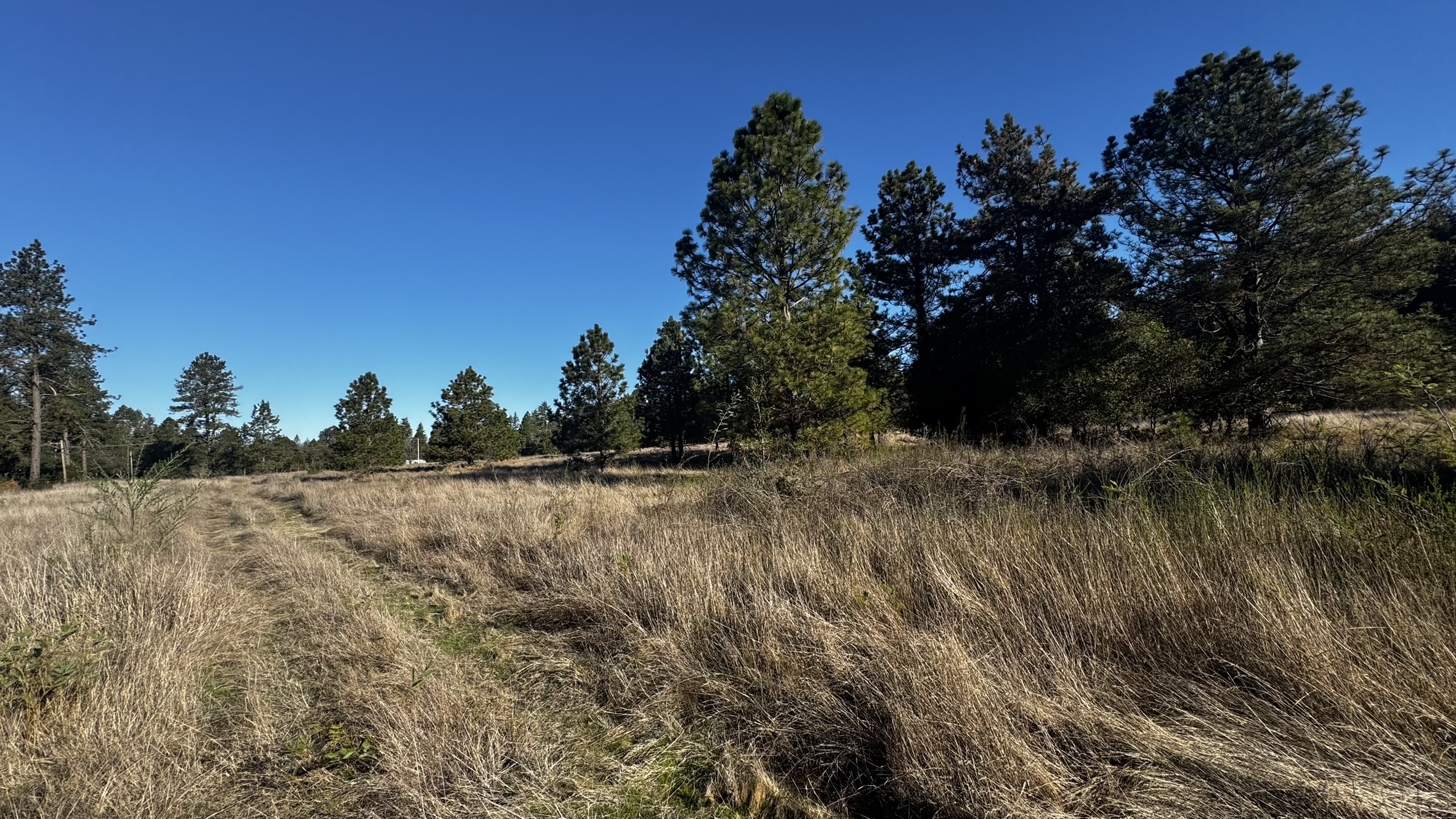
A proposed housing development on undeveloped land near Scotts Valley could see an expedited environmental review process under Prop 45. (Jesse Kathan — Santa Cruz Local file)
Local impact
County and city rules for development wouldn’t change as a result of Prop 45 — areas zoned for rural residential use, for example, wouldn’t be subject to high-rises or industrial buildings.
But many projects in the county have been changed, significantly delayed or stopped by lawsuits challenging the development’s environmental review. That kind of pushback could be limited by the changes proposed in Prop 45.
For example, when Santa Cruz city leaders tried to scale back laws protecting large urban trees, a group of residents successfully challenged the move in court on the grounds that it violated CEQA. More recently, a lawsuit challenged the city’s plan for the redevelopment of the Santa Cruz Wharf and compelled the city to undertake a more thorough environmental review. The litigants eventually negotiated with the city to scale back some parts of the plan.
Planned and proposed future projects, including South County segments of the Santa Cruz Rail Trail and a potential housing subdivision near Scotts Valley, would require environmental review processes. Prop 45 would affect how long the environmental impacts of those projects are studied, and to what extent they can be challenged in court.
In a statement, a Santa Cruz County spokesperson said county staff haven’t analyzed the potential impacts of Prop 45. But other local governments, including Marin County, have opposed the proposition, in part because of predictions that it could cost the state and local governments hundreds of millions of dollars to keep to the required accelerated timelines.
Prop 45 would also remove the requirement to consult with native tribes that are not federally recognized. That includes the Amah Mutsen Tribal Band, whose ancestral lands include Santa Cruz County. A proposed sand mining pit in Jurstiac in San Benito County, which would have occupied land the Amah Mutsun consider sacred, was defeated in January after the tribe challenged its environmental review. State authorities determined that developers hadn’t meaningfully consulted with the tribe or accounted for the harm to their cultural lands.
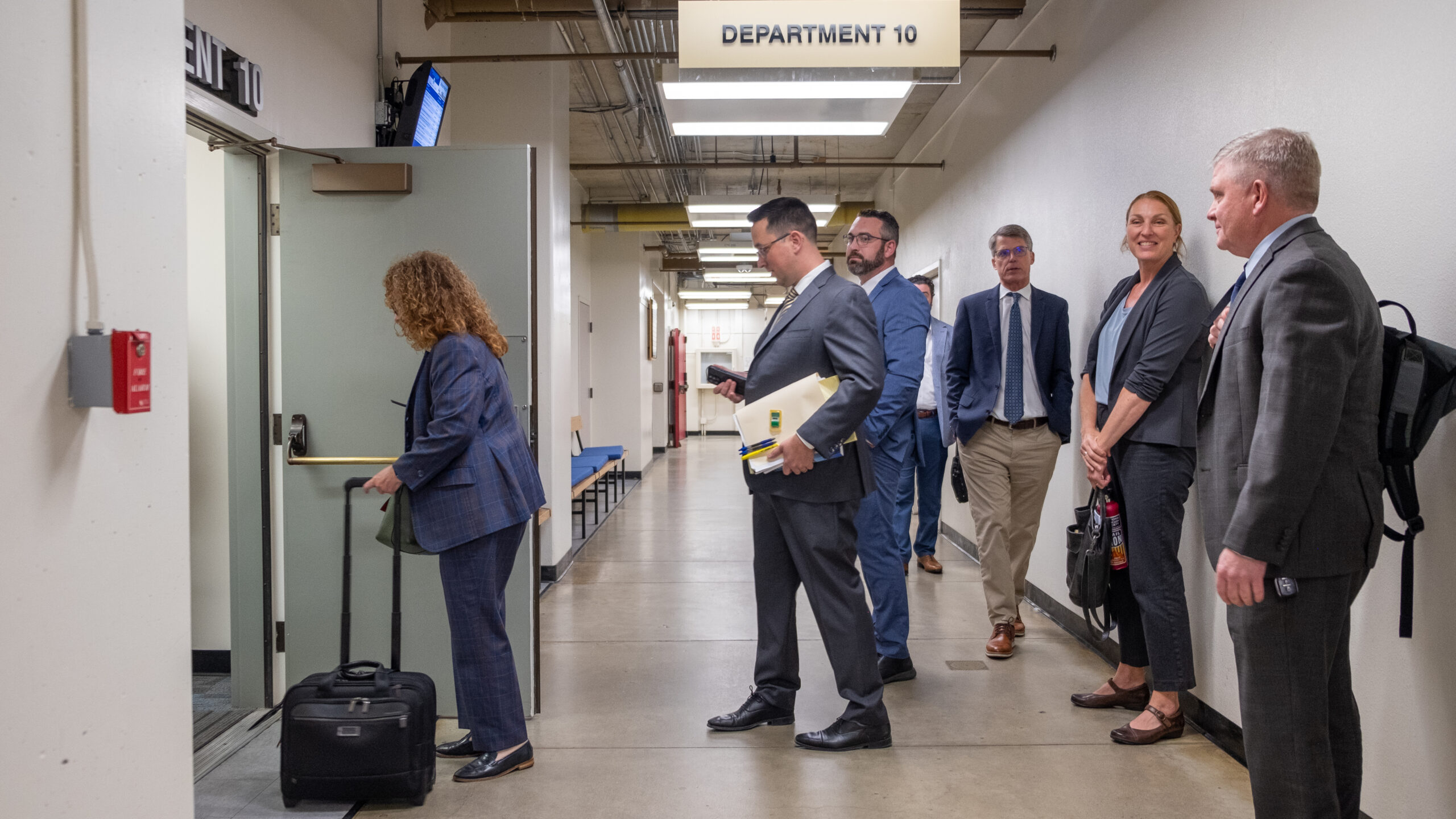
Attorneys enter a hearing about UCSC’s 2021 Long Range Development Plan in 2024. The city and county of Santa Cruz sued the university over grounds its environmental impact report was inadequate, and prevailed. (Nik Altenberg — Santa Cruz Local file)
Local supporters say
The Santa Cruz Area Chamber of Commerce supports Prop 45 because local businesses want to address hiring challenges exacerbated by the housing affordability crisis by accelerating housing development, said CEO Kristen Brown.
Prop 45 could prevent “long and lengthy lawsuits that have held up some of our projects by using CEQA as a reason to prevent development from moving forward,” she said. “So for us, this is a workforce issue, an economic issue, and an issue that impacts our businesses throughout the county.”
California YIMBY, a statewide pro-housing group that has advocated for reforms to CEQA, has not issued a recommendation on Prop 45. Rafa Sonnenfeld, a Santa Cruz resident and former staffer of two statewide YIMBY organizations, said he sees why the movement hasn’t given Prop 45 full fledged support — some urbanist housing advocates are concerned that the CEQA reforms could promote sprawl or make projects like highway widening harder to stop.
But “I personally think that CEQA is such a mess that we probably need something like this to hopefully push the legislature in a better direction,” Sonnenfeld said.
Local opponents say
Eric Lombardo, director of external affairs for the Land Trust of Santa Cruz County, said the proposed changes to CEQA “could meaningfully reduce the amount of input that our community has on whether that type of project is a good thing for the community, for the region, and particularly for the environment,” he said.
In particular, the land trust is concerned about developments that could place sprawling housing developments or industrial facilities in open land that serves as wildlife corridors for animals to move between the Santa Cruz Mountains and surrounding habitat.
Recent state laws have already streamlined housing production by exempting some projects in urban areas from CEQA, he said.
With regards to the proposed changes for tribal consultation, “we really care about our tribal partners’ ability to participate in consultation related to their tribal cultural resources, and we are very, very opposed to the fact that Prop 45 would remove that process for non federally recognized tribes,” Lombardo said.
The Amah Mutsun Land Trust, along with the Santa Cruz Climate Action Network, the Democratic Club of North Santa Cruz County and Indivisible Santa Cruz County, are opposed to Prop 45.
Questions or comments? Email [email protected]. Santa Cruz Local is supported by members, major donors, sponsors and grants for the general support of our newsroom. Our news judgments are made independently and not on the basis of donor support. Learn more about Santa Cruz Local and how we are funded.

Jesse Kathan is a staff reporter for Santa Cruz Local. They hold a master's degree in science communications from UC Santa Cruz.