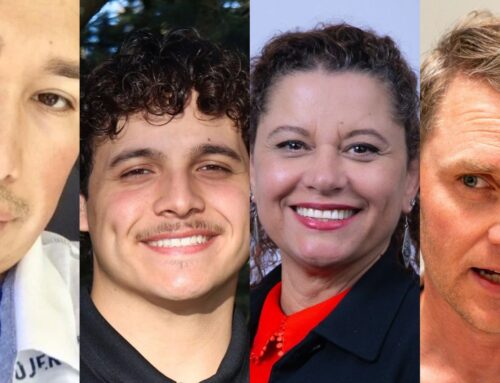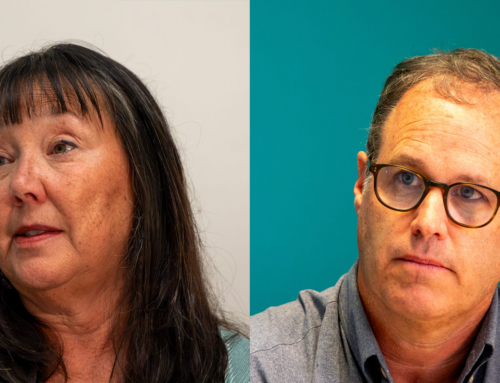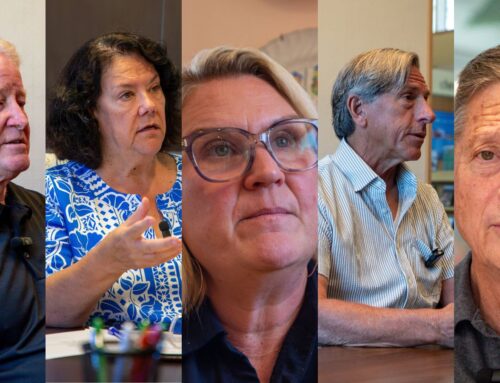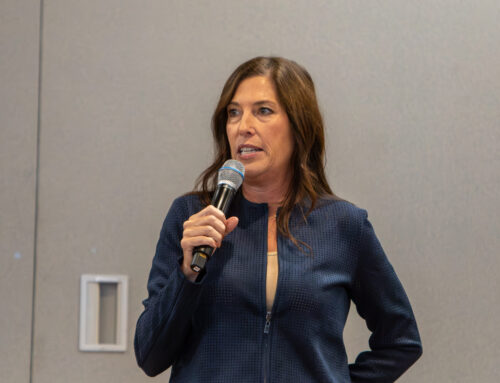
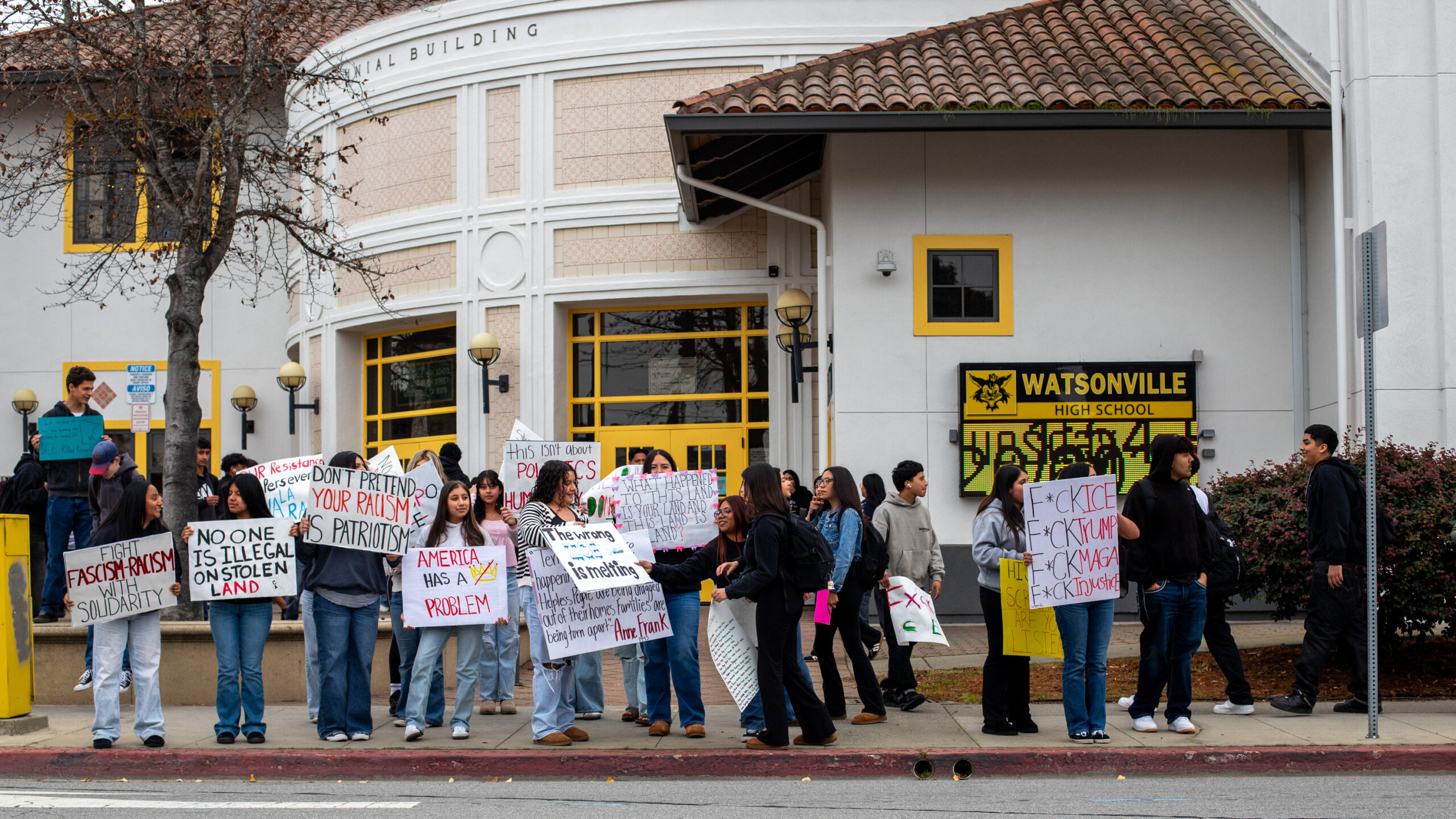
Watsonville High School students participate in a nationwide walkout on Jan. 20 against the actions of federal agents from U.S. Immigration and Customs Enforcement, or ICE. (Amaya Edwards — Santa Cruz Local/CatchLight Local)
SANTA CRUZ >> The Santa Cruz County Board of Supervisors on Tuesday unanimously approved banning federal agents from using county property for civil immigration enforcement.
The new policy covers all county-owned buildings, parking lots and open spaces. County staff plan to compile a list of county properties and decide where to put up signs notifying of the ban.
The ban is part of the county’s efforts to prepare for a possible federal immigration crack-down, amid increased enforcement across the country and rising fears throughout immigrant communities. It was brought forward by the SHIELD ad hoc subcommittee, created in January with Supervisors Felipe Hernandez and Monica Martinez. The duo have been coordinating closely with county staff and community organizations serving immigrant residents to come up with possible next steps.
“The impacts of ICE in our community are devastating to families,” Hernandez said. “It causes not only fear, but it halts the daily lives of our residents.”
In February, Watsonville city leaders enacted a similar ban, as have multiple Bay Area jurisdictions including Santa Clara County, Alameda County and San Francisco.
Supervisor Justin Cummings suggested encouraging the cities of Santa Cruz, Scotts Valley and Capitola to consider a similar ban, citing a need for uniform policy across the region so residents have the same protections across local borders.
More than a dozen people spoke on Tuesday in support of the policy and future steps to protect immigrant residents, including leaders from Watsonville Law Center and the Community Action Board.
Many wanted the county to clarify how they plan to enforce this ban if federal agents try to use county land for immigration enforcement actions.
“I’ve heard some folks talk about ‘this is the moment to stand up and speak your voice and do our part,’ and that’s true, but it’s also a time to recognize that the ordinances or policies — those are good, but the implementation factor, that’s where it’s going to count,” Bernie Gomez, programs and leadership coordinator at the MILPA Collective, a Chicano-Indigenous community support and advocacy group.
The county is working on its policy for engaging with federal immigration agents, which Cummings suggested be made available for the public.
There have been at least 25 visits by U.S. Immigration and Customs Enforcement to the county between January 2025 and January 2026. Santa Cruz Local is tracking this activity to help give communities affected by immigration enforcement more information about what’s happening in their community, and help separate facts from rumors.
Hernandez, Martinez and staff will continue to confer with local community organizations and improve on the county’s readiness, with the subcommittee presenting another update by May 19. Next steps include:
- Finalizing protocol for how county staff will engage with immigration enforcement officers and how the county will handle increased federal immigration enforcement action in the future.
- Establishing a recurring community roundtable with organizations providing direct services.
- Researching secure, non-digital communication channels for sharing accurate information with community organizations.
- Coordinating consistent facility policies and public messaging with other jurisdictions, such as cities, school districts and neighboring counties.
- Analyzing public service trends and ensuring residents don’t avoid basic need services like healthcare or food programs.
Questions or comments? Email [email protected]. Santa Cruz Local is supported by members, major donors, sponsors and grants for the general support of our newsroom. Our news judgments are made independently and not on the basis of donor support. Learn more about Santa Cruz Local and how we are funded.

B. Sakura Cannestra is a politics and governance journalist based in San Jose. She previously reported for San José Spotlight and POLITICO California. She graduated from UC Berkeley in 2023 with a Master's of Journalism, where she also got her start as an undergraduate in 2016 covering the university and city of Berkeley for the Daily Californian.