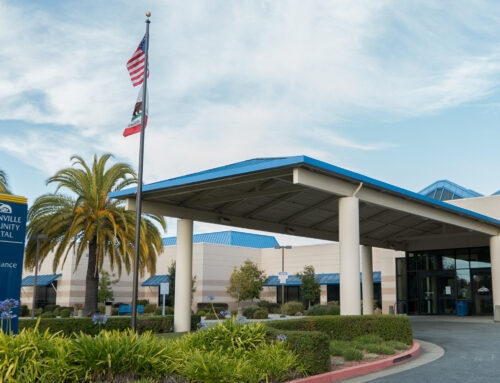
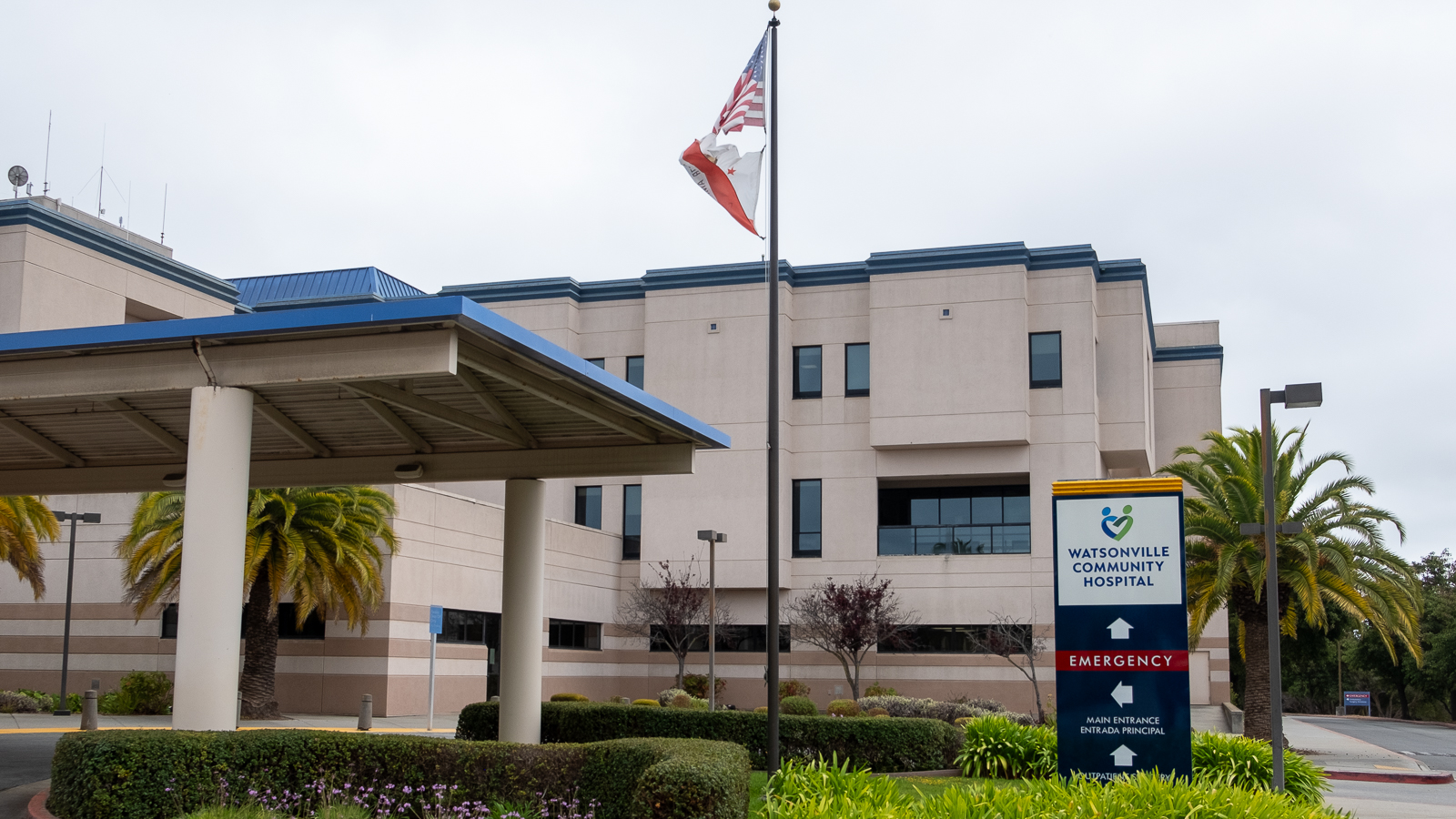
Watsonville Community Hospital is again on shaky financial footing after a steady recovery. (Nik Altenberg — Santa Cruz Local)
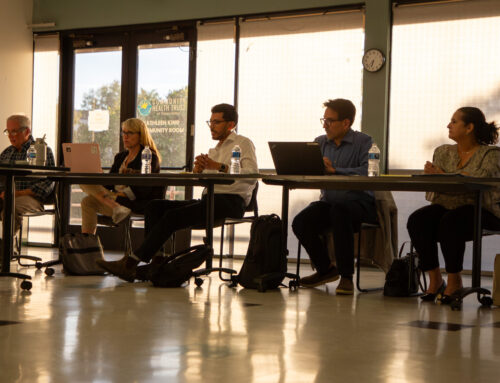
Pajaro Valley Health Care District meeting
- 5:15 p.m. Wednesday, Nov. 19 in the community room at 75 Nielson St., Watsonville and on Zoom.
- Comments can be submitted on the district website.
WATSONVILLE >> After years of steady financial recovery, Watsonville Community Hospital is again on shaky financial footing — with more than $14 million in losses so far this year — as its leaders race to find a solution to keep the region’s only full-service hospital afloat.
Challenges for the hospital include federal cuts to Medicaid, state cuts to Medi-Cal, mounting facilities maintenance costs, fewer patients in part due to immigration fears and a 2024 data breach that led to multiple lawsuits and half the staff hospitalists quitting.
The past year has been difficult, but the future could be even rockier as the state and federal health cuts begin to take effect in 2026 and 2027.
“Things are going to get more expensive, and it’s going to be more difficult for us to continue to operate,” said Tony Nuñez, Pajaro Valley Health Care District board chair. “Anything that we can do to ensure that Watsonville Community Hospital is going to be here for the long term, we need to do that.”
District leaders are looking to transfer hospital operations to Sutter, Kaiser, Dignity Health or another nonprofit health care provider, or to partner with the County of Santa Cruz or UC San Francisco.
Nuñez said they’re looking at providers that operate locally and are “going to be here in the long term and [want] to continue to invest into local health care.” The district would maintain ownership of the land and building.
The district is looking for a partner “to allow us to weather the unprecedented storm that we’re going to see in health care,” Nuñez said.
The partnership could mean a transfer of operations and management or another agreement, he said, and the district plans to have more clarity on a path forward by next month. A full partnership agreement could come by mid-2026 as the district races to bolster itself against deepening financial woes expected as Medicaid and Medi-Cal cuts are phased in beginning Jan. 1.
The 106-bed hospital serves an area with roughly 77,000 residents. If the district were to go under, state law would require the hospital to be sold or transferred to a private health care provider, and the health care district would be dissolved.
As for the data breach, Nuñez said potential litigation is serious, but it’s not the district’s biggest concern. Several lawsuits have been filed, while law firms have launched inquiries into the incident for a possible class-action suit.
A November report by Santa Cruz County Local Agency Formation Commission — a local government oversight agency — found that despite the hospital’s recent years of financial stabilization, the hospital faces long-term fiscal challenges.
The report laid out several possible paths forward for the hospital, and Nuñez said transfer of operations to a nonprofit is the main option they are pursuing.
Joe Serrano, the LAFCO’s executive officer, said the agency is most concerned with whether the hospital can sustain itself amid shifting federal and state funding.
“The No. 1 concern is financial stability,” Serrano said. “Unlike other special districts that receive property tax revenue, this health care district is heavily reliant on patient service revenue, specifically from Medi-Cal and Medicaid. And with changes at the federal level, that primary source of revenue is now up in the air.”
Hospital finances back in the red
Nuñez said they expect to lose $4 million to $8 million in annual revenue due to looming federal Medicaid cuts that could cause 28,000 Santa Cruz County residents to lose coverage by 2028.
The hospital could face additional losses if the Trump administration reduces payments from a federal program that compensates hospitals for treating a higher number of Medicaid patients.
“We’re talking anywhere from $10 million to $15 million in possible loss in annual revenue just in this upcoming year. And that’s a real risk,” he said.
Nuñez also cites challenges recruiting physicians and addressing deferred maintenance left by previous owners. While some facilities work can be paid for by the $116 million in bonds approved by voters last year, equipment like hospital beds have to be paid for out of the district’s pocket.
Under a private, for-profit owner, the hospital went bankrupt in 2021. The Pajaro Valley Health Care District, a public agency, formed in response and took control of the hospital in 2022. After voters approved a bond measure in March 2024, the district purchased the hospital building and land later that year, setting the hospital up to save millions in rent long-term.
The district improved the hospital’s finances from about a $10 million deficit in 2022 to near break-even in 2024. But as of September, the hospital’s finances show a loss of $14.8 million, according to estimates Nuñez shared with Santa Cruz Local.
The LAFCO report will be presented to the health care district at its board meeting at 5:15 p.m. Wednesday, Nov. 19 in the community room at 85 Nielson St., Watsonville and on Zoom.
Clarification: This story has been updated to clarify the expected timeline for a partnership agreement.
Questions or comments? Email [email protected]. Santa Cruz Local is supported by members, major donors, sponsors and grants for the general support of our newsroom. Our news judgments are made independently and not on the basis of donor support. Learn more about Santa Cruz Local and how we are funded.

Evan Quarnstrom holds a degree in International Business from San Diego State University. He grew up in midtown Santa Cruz.