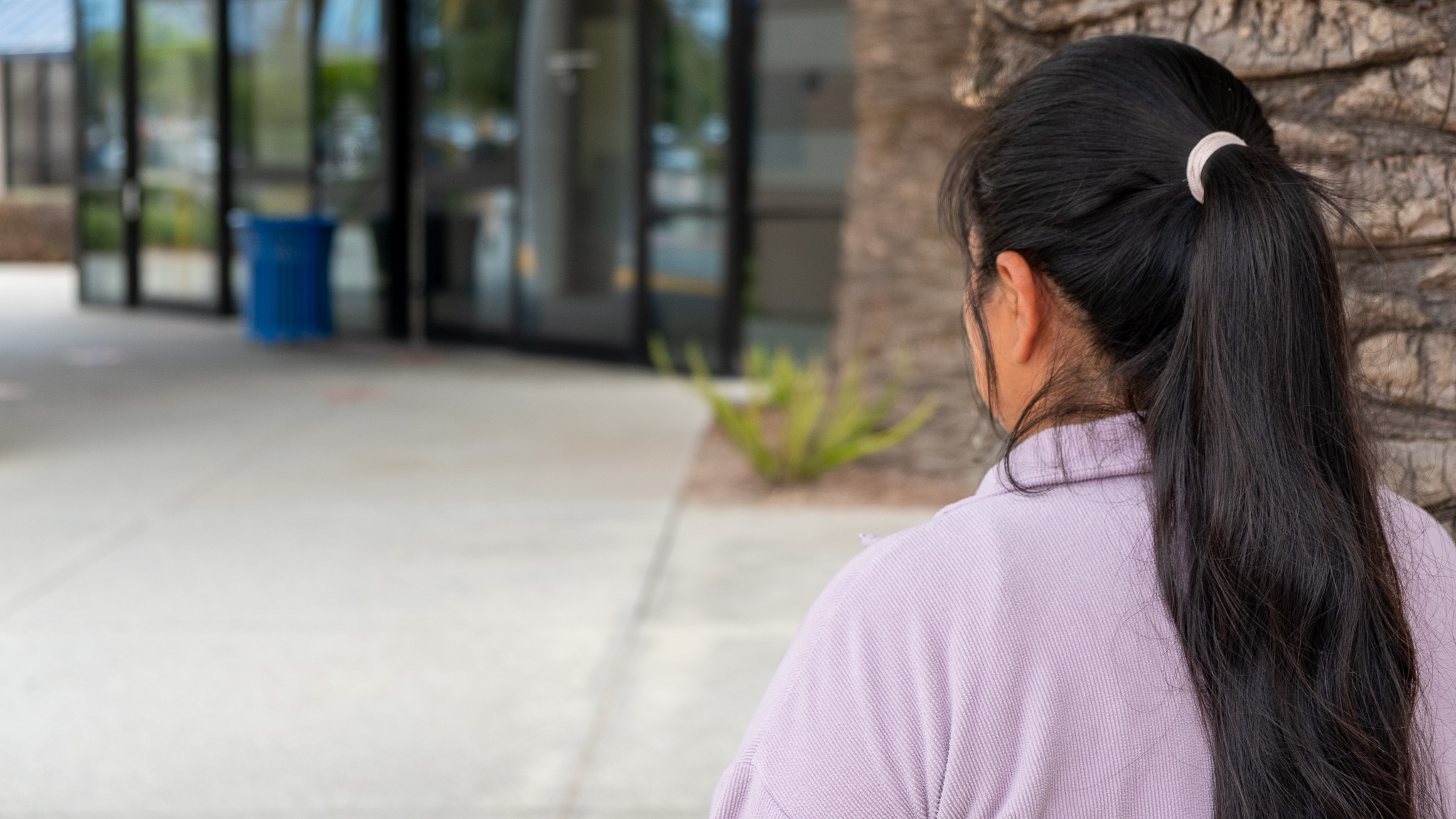
Sofia* poses for an anonymous portrait in front of Watsonville Community Hospital. She trained to volunteer as a doula to support Indigenous, Mixtec-speaking women through pregnancy and birth. (Nik Altenberg — Santa Cruz Local)
WATSONVILLE >> Hundreds of farmworkers in the Pajaro Valley came from poor areas of southern Mexico where Indigenous languages like Mixtec, Zapotec and Triqui are spoken. Here, many face poverty, cultural differences and a lack of language access that can be barriers to adequate health care.
For some women coming to give birth at Watsonville Community Hospital, they arrive alone because their spouses cannot afford to take a day off work. They go through the birth or cesarean section procedure without a doctor or nurse who speaks their language. Instead, they are offered an interpreter on speaker phone.
A new initiative aims to close this gap by bringing volunteer Mixtec doulas to Watsonville Community Hospital to support pregnant, Mixtec-speaking patients in the labor and delivery department — but challenges remain to implementing the program.
Earlier this year, 12 Mixtec women farmworkers completed a four-day training with the goal of volunteering at the hospital, fostering greater maternal care and birthing knowledge within their communities, and serving as advocates and promotoras, or community health workers.
A doula provides physical, emotional and logistical support, but does not have formal obstetric training.
The training centered Indigenous birthing knowledge and personal experience, said Maria Ramos Bracamontes, who traveled to Oaxaca to learn from Indigenous midwives about traditional birthing knowledge. The women in the training also shared their own knowledge, some whose own mothers and grandmothers were midwives. She led the doula training as a project of Campesina Womb Justice, a mutual aid initiative she founded to advocate for Indigenous women farmworkers in Santa Cruz County.
Bracamontes said a doula is an acompañante, or companion, throughout pregnancy, birth and postpartum. This can mean giving massages for a sore lower back or belly, teaching exercises to prepare the body for birth, guiding the breath during birth and advocating for the patient’s needs and desires within health care institutions.
Bracamontes is a certified nurse midwife who works at Watsonville Community Hospital.
She began working on this initiative at the hospital several years ago to bring bilingual Spanish-speaking doulas to volunteer in the labor and delivery department. That program is just getting off the ground, with two volunteer doulas working regular shifts.
Now, she’s hoping to expand it to bilingual Mixtec-speaking doulas.
“We know that the best care for anyone in any setting is from their own community,” said Bracamontes.
For every pregnant Mixtec patient, and especially for women who arrive alone at Watsonville Hospital, the doulas could serve as an advocate and interpreter, and bridge a crucial gap in language access and health equity. But, as many of the women are not authorized to be in the country, the path towards implementing the program is unclear.
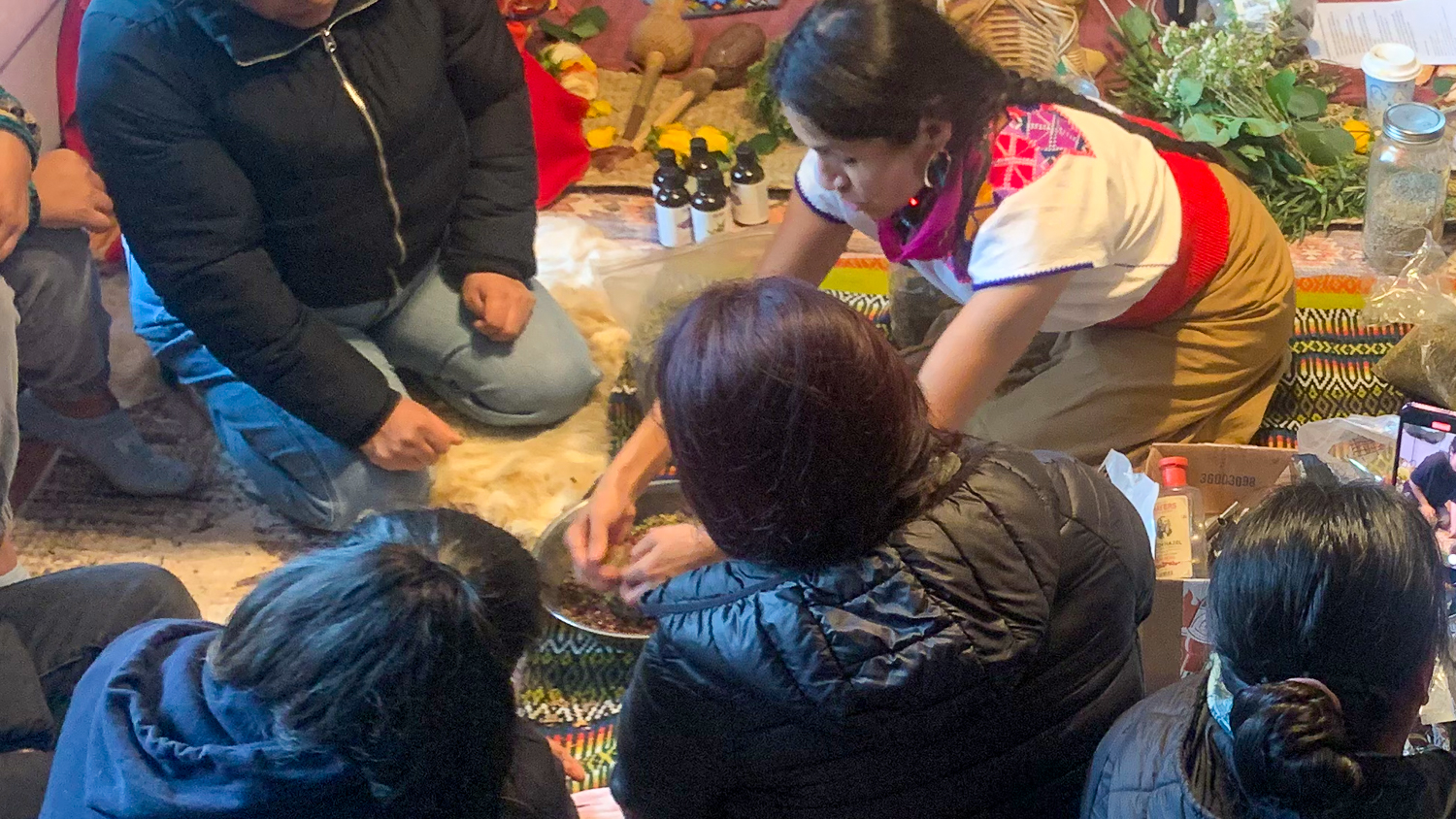
Maria Ramos Bracamontes teaches about herbal medicine at a doula training for Mixtec farmworkers in February. (Maria Ramos Bracamontes — Contributed)
‘Many Mixtec women suffer a lot’
Sofia* is one of the Mixtec women who completed the doula training with Bracamontes.
“That’s very important, that we women have someone to support us, because if you don’t have anyone, you feel scared and and you’re alone in the hospital,” said Sofia*, a 38-year-old Mixtec farmworker who lives in Watsonville. Santa Cruz Local is using a pseudonym because as an unauthorized immigrant, she asked that her name not be used.
Sofia grew up in a Mixtec village in Oaxaca and like many women farmworkers, she has suffered the hardship of working in the fields while pregnant, and navigating the U.S. health care system without speaking the language.
“Many Mixtec women suffer a lot,” she said in Spanish. “They haven’t had support.”
Spurred to action from her own personal experiences, Sofia said she is eager to volunteer, and hopes the hospital can find a way to make the program work. The main barrier, said Watsonville Hospital spokesperson Nancy Gere, is that the background checks mandated by hospital policy require a Social Security Number — which unauthorized immigrants do not have.
Katie Gabriel-Cox, an OB/GYN physician at Watsonville Hospital and board member of the Pajaro Valley Health Care District, said the hospital is committed to the program and “we always find a way to make it work.”
Gabriel-Cox said the hospital could look to other health care facilities in the state for how they’ve navigated similar roadblocks involving background checks. Doulas could also connect with patients outside the hospital, she said, and come in as the patient’s support person.
Bracamontes said that is already happening to a degree, but implementing the full program within the hospital would ensure more women have access to the service.
“Whatever it takes to get the care to the patient is the most important,” Bracamontes said. She added that another major barrier is poverty, and she hopes to find a way to pay the women for their time, since volunteering unpaid hours outside of work is an added challenge.
She said she received a $15,000 grant from Seventh Generation Fund for Indigenous Peoples and the women received a $600 stipend each for the training.
The women work in Pajaro Valley fields or care for children while their partners work in the fields, usually for about $15 an hour. Sofia said she was making about $2,000 a month working in the fields and is currently a stay-at-home mom, and she said it’s hard to make ends meet with rising inflation.
Despite any difficulty she has providing for her family, Sofia said she is committed to being a volunteer doula to help other Mixtec women.
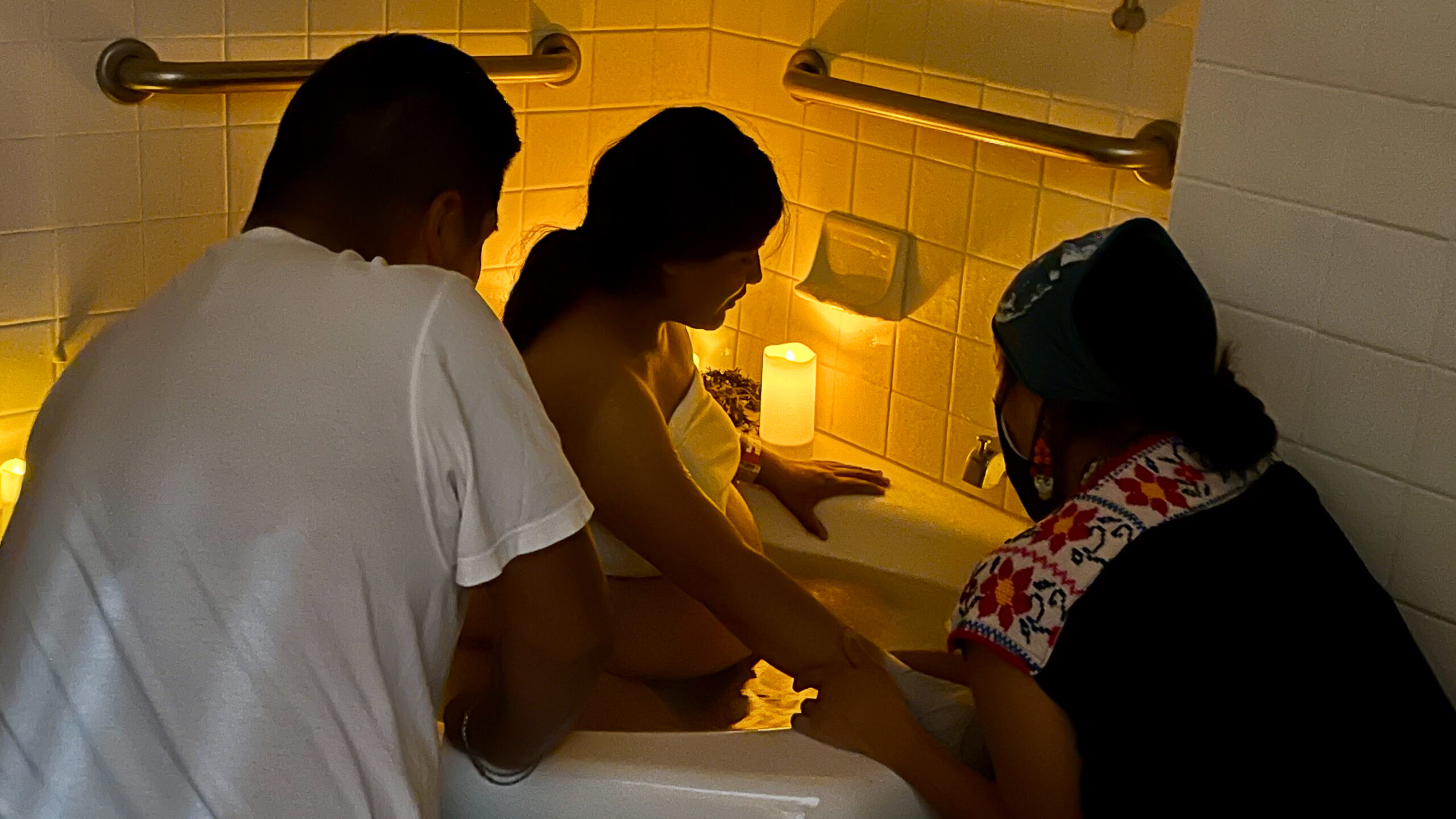
Maria Ramos Bracamontes works as a certified nurse midwife at Watsonville Community Hospital. This still is from the documentary film The Long Labor. (Consuelo Alba — Contributed)
‘Whatever God wants, but I would like to help women’
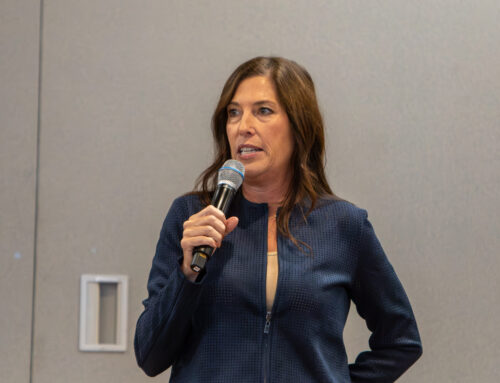
Marlene Kleffel is a private-practice doula who began volunteering at Watsonville Hospital in May. She and one other volunteer doula work regular shifts in the labor and delivery department, and two others drop in when they have time.
Kleffel speaks English and Spanish, and said she has at times felt bad for patients that speak Mixtec who can’t easily communicate with doctors while giving birth. Watsonville Hospital does not employ Mixtec translators, and instead uses an over-the-phone interpretation service.
“When you can’t communicate with someone about how you’re feeling, then it becomes a very scary experience,” she said, adding that Spanish speakers request her assistance as a doula at the hospital more often than English speakers.
Kleffel said when she finishes a shift, she will check in with all the patients she’s been assisting and give them her card. One time, she said, a Spanish-speaking woman who was in labor called her to come back to the hospital because the communication was so much easier.
“Throughout the labor, where, if there’s nobody there that speaks Spanish, they have to have a translator on the phone — I can’t imagine what that must feel like for everybody,” Kleffel said. “We’re trying to build a good line of communication so that every person can have the birth experience that they want, that they deserve.”
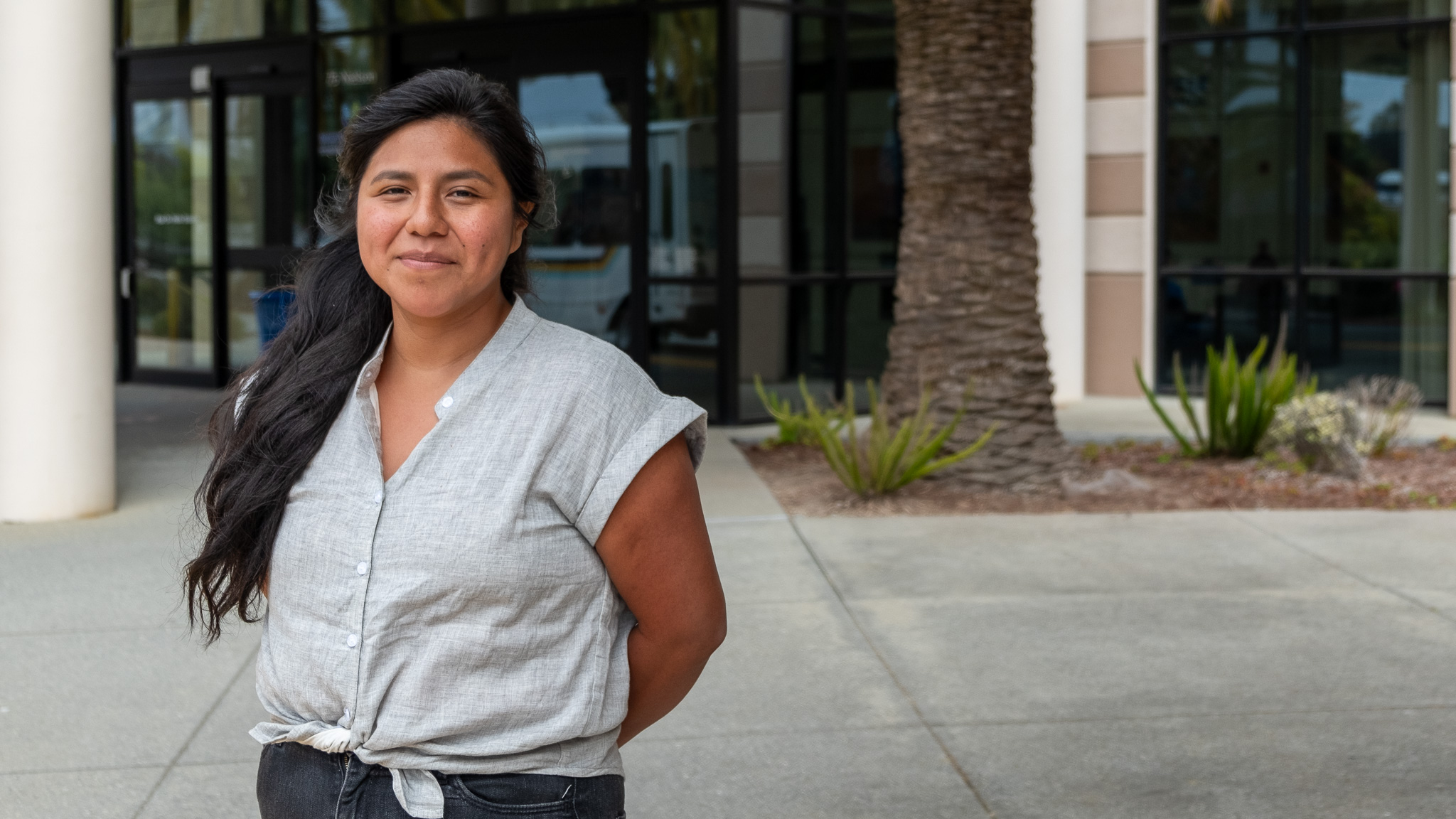
Marlene Kleffel is a doula who volunteers at Watsonville Community Hospital about 12 hours per week. She has Mixtec family in Oaxaca. (Nik Altenberg — Santa Cruz Local)
Sofia, the Mixtec doula, said Bracamontes was her midwife at the hospital and helped her gain the confidence to have her birth the way she wanted, without surgery. Sofia said she wanted to have her fourth child naturally, after a difficult recovery from her second cesarean section, but didn’t feel confident in her ability before meeting Bracamontes.
“She gave me so much, I don’t know — confidence. So much love,” Sofia said.
Sofia described her struggles in recovery from her second cesarean section.
“With the second one, I really suffered because I had to take care of the other baby and I couldn’t stand,” she said. “I didn’t have anyone to help me. I had my husband, but he has to work, and it’s very difficult. That’s also why I wanted to have my baby naturally.”
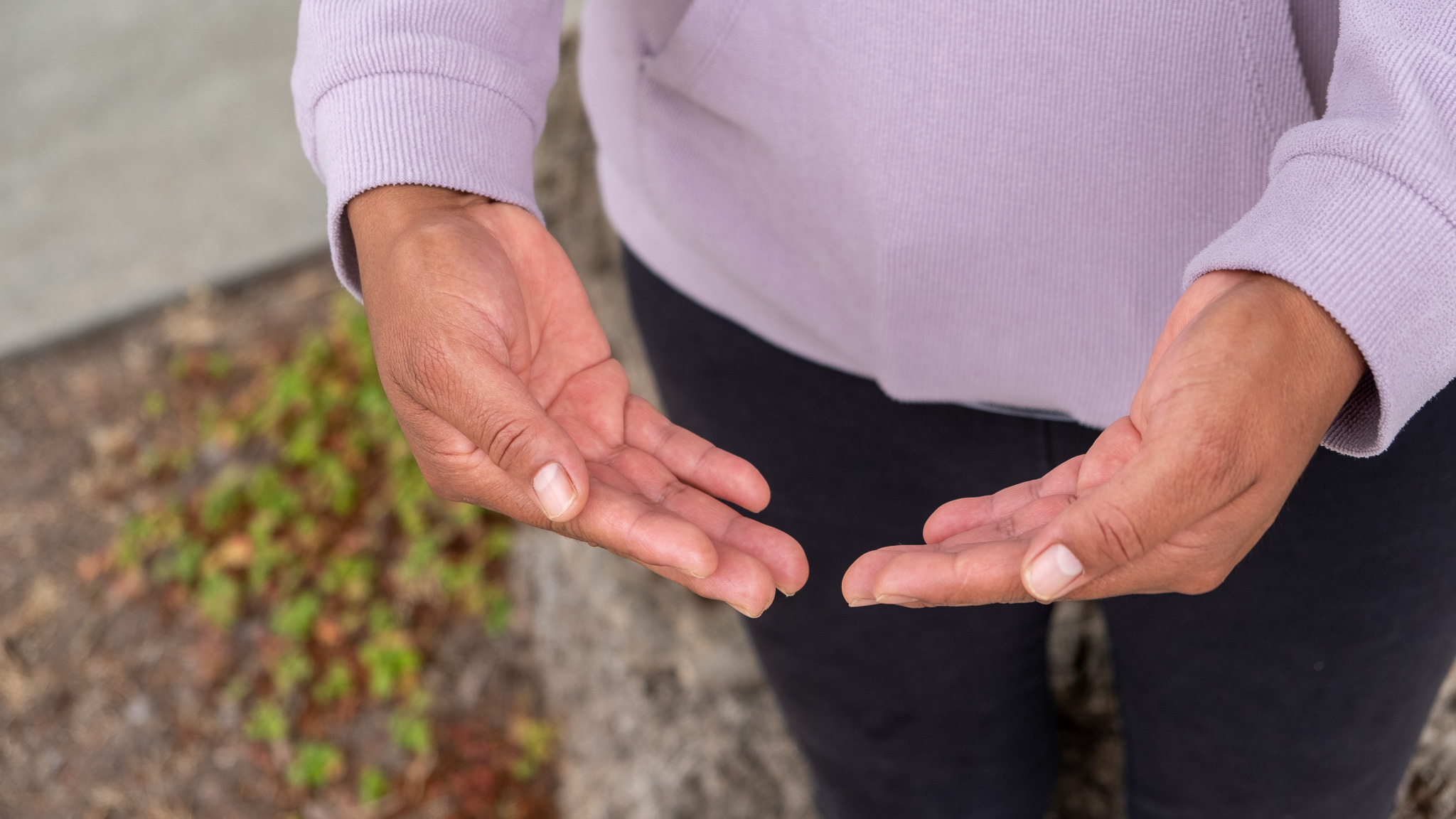
When asked what tools or implements she uses in the work of a doula, Sofia said ‘just my hands.’ (Nik Altenberg — Santa Cruz Local)
The child is now five months old and she said she felt proud to have birthed him without surgery.
The group of Mixtec women who trained as doulas continue to meet, and often speak of the struggles they face in their day-to-day lives.
“They share their experiences of how they have struggled to have their babies, they haven’t had support,” Sofia said.
Bracamontes said her long-term vision is to open a birth center in Santa Cruz County for Indigenous women and farmworkers to provide the culturally competent, multilingual care that is shown to lead to better health outcomes. The main barrier is securing grants or other funding, she said.
When asked whether she would like to work as a doula rather than in the fields, Sofia said, “Whatever God wants, but I would like to help women.”
Read more
- Federal Medicaid cuts could threaten Watsonville hospital’s revival — July 18, 2025
- How pesticides endanger pregnant farmworkers in Pajaro Valley — July 8, 2025
Questions or comments? Email [email protected]. Santa Cruz Local is supported by members, major donors, sponsors and grants for the general support of our newsroom. Our news judgments are made independently and not on the basis of donor support. Learn more about Santa Cruz Local and how we are funded.
Nik Altenberg is a bilingual reporter and assistant editor at Santa Cruz Local. Nik Altenberg es reportera bilingüe y editora asistente para Santa Cruz Local.