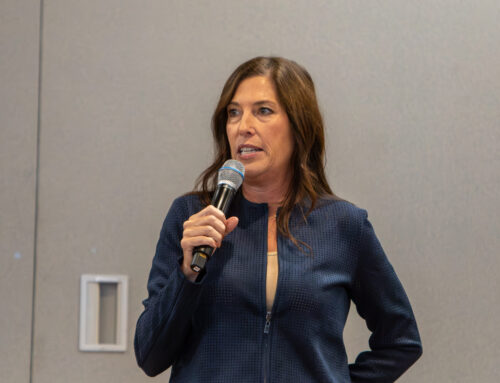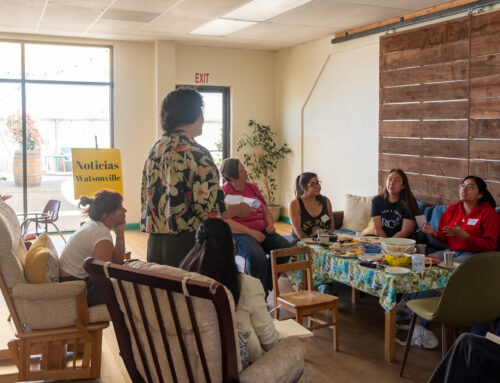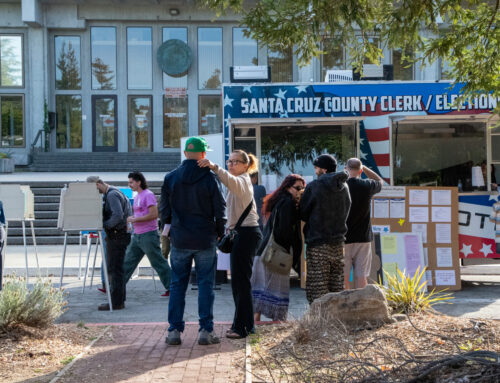

Volunteers pack boxes and bags of fresh produce for immigrant families at Resurrection Church in Aptos on Aug. 20, 2025. (Amaya Edwards —Santa Cruz Local/CatchLight Local)
SANTA CRUZ >> After arriving in Santa Cruz in 2021, Alfredo and his family finally felt free to go to the park or the beach without fear.
He, his wife and his then two-year-old child fled their home in El Salvador in 2018 and traveled, by bus and on foot, more than 3,000 miles. Staying no longer felt like an option.
“Things were never going to change regarding violence, insecurity, robbery, extortion,” he said in Spanish. “I wanted something better for my daughter.”
Political instability and gang violence in El Salvador can be traced in part to the fallout from a 12-year civil war where U.S.-trained paramilitaries carried out civilian executions, kidnappings and torture in a conflict that left more than 70,000 dead and led a fifth of the country being forced to leave their homes.
After arriving at the border, Alfredo’s family asked U.S. immigration officials for asylum under international law — the first step towards permanent residency and citizenship. He requested to be identified for his middle name because of concerns about immigration enforcement. Four years later, he still doesn’t have an answer, or an appointment.
But, he said, “I hope they don’t give us an appointment soon.” As asylum cases increasingly end in arrest and deportation, he prefers that his family stays in limbo.
Alfredo’s family is one of millions who have come to the U.S. escaping war, violence or persecution. Amid growing concerns around immigration enforcement, Alfredo and many like him have found support locally through a network of volunteers, many of whom host asylum-seekers in their homes.
The path towards legal status has always been difficult, but since the beginning of President Donald Trump’s second term it has grown longer and less certain, said Yajira Lopez, a legal fellow with nonprofit Community Action Board’s Santa Cruz County Immigration Project.
In the coming months and years, she said, “we will be seeing more people facing deportation.”.
Welcoming Network
On a recent Wednesday, Alfredo and a dozen other asylum seekers visited a monthly food distribution at an Aptos church. Around eight volunteers, mostly senior women, buzzed about to fill to-go bags and boxes with produce.
There were moments the distribution looked like a family reunion, with lots of hugs and catching up while loading up cars with food. Many of the asylum seekers and volunteers were former housemates.
Several years ago “I did the crazy thing,” said Mariam Stombler, co-founder of the Santa Cruz Welcoming Network and a former lawyer for the County of Santa Cruz. She invited an Afghan family of 13 to temporarily stay in her Santa Cruz home. Now, they fondly call her Bibi, or grandmother, she said. Stombler and other members of the Welcoming Network have hosted dozens of families, including those fleeing gang violence in El Salvador, the war in Ukraine and Taliban rule in Afghanistan.
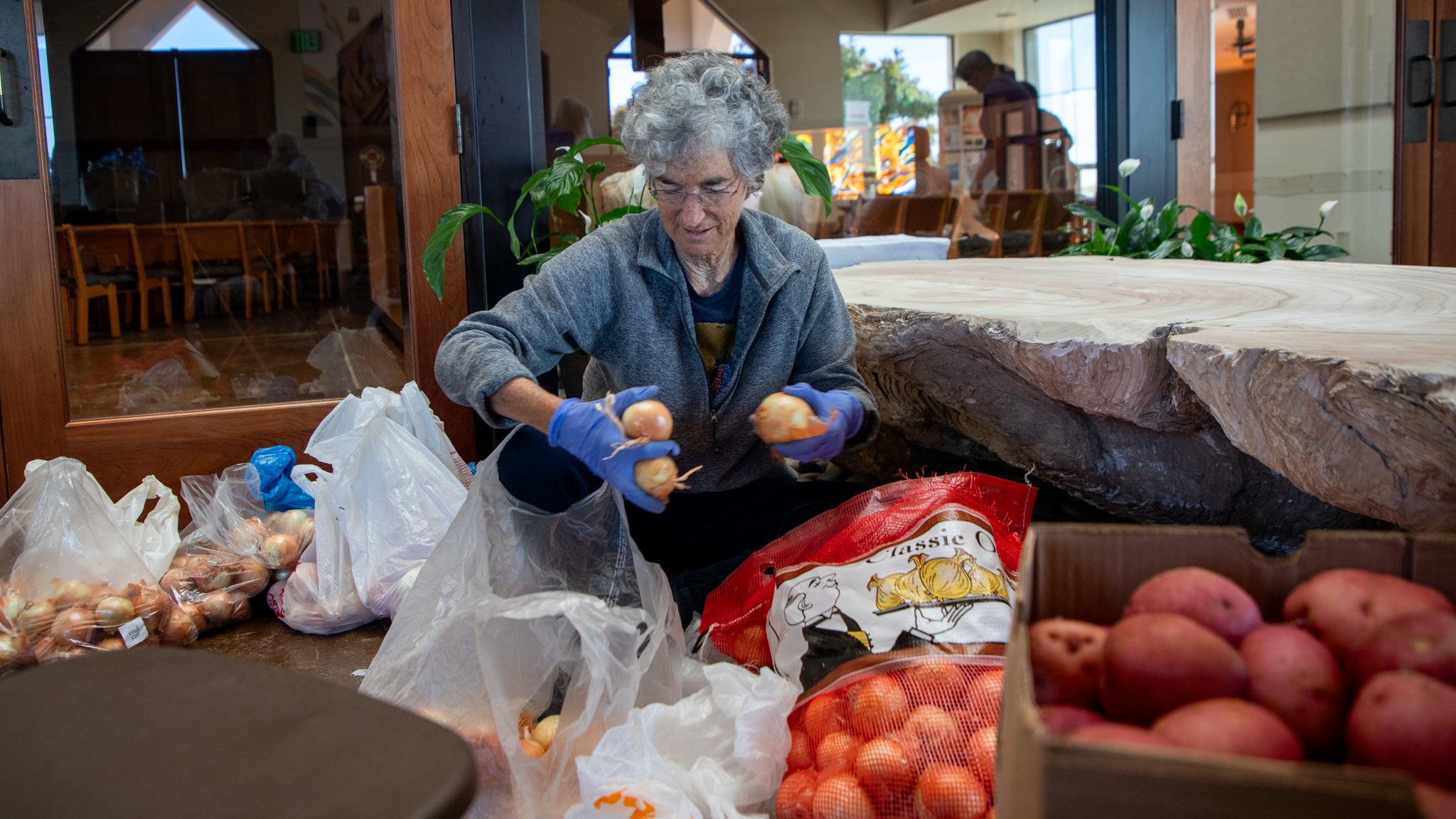
A volunteer loads food into a bag at a food distribution on Aug. 20. (Amaya Edwards — Santa Cruz Local/CatchLight Local)
Besides offering housing and food, volunteers also accompany asylum-seekers to immigration meetings, court dates and errands like school registration and doctors appointments, which can be difficult to navigate alone due to language barriers and cultural differences.
Since its founding in 2019, the group has helped about 40 families — 121 people in total, including 49 children. It has been a lifeline for people like Mari, who fled Nicaragua in 2018 because of political violence and discrimination as a trangender woman. Mari asked to use her first name only because of her immigration status.
Mari had no family or other connections in California, but a nonprofit that helped her cross the border and file for asylum in 2022 contacted the Welcoming Network. A 16-hour bus ride later she arrived in Santa Cruz. A volunteer hosted her for five months, and helped Mari enroll in English classes and find a job.
In 2023, Mari was granted asylum. Now, she awaits permanent residency, and hopes to soon start studying for the U.S. citizenship exam. She also plans to study psychology and become a counselor in hopes of helping other LGBTQ+ immigrants and refugees.
“Every day, there are many people in the community who cross the border and have also been harassed in our countries, so they come with a lot of trauma,” she said in Spanish. No organizations near Santa Cruz have been able to connect her with a Spanish-speaking therapist, she said.
Mari is one of a handful of Welcoming Network participants who have received asylum, Stombler said. Most are still waiting, many with mounting anxiety.
Since the start of the second Trump administration some participants, fearing deportation, have asked Stombler if it’s safe to attend their check ins with immigration officials or hearings in immigration court. “Even as a friend, I don’t know what to tell you,” Stombler said she has told people. “I don’t know what I would do.”
Federal immigration changes
Historically, asylum seekers were rarely deported. Today, that’s no longer the case.
The first step for many asylum seekers is an interview with U.S. Citizenship and Immigration Services. Those interviews mostly end in approval, which puts people on the path to permanent residency and citizenship, or denial, which leaves people as unauthorized immigrants.
Before Trump’s federal immigration enforcement crackdown, “it wasn’t a good thing that a case would be denied,” said Lopez, the legal fellow. “But generally speaking, people weren’t as prone to being ordered deported or referred to immigration court.”
Get immigration legal help
- Experts recommend to only work with a qualified nonprofit organization or a private attorney recommended by a nonprofit. See a list of nonprofits and recommended private attorneys from Santa Cruz County.
- Notarios, or notaries, are not legally able to handle immigration cases.
- Read more at Santa Cruz Local’s immigration resource page.
Now, it has become common for immigration agents to wait in courtroom hallways, ready to detain people whose asylum cases were dismissed. One woman was recently detained in San Francisco immigration court though the judge had not moved to dismiss her case.
As immigration becomes increasingly politicized, more people are facing court cases where they must argue both for asylum and against deportation.
Some asylum-seekers have been removed from the country without the opportunity to even argue their case. People who have entered the U.S. within the last two years could face “expedited removal,” a lower barrier to deportation which previously applied only to people within 100 miles of the border who had been in the country for fewer than 14 days.
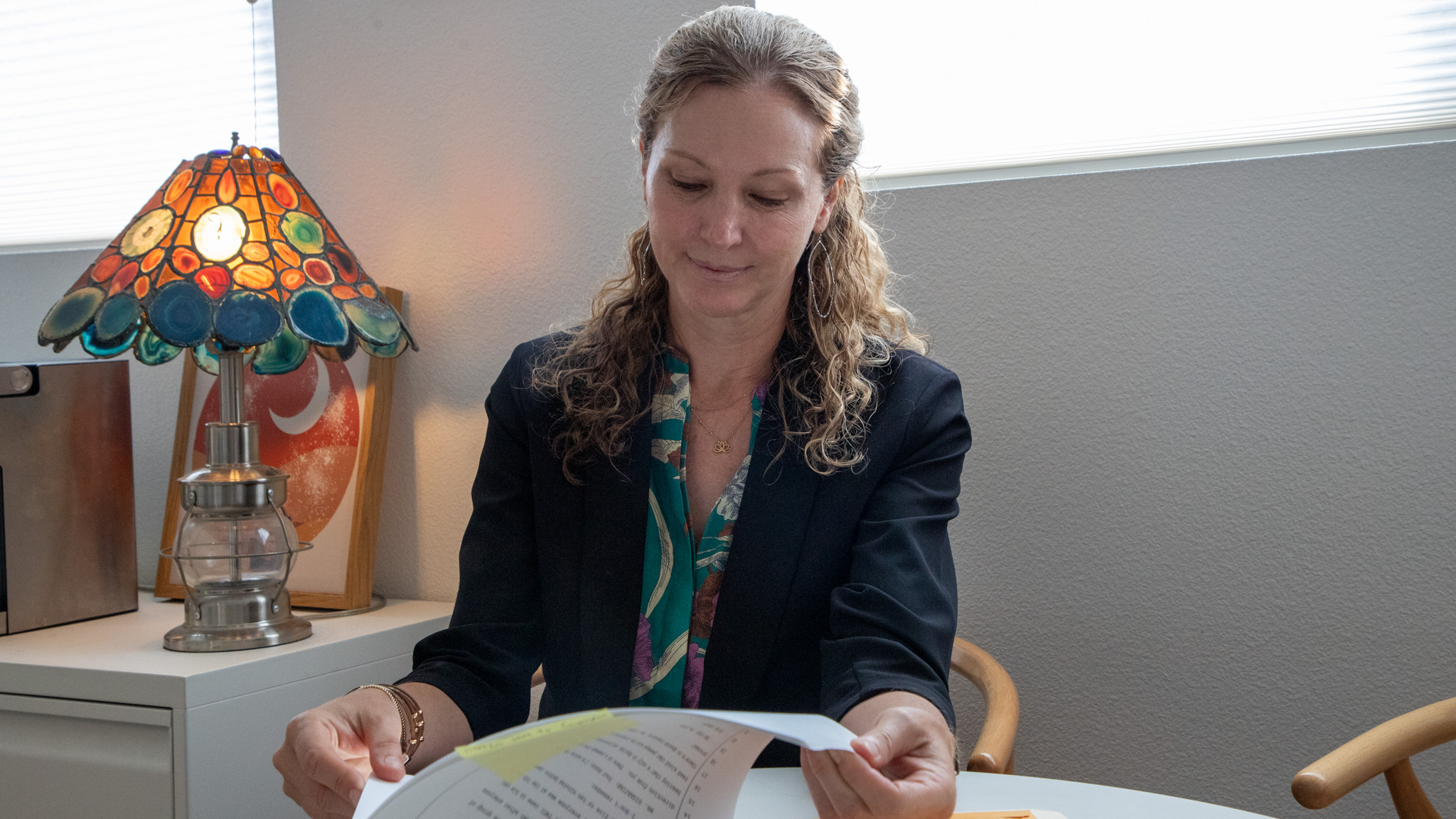
Santa Cruz County Public Defender Heather Rogers said she wants more immigration lawyers in her office. (Amaya Edwards — Santa Cruz Local/CatchLight Local)
Despite the fear and uncertainty, “we always let people know that they have to show up, regardless of if they have an attorney or not,” Lopez said. “We don’t want them to be ordered deported just because they failed to show up.”
Longer timelines, few lawyers
Within the last 10 years, a mounting backlog of asylum cases have stretched waiting times for interviews and trials. Recent changes, including the firing of some immigration judges, have compounded the problem, Lopez said.
There were more than 1.4 million affirmative asylum applications pending as of Dec. 31, 2024.
Many Welcoming Network participants have been waiting for interviews for five years or longer, Stombler said.
The length and complexity of the process can make finding a lawyer difficult and costly. Jeraline Singh Edwards, a Santa Cruz-based immigration lawyer, said she limits the number of asylum cases she takes on because the process takes so long. Right now, she has fewer than 10.
The Santa Cruz County Immigration Project also limits its cases, and only represents asylum-seekers facing deportation.
“Our funding doesn’t really cover the exorbitant amount of work that these cases take,” Lopez said. Because Santa Cruz is “a legal desert” without enough immigration lawyers, many people use notaries not legally qualified to take on immigration cases, she said.
Although Alfredo said El Salvador has become safer, “there are still many things missing for my country to become a more prosperous country—one with opportunities.”
With two children born here as U.S. citizens, deportation would face him with a choice between taking them back to El Salvador or letting them stay in Santa Cruz with his wife’s family.
“I’m doing things right,” he said. “I hope this country recognizes me one day and can give me a chance to be here.”
For now, he waits.
Editor’s note: We have updated this story to refer to Alfredo only by his middle name. This change was made at his request to help protect him and his family during the immigration process.
Support Santa Cruz County asylum-seekers
- The Welcoming Network is looking for volunteers to accompany asylum-seekers to appointments, help distribute food and otherwise support asylum-seekers. They are also looking for people to host asylum-seekers in their home, or offer a home for free or below-market rent.
- The Community Foundation of Santa Cruz County has a fund that collects donations to distribute to nonprofits working with immigrants, including the Community Action Board, Catholic Charities, and Community Bridges. The welcoming network also accepts donations.
Questions or comments? Email [email protected]. Santa Cruz Local is supported by members, major donors, sponsors and grants for the general support of our newsroom. Our news judgments are made independently and not on the basis of donor support. Learn more about Santa Cruz Local and how we are funded.

Jesse Kathan is a staff reporter for Santa Cruz Local. They hold a master's degree in science communications from UC Santa Cruz.