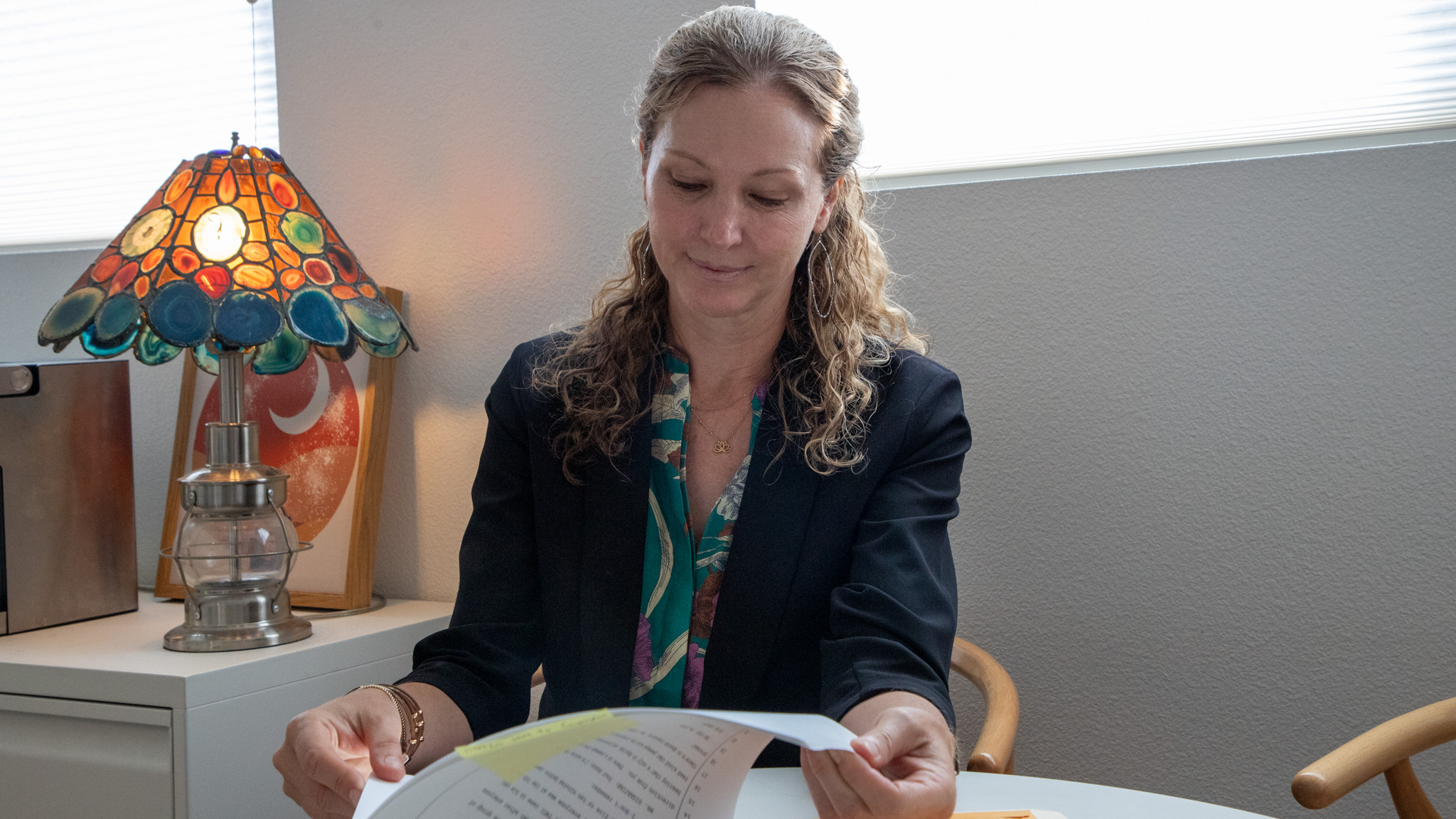
One public defender handles immigration work, Santa Cruz County Public Defender Heather Rogers said. (Amaya Edwards — Santa Cruz Local/CatchLight Local)
SANTA CRUZ >> As federal immigration enforcement has ramped up in recent months, some California counties are investing more money in legal defense for immigrants. Santa Cruz County Public Defender Heather Rogers wants to add immigration lawyers to her office, but the county’s finances remain a barrier.
Rogers said she wants to create an immigration unit to help residents with asylum and green card applications, provide deportation defense and offer other legal services.
“Immigration defense should be like criminal defense. If you can’t afford an attorney, you should be appointed one,” Rogers said. Immigration courts are federal, and the closest one to Santa Cruz County is in San Francisco.
Alameda County Supervisors in March dedicated $1.3 million to the immigration unit in its public defender’s office. In 2014, Alameda County was the first in the state to launch a deportation defense unit. The unit grew to six immigration attorneys when the first Trump administration started in 2017.
“It is essential to provide these services,” Alameda County Deputy Public Defender Jeff Chorney wrote in an email. Since Trump took office in January, the immigration unit’s workload has increased. “We’ve had clients illegally detained because of their immigration status. We’re also seeing the administration trying to speed up removal cases.”
The Santa Cruz County Public Defender’s Office has one immigration lawyer, Ajla Azevedo-Husic, who spends about 60% of her time on immigration-related work.
“If we could even double that capacity or triple that capacity, I think the sky is the limit,” Rogers said. The Public Defender’s Office handles about 6,000-8,000 cases per year, she said, and about 10% of those cases involve noncitizens.
“It’s a lot for one person, and I know that we could do so much better if we had more capacity,” Rogers said. She said her team does “a lot with a little.” Santa Cruz County public defenders are county employees rather than attorneys contracted from outside law firms.
The office provides several immigration services, including:
- Informing residents accused of crimes of the potential immigration consequences of convictions or of taking a plea deal.
- Screening youths for eligibility for Special Immigrant Juvenile Status, which provides temporary protection from deportation.
- Record clearance to get crimes reduced, expunged or sealed to avoid immigration consequences.
Santa Cruz County residents must pay out of pocket or seek help from local nonprofits for help with asylum petitions, residency or citizenship applications, deportation defense, legal representation in a federal immigration court and many other services.
While local nonprofits provide those services at low or no cost, including Community Action Board and the Catholic Charities Diocese of Monterey, having immigration lawyers within the public defender’s office would have advantages, said Rogers.
“What’s different about the county government space and our department is that we are much more stable,” she said, while nonprofits often rely on grants and yearly fundraising. “If we commit to this work, if we commit to serving this community, it becomes a part of these well-established offices where we make a living wage,” Rogers said. “We can actually attract skilled talent who can live in the most expensive place in the world.”
The public defender’s office is also better poised to provide services to people who are already their clients.
“We’ve already done months and months of work on these cases and so adding this to services we’re already providing creates economies of scale that I think are smart and make sense from a financial perspective,” Rogers said.
Early in the second Trump administration, Santa Cruz County leaders held a press conference to announce $100,000 to be donated to local immigrant rights nonprofits. Community Bridges Executive Director Ray Cancino said that was a good start, but county investment in immigrant services shouldn’t stop there.
“We need to invest the dollars equally in terms of the measured impact that we hope to see in our community, and not be fixated on performative measures or performative investments,” Cancino said.
Community Bridges is a nonprofit that runs community resource centers across the county and serves many immigrant families in the Pajaro Valley.
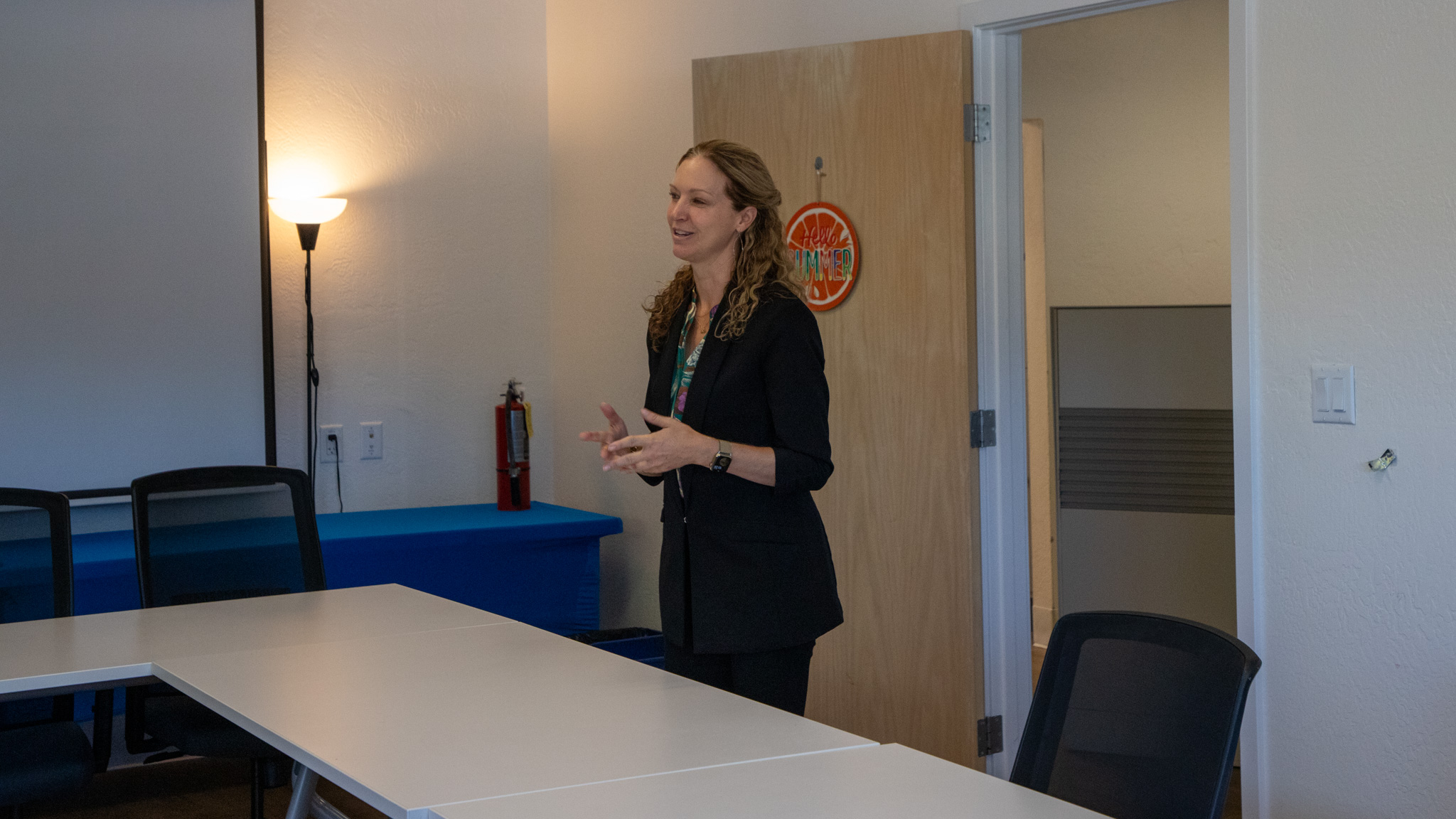
Heather Rogers speaks at the office of the public defender at 420 May Ave. in Santa Cruz. (Amaya Edwards — Santa Cruz Local/CatchLight Local)
In collaboration with several nonprofits, the Santa Cruz County Public Defender’s Office hosted a free asylum clinic in July and one last year. The clinics are not advertised, Rogers said, because nonprofit partners are prioritizing people with the most urgent cases from a waitlist of “dozens and dozens” of individuals and families.
The first clinic served about 30 individuals and 10 families. The second one served eight individuals and two families, Rogers said. “It’s a real drop in the bucket of what’s needed,” she said.
“We bring together immigration practitioners and volunteers to actually spend a whole day working with them to get those [asylum] petitions filed,” Rogers said. “Some of these people had immigration appointments the next week and had they gone in with nothing, it’s possible they would have been deported.”
A strained budget
Though Rogers would like an immigration unit, she said county funding would be challenging. The county had a tough budget year and more belt-tightening could be on the horizon as federal policies create economic uncertainty. County leaders are also bracing for more costs because the federal budget adopted July 4 slashed social services from food assistance programs to Medicaid.
The Public Defender’s Office immigration lawyer was paid more than $200,000 including benefits in 2023, according to Transparent California. Rogers said she hadn’t thought about how many immigration lawyers would make sense to have, because “there’s never been any sense that there was money to do this.”
Santa Cruz County Supervisors’ positions on more immigration attorneys were not clear this week. Supervisors Justin Cummings and Felipe Hernandez were on vacation, Monica Martinez was unavailable for comment, and Manu Koenig and Kim De Serpa did not respond to multiple requests for comment.
Rogers said she’d like to see Santa Cruz County follow suit of “the offices around the state who are really stepping up and showing a true, robust commitment to this particular community.” She reiterated that the county is doing the most it can with a strained budget.
“Ideally, we could fund an immigration unit outside the General Fund, through philanthropy or grants. That’s how units in some other public defender offices in California started their units,” Rogers wrote in an email. “It would be great to pilot the same thing here.”
Read more
- Tips for Dreamers in Santa Cruz County as DACA faces uncertain future — Feb. 25, 2025
- Immigration resources in Santa Cruz County — February 2025
Questions or comments? Email [email protected]. Santa Cruz Local is supported by members, major donors, sponsors and grants for the general support of our newsroom. Our news judgments are made independently and not on the basis of donor support. Learn more about Santa Cruz Local and how we are funded.

Nik Altenberg is a bilingual reporter and assistant editor at Santa Cruz Local. Nik Altenberg es reportera bilingüe y editora asistente para Santa Cruz Local.