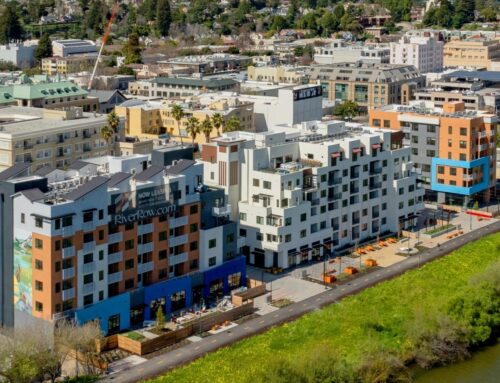
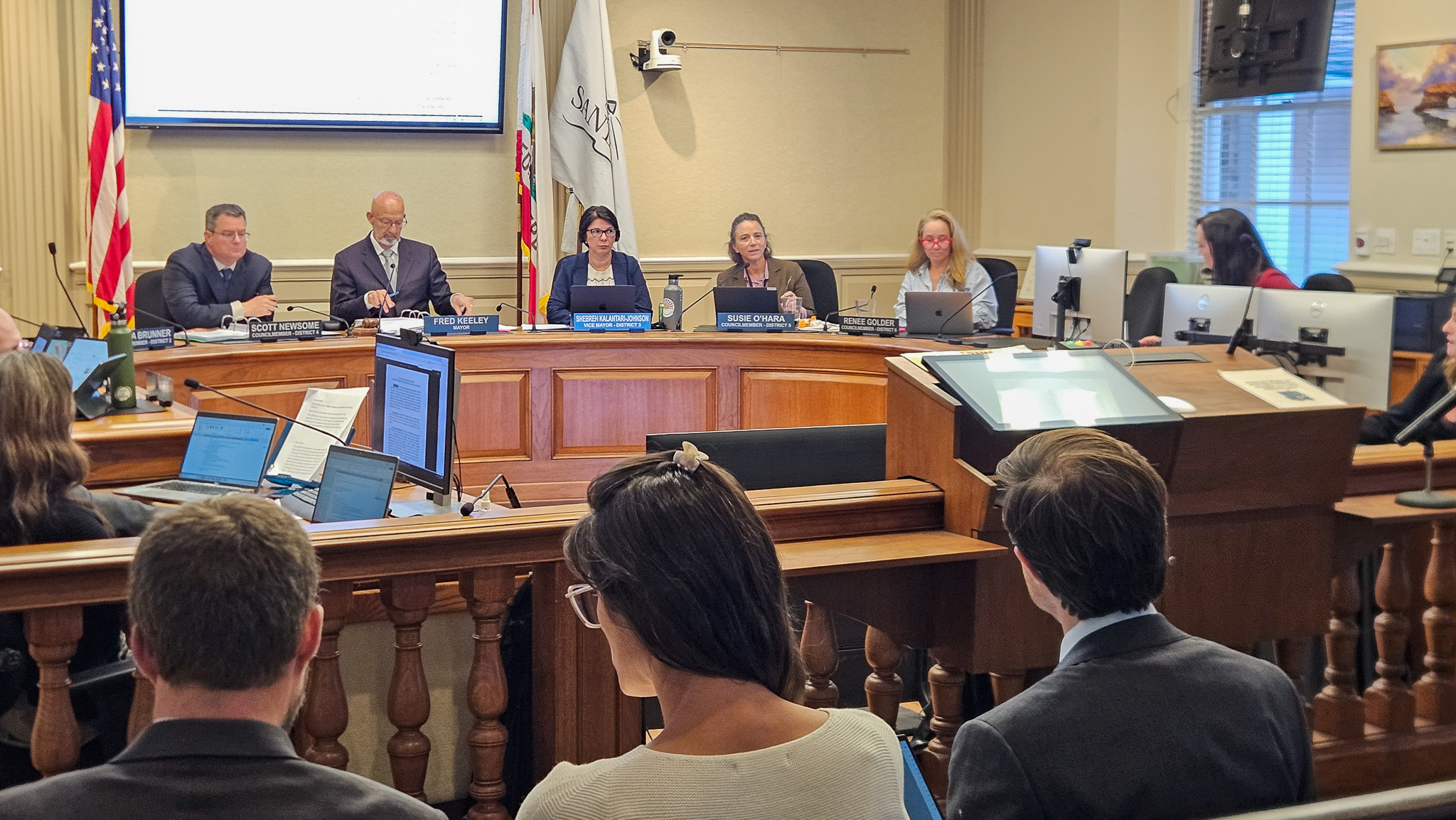
The Santa Cruz City Council on Tuesday denied an appeal brought by Workbench, but developers can still build balconies that extend further than the Downtown Plan allows. (Tyler Maldonado — Santa Cruz Local)
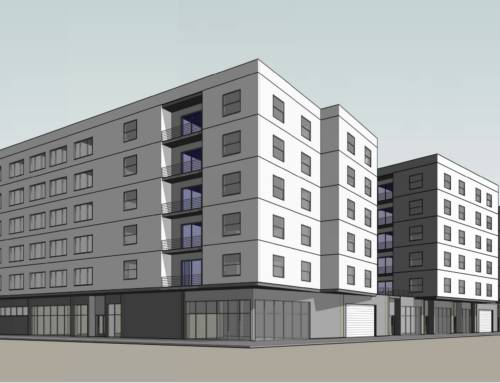
SANTA CRUZ >> An eight-story, 178-unit apartment building next to the Town Clock on N. Pacific Avenue can be built as proposed, with the potential to grow by 46 units, the Santa Cruz City Council decided Tuesday.
Santa Cruz-based developer Workbench said the project had been in limbo after a planning commission decision to shrink balconies that extend beyond the property line.
The 5-1-1 city council vote allowed the balconies, but technically denied Workbench’s appeal of the planning commission’s decision. In doing so, the city essentially decided encroachment into public space is not a required “waiver” under state density bonus law, and the city could choose whether to allow it.
“I don’t see it as establishing a precedent that would translate into a legal right,” said Santa Cruz City Attorney Tony Condotti in an interview. But it could “signal to developers that this is an option for them,” he said.
The project includes 30 affordable units which qualify it for two density bonuses, according to city staff. State density bonus law allows a developer to build taller and denser buildings than city rules allow, if the project includes a certain amount of units below market rate.
The council also denied a separate appeal from advocate Gillian Greensite, which argued the developer could have allowed two heritage-sized redwood trees to remain. Council members directed staff to propose revisions to the heritage tree rules to better fit “the city’s environmental values” and to explore relocating the two trees.
Councilmember Scott Newsome, who represents Downtown, was the only no vote and councilmember Sonja Brunner was disqualified.
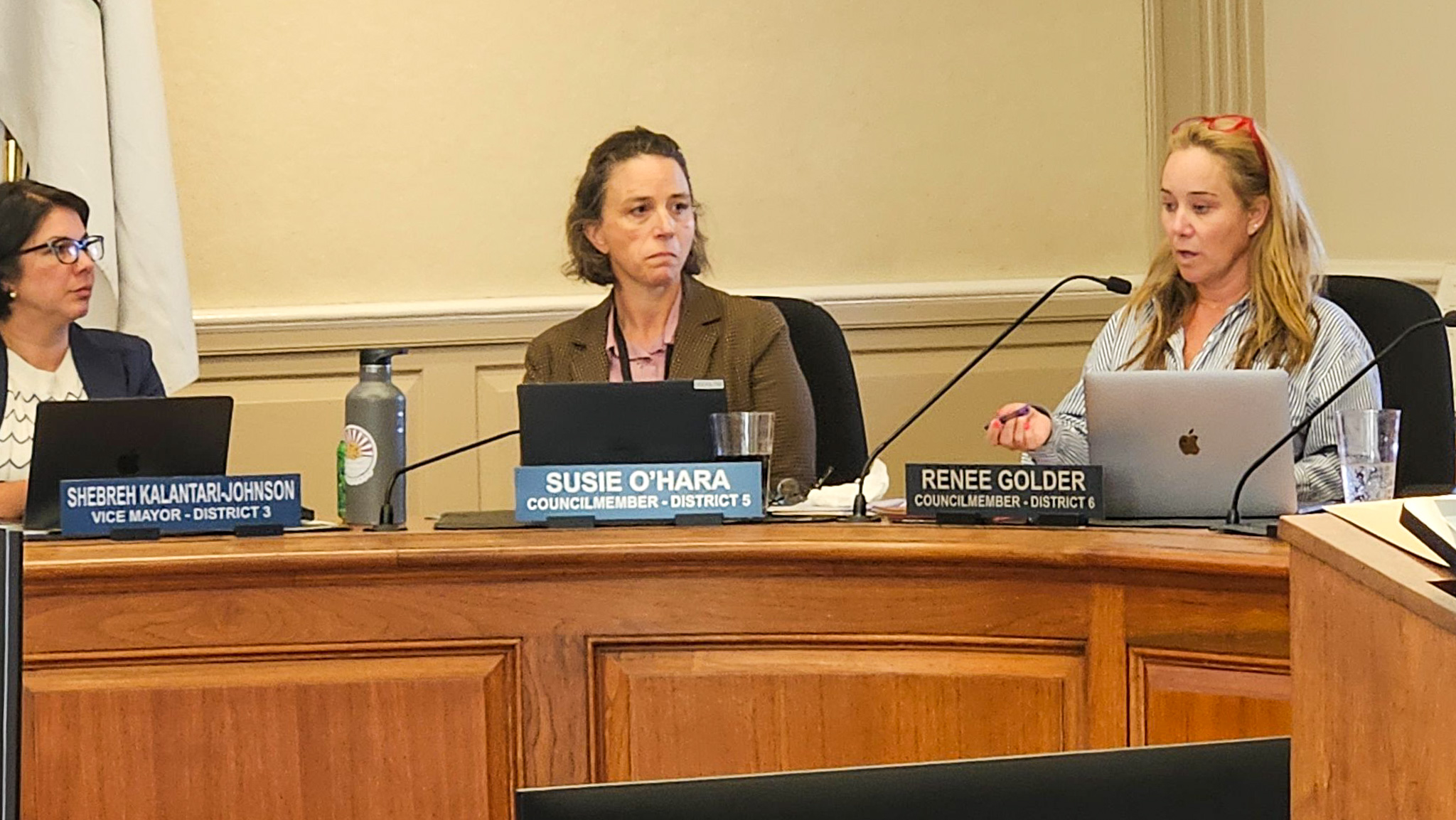
Councilmember Susie O’Hara, center, drafted the motion to allow Workbench extended balconies on the Clocktower apartments. (Tyler Maldonado — Santa Cruz Local)
46 additional units possible
State law allows Workbench to add up to 46 more apartments in the future, mostly by converting “amenity space” into ADUs, or accessory dwelling units. Revised floor plans submitted in July describe those spaces as art studios, study rooms, bike storage, a music room, event space and other uses.
None of the potential additional units would need to be below-market-rate. State law prevents the city from imposing affordability requirements on ADUs, said Santa Cruz Senior Planner Timothy Maier.
Confused about housing jargon?
Read Santa Cruz Local’s housing glossary to learn common words, phrases and laws.
Councilmember Gabriela Trigueiro asked whether the city could require Workbench to keep those spaces as amenity spaces, but city staff said state law does not allow that.
“This is not a 178-unit project, it’s a 224-unit project with 46 additional units disguised with various other uses,” David Carlson, a county planner speaking in his personal capacity as a resident of Santa Cruz, said during public comment.
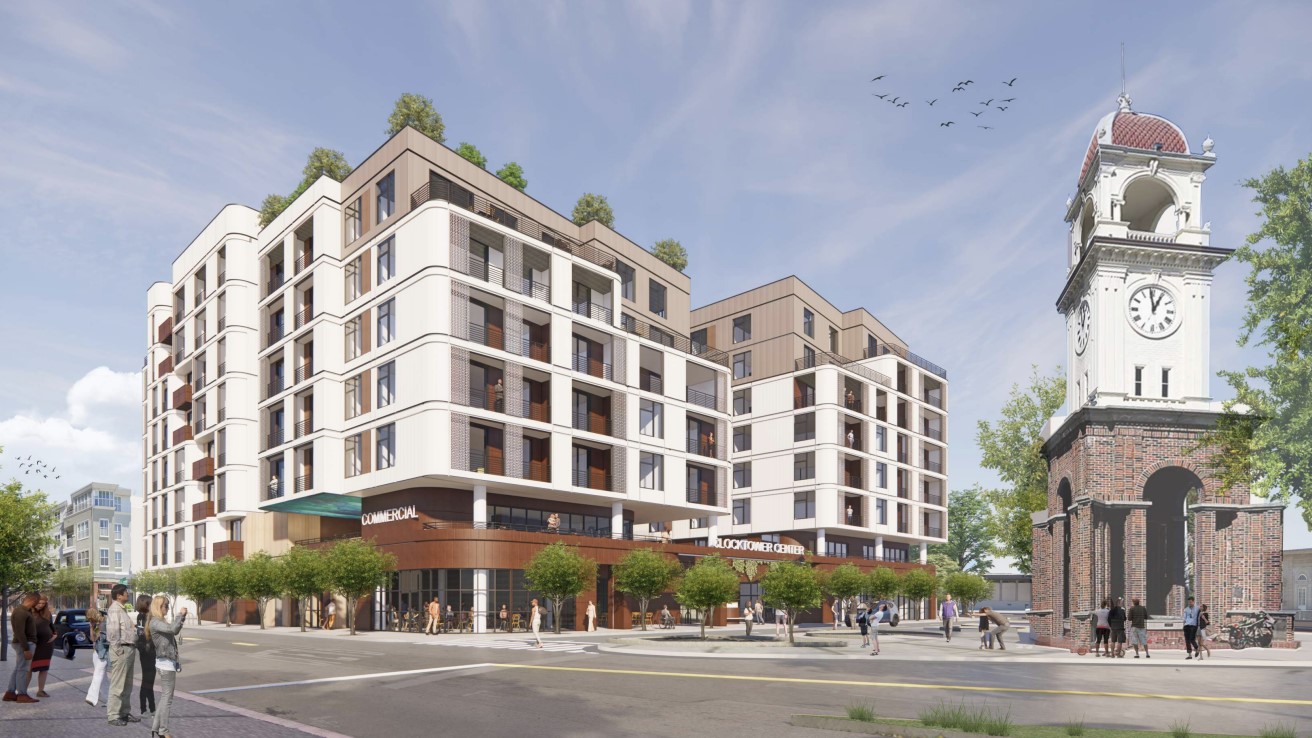
Balconies of a proposed eight-story apartment building can protrude 4.5 feet beyond the property line, the Santa Cruz City Council decided Tuesday. (Workbench)
Another Workbench project, the proposed redevelopment of the Food Bin on Mission Street into apartments, called for 11 “storage” spaces to be converted into ADUs. The city council approved the project in May 2024 but denied the proposed conversion of the storage spaces, prompting a lawsuit from the developers.
A judge rejected the lawsuit last week, and Workbench appealed the decision Tuesday.
“The court agreed with the city’s position that that was on its face an effort to obtain a project density that was well in excess” of what the developer was entitled to, said Condotti, the city attorney.
The Food Bin plans clearly intended for the storage spaces to be converted to living spaces. However, because the Clocktower plans are labeled with uses such as a steam room, a chef’s kitchen and a music room — and not as future ADUs — Condotti said the city could not force a redesign. Cities cannot apply local building rules that effectively block the building as designed.
Condotti said Workbench “obviously learned its lesson from the Food Bin case.”
“Those amenities are required to be approved as proposed,” said Jamileh Cannon, co-founder of Workbench. “Per state density bonus law, we are providing 30 affordable homes, and the state has protected amenity spaces as a way to offset the cost of building affordable units.”
In response to a question from councilmember Newsome about whether Workbench planned to convert the areas to ADUs, Cannon said “we may consider other applications in the future, but the current application that you have in front of you is to build the amenities as shown.”
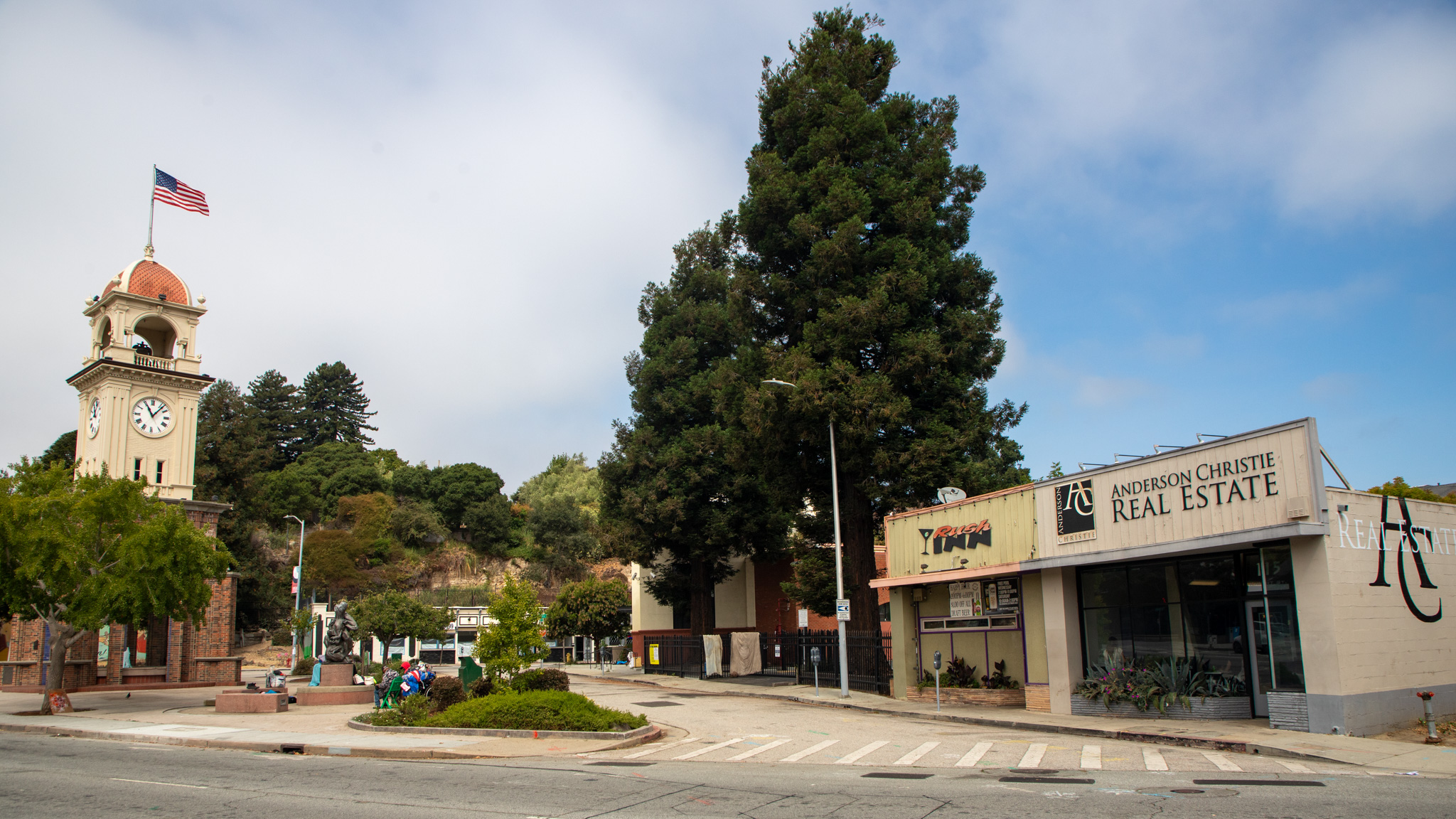
Two redwood trees are set to be removed to make way for a proposed eight-story apartment building Near the Town Clock. (Amaya Edwards — Santa Cruz Local/CatchLight Local)
Heritage trees slated for removal
Gillian Greensite of Save Our Big Trees said that the city’s heritage tree law suggests that “there should be some discussion around the issue of design” before a developer can remove a tree. She said no attempts were made by the developer to do so.
Cannon, of Workbench, said she met with Greensite about the heritage trees, and that designing the building around the existing trees would require the building to be built an additional one or two stories, increasing costs.
“The project would not be financially viable given those above parameters,” said Cannon.
Santa Cruz Planning Director Lee Butler said there were no objective standards for the heritage tree removal process. City staff are expected to return to council in six months with a clarification of the process for heritage tree removals.
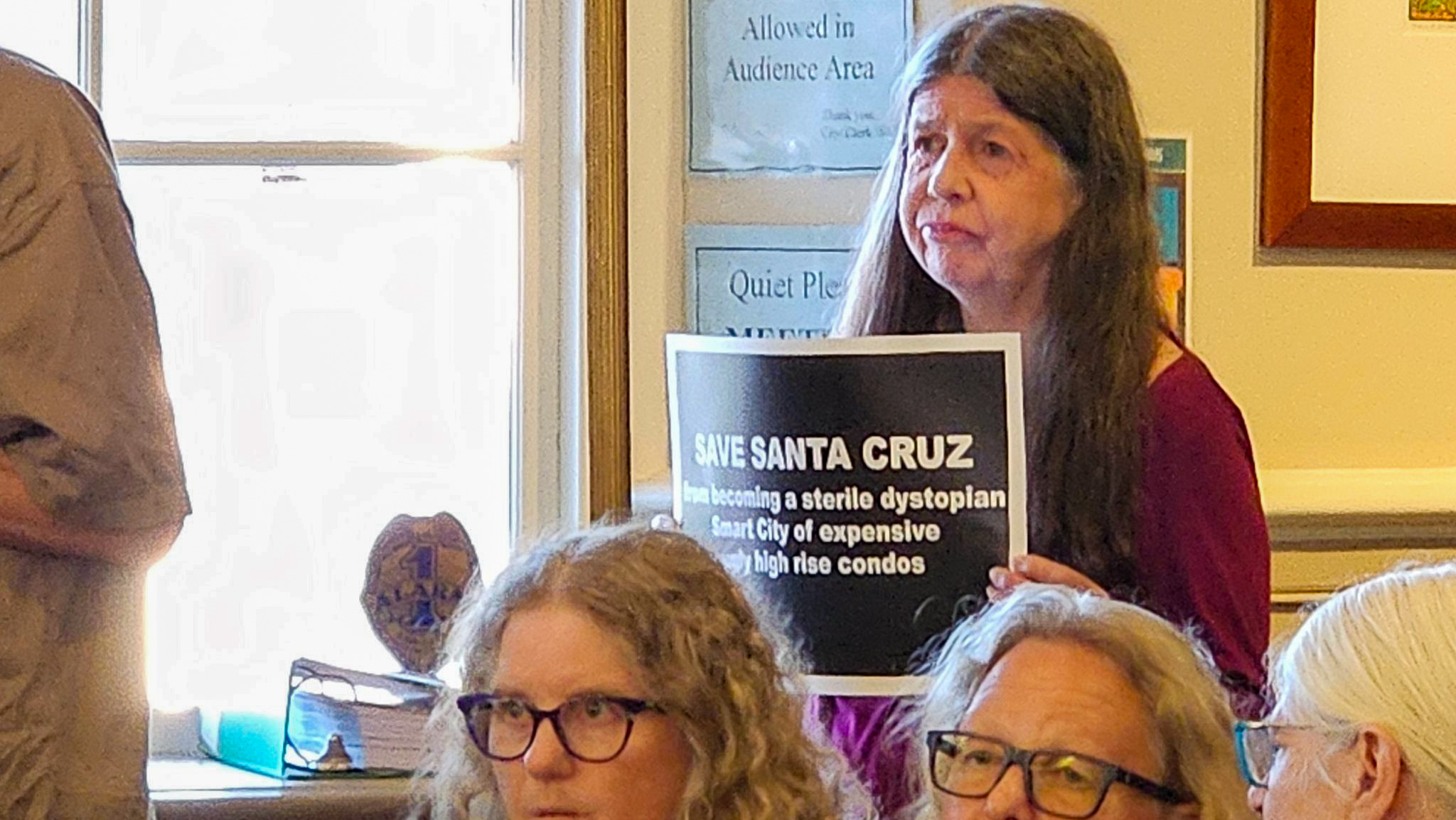
Medical social worker Kathleen Lynch opposed the Clocktower apartment project during Santa Cruz City Council public comment Tuesday. (Tyler Maldonado — Santa Cruz Local)
Questions or comments? Email [email protected]. Santa Cruz Local is supported by members, major donors, sponsors and grants for the general support of our newsroom. Our news judgments are made independently and not on the basis of donor support. Learn more about Santa Cruz Local and how we are funded.

Tyler Maldonado holds a degree in English from the University of California, Berkeley. He writes about housing, homelessness and the environment. He lives in Santa Cruz County.