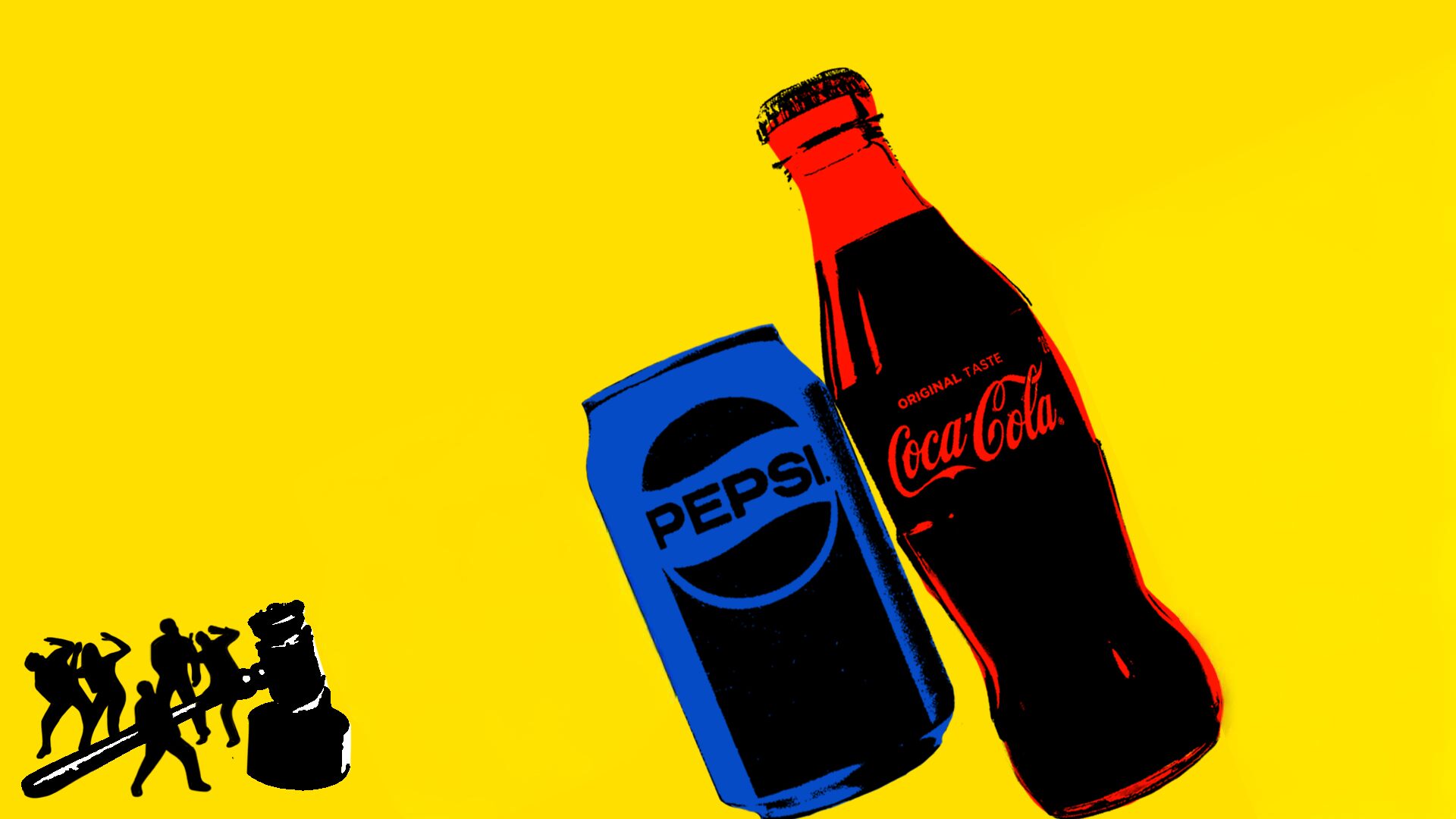
An investigation by Santa Cruz Local, Lighthouse Reports and a team of international collaborators examined the legal tactics Coca-Cola, PepsiCo and other food and beverage companies use to skirt regulation. (Revisual Labs)
This story is Part 1 of a series on soda taxes in Santa Cruz County. Read Part 2 here. This series is part of Big Food vs. The People, a reporting project with Lighthouse Reports and an international collaboration of newsrooms. Read the other stories here.
WATSONVILLE >> Juan Manuel Garcia limped slightly as he approached the podium, his black leather boots and plaid button-down shirt tucked neatly into dark jeans. He lifted his head to look at the Watsonville City Council with dark, puffy bags beneath his eyes. His voice was strong and clear.
“For many years, I have had diabetes,” he said in Spanish at the April 2016 meeting, describing how the disease worsened his eyesight, left his feet numb, and required expensive treatment he could barely afford. It was the legacy, he believes, of years working long hours in the fields, drinking sports drinks and sodas.
Garcia asked the council to put on the ballot a tax on sodas and other sugary drinks, repeating the request of previous speakers during the meeting’s public comment period. The tax aimed to nudge buyers away from beverages that drive chronic disease, and to raise money for youth recreation and health education programs.
“Don’t do it for me, for those who are already grown,” Garcia said. “Do it for those growing up, the children who need to be educated.”
Latinos like Garcia, including rising numbers of youth, disproportionately face chronic diseases like obesity and Type 2 diabetes. While there are many reasons for the trend, high-sugar, low-nutrient foods like soda are a key driver, and soft drink companies have long cultivated Latinos as a consumer base. Increasingly, research suggests that taxing sugary beverages can help reduce their consumption.
The beverage industry has fiercely opposed such taxes, through efforts both overt and clandestine.
Garcia had come to ask the council for help after an effort to gather signatures for a ballot measure fizzled out for no apparent reason over the previous months. Coca Cola executives privately took credit for the halted effort, leaked emails show. Eight years later, the same playbook would be deployed in Santa Cruz. And this time, the beverage industry — despite investing millions of dollars — would fail.
An investigation by Santa Cruz Local and Lighthouse Reports uncovered the unseen strategies of the beverage industry to fight the soda tax efforts in Santa Cruz and Watsonville. For more than a decade, the industry has cultivated the support of Latino politicians, even as chronic conditions associated with the overconsumption of sugar disproportionately affect Latino communities. Industry leaders nurture relationships with local and state electeds through campaign contributions, behested donations, gifts, and sponsorships of professional organizations. Organizers who reviewed financial records obtained by Santa Cruz Local said they believe that the soda industry leaned on those relationships to kill the tax effort in Watsonville.
Some on the political left have criticized soda taxes for raising prices on the working class. In Santa Cruz, industry consultants amplified those criticisms by paying at least one local activist of color to build opposition.
These tactics are not limited to California, or to the U.S. A coalition of international media partners including Santa Cruz Local and Lighthouse Reports has documented similar tactics by food and beverage industries in Colombia, Mexico, Brazil, India, the United Kingdom and the European Union. A lawsuit from the American Beverage Association challenging the Santa Cruz soda tax is one of 239 instances of these industries trying to stymie regulation by suing the government.
“The beverage industry is playing hardball while everyone else is doing ping pong,” said Oakland-based political consultant Larry Tramutola. “They play politics differently than mere mortals.”
Success in Berkeley
Juan Manuel Garcia was the last of the public commenters in 2016 to ask the Watsonville City Council to consider the soda tax. The first was his son, Christian Garcia.
The elder Garcia moved to Watsonville from Jalisco, Mexico in the late 1980s. He worked long days picking crops and fixing tractors, quenched his thirst with Gatorade, and relaxed at home with bottles of Coke.
Christian was 10 when his father’s eyesight grew blurry and he was diagnosed with Type 2 diabetes. Like many immigrant farmworkers, Juan Manuel had in part relied on sugary beverages out of distrust of the local water supply. Soda was integrated into his family back home — as was diabetes. All four of Christian’s grandparents in Mexico had the condition, he said. “My grandfather on my mom’s side died from a diabetic shock, because he didn’t know he had diabetes,” he said.
In part due to a public health epidemic of Type 2 diabetes, Mexico in 2014 instituted a nationwide tax on soda.
The same year, Christian began working on his first soda tax campaign in Berkeley. Then 24, he was working as the political director of TOLA Academy, an Oakland-based organization that trains young campaigners. When a group of Berkeley residents asked the academy to help campaign for a soda tax, Christian Garcia thought of his father. In an interview, he said he realized “how this industry really kind of took advantage of communities like Watsonville — not just across the country, but across the world.”
TOLA Academy was founded by Tramutola, the political strategist, who came up alongside Cesar Chavez and Dolores Huerta as a labor organizer with the United Farm Workers. By 2014, he was well acquainted with soda tax opponents. Beverage industry lobbyists had spent years crushing efforts for a statewide soda tax.
After being approached by the group of Berkeley organizers advancing the tax, Tramutola agreed to put his team on the effort pro bono. Soon after, he said he received a call from a consultant representing the beverage industry inviting him to instead back the opposition, for a hefty fee.
“That was the carrot,” he said. “The stick was that, ‘well, if you’re against us, you’re going to have a hard time finding other clients.’” Tramutola said he declined.
Despite an $2.2 million opposition campaign bankrolled by the American Beverage Association, voters in Berkeley approved the tax in 2014.
After the victory, the TOLA Academy received money from political organizations affiliated with Michael Bloomberg to canvas in other cities and pave the way for a repeat victory. They started envisioning future battlegrounds, places where the health harms of sugary beverages stood alongside the political will to push back: Oakland, San Francisco, San Diego, San Jose.
Garcia thought of his hometown.
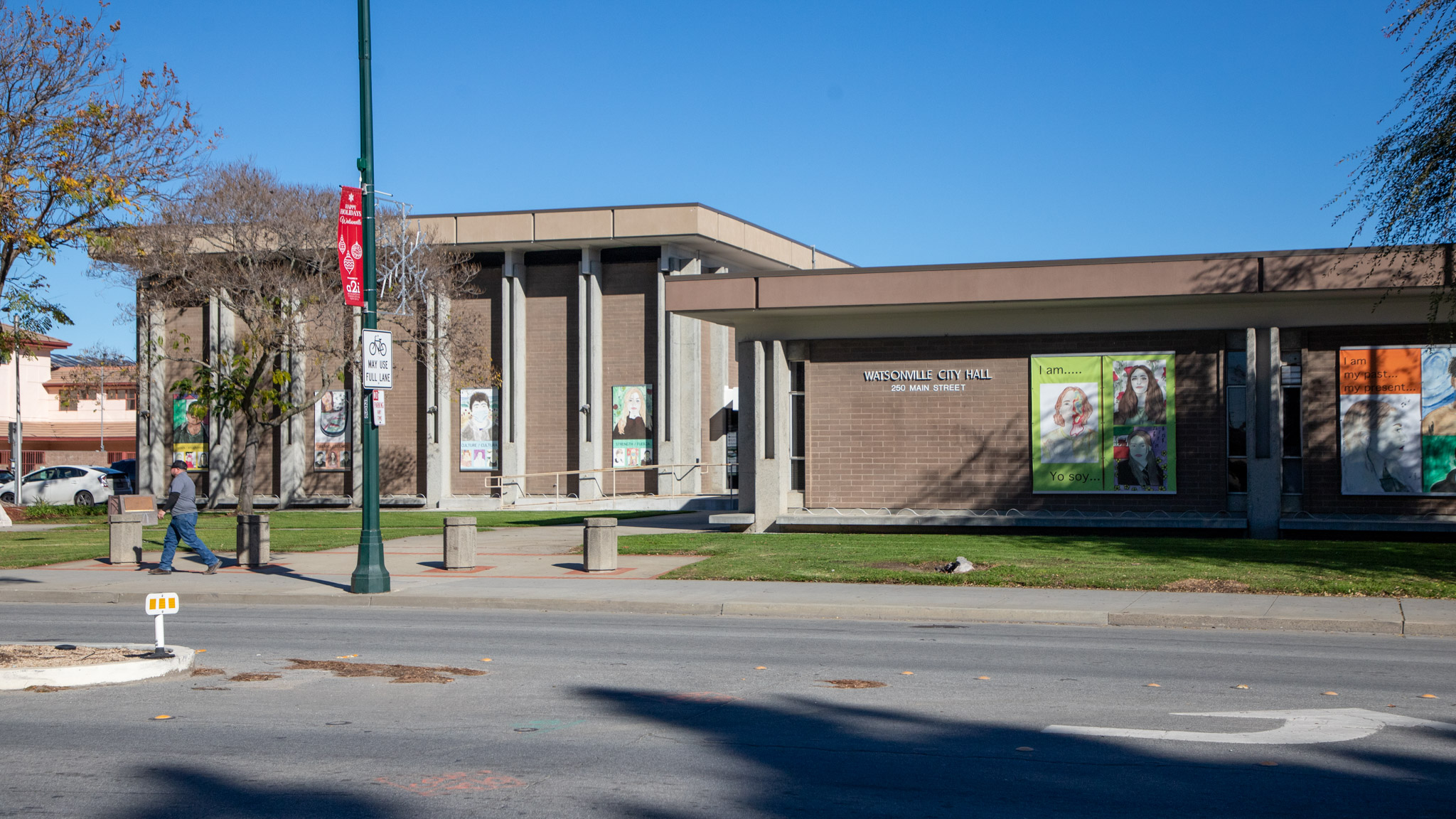
Watsonville City Hall on Jan. 13, 2026. (Amaya Edwards — Santa Cruz Local/Catchlight Local)
Losing ground in Watsonville
In summer of 2015, TOLA Academy members descended on Watsonville to survey residents on their support for a tax on sodas and other sugary drinks. Most people said they would support the tax measure if the money was reinvested in parks and other programs to support public health, Garcia said.
Organizers reached out to leaders of the Health Trust of Pajaro Valley, which operates a diabetes health center. A program director at the time, Veronica Camberos, agreed to sign on as the petitioner for a citizen’s initiative.
Soon after, the beverage industry caught wind of the effort. “Coalition-building work is underway in San Francisco, Oakland, Richmond and Watsonville” to prepare for anticipated soda tax efforts, a Coca-Cola government relations staffer wrote in an email in February 2016. The internal emails were leaked later that year following hacks by the website DCLeaks.
In response to a detailed list of questions for this story, Coca-Cola wrote in a statement, “We believe public health challenges are best addressed through collaboration among governments, public health authorities, the private sector, and civil society. We engage constructively on topics affecting our business and respect the role each stakeholder plays in advancing public health goals.”
“Coalition building” is an industry term used by campaign consultants hired to sway elections. Critics of the practice describe it as astroturfing — faking grassroots support.
“There are certain chapters of the playbook that are routinely used” by the food and beverage industries to defeat attempts at regulation, said Scott Faber, former chief lobbyist for the Consumer Brands Association, which advocates for the producers of food, beverage and other products.
“I’ve never worked on a campaign to make our food safer or healthier or more affordable, or to feed more people, where the industry did not use astroturf to defend the status quo,” he said.
One such consultancy, Rodriguez Strategies, cut its teeth on the failed campaign to oppose the Berkeley tax. On its website, the company touts its ability to form coalitions by “identifying, engaging, and activating diverse stakeholders to influence decision makers and the court of public opinion.”
The American Beverage Association, which represents PepsiCo, Coca-Cola and other major soft drink companies, formed a campaign committee to oppose the 2016 Watsonville tax, and hired Rodriguez Strategies to head the effort. Two Rodriguez Strategies consultants flew in and began building their coalition.
“Within a couple of weeks, we saw them talking to business owners and pretty much bringing in some havoc, and telling them that this was going to be bad for their business, this was going to make them go out of business,” Christian Garcia said.

The American Beverage Association, which represents PepsiCo, Coca-Cola and other major soft drink companies, formed a campaign committee to oppose the 2016 Watsonville tax. (Tyler Maldonado — Santa Cruz Local file)
While consultants worked on the ground to win over business owners, industry representatives touched base with a friendly face in Sacramento – Luis Alejo, a former mayor of Watsonville who represented south Santa Cruz County in the State Assembly. His wife at the time, Karina Cervantes, sat on the Watsonville City Council.
In 2014, Coca-Cola donated $1,494 to Alejo’s campaign for state assembly. In 2015, Coca-Cola, PepsiCo, and the American Beverage Association gave a combined $3,000 towards his wife’s bid to take over the assembly seat.
In March 2016, at the height of residents’ efforts to support a Watsonville soda tax initiative, support came to Alejo in a different form — a behest.
Behest donations are made by corporations or other special interest groups to a nonprofit on behalf of politicians, and must be reported to state authorities.
They’re common in California politics, and are sometimes received without coordination between donors and elected officials.
But often, behests are offered by corporations seeking to secure future support for their political aims, said former State Sen. Bill Monning, who has supported a statewide soda tax. “It’s just another form of legalized bribery,” he said.
Between 2011 and 2016, corporations and other special interests made 100 donations on Alejo’s behalf. Most were to the nonprofit California Latino Legislative Caucus Foundation, which gives student scholarships, distributes grants to other nonprofits, and pays for the travel of caucus members to annual conventions.
On March 15, 2016, the foundation received a $25,000 behest in Alejo’s name from PepsiCo. The donation is tied with another from Chevron for the largest of Alejo’s political career. Later that month, the caucus foundation in turn donated $5,000 on Alejo’s behalf to Alisal DREAM Academy, a Salinas-based youth leadership nonprofit where he serves on an advisory board.
Soon after the behest from PepsiCo, members of the Health Trust of Pajaro Valley, who had initially allied with organizers from TOLA to support the citizen led tax initiative, abruptly stopped communications with organizers. “They just literally would not respond to emails, phone calls, text messages,” Christian Garcia said. “It was all just radio silence.”
Alejo did not respond to repeated requests for comment.
Christian Garcia remembers collecting more than enough signatures to qualify for the 2016 ballot. But local campaigners, including staff from the health trust and the United Way of Santa Cruz County, never submitted a completed petition to the city clerk, Watsonville city officials confirmed.
Camberos, the health trust program director who signed on as the petition organizer, said she didn’t recall exactly what happened— whether organizers had failed to get the required signatures in time, if the petition was invalidated, or if they had just never turned in the paperwork.
“I think what we noticed is that the community still needed more time to digest what this meant,” Camberos said. The six months until the November election would not be enough, they had decided. And although the campaign effort’s legal fees were backed by a donation from the
American Heart Association, the health trust was running out of money to dedicate staff time to the effort, she said.
Camberos said she didn’t recall any contact between industry consultants and the health trust. “To be honest, I don’t know that we ever came close to them considering us as a threat,” she said.
Christian Garcia sees things differently. “We had been organizing for about six months, and they came in [for] about two months and kind of derailed the whole operation,” he said of industry consultants.
“In a community like Watsonville — I could say this, having grown up there — I think all of us are a little naive to the politics around us,” he added. For local businesses and nonprofits, experiencing that full force of the industry’s power for the first time, “it’s a gut punch.”
TOLA Academy “never really figured out what had happened” with their local collaborators, said Tramutola, the head of the academy, “but somebody had gotten to them, clearly.” After Santa Cruz Local informed him of the $25,000 behest from PepsiCo in Alejo’s name, Tramutola said he believed the industry used Alejo’s local influence to disrupt the soda tax effort.
“If you’re the beverage industry, it is far less expensive and less risky to invest in elected officials and relationships with elected officials, so something doesn’t get on the ballot, than to have expensive ballot measures where you may lose,” he said.
In an April 4, 2016 email to executives, a Coca-Cola government relations staffer noted with approval that the Watsonville soda tax proposal had been dropped. “Early organizing and outreach to the business community were instrumental to the successful outcome,” he wrote in a leaked email.
“California’s beverage companies work and live in communities across our state and we are proud to support organizations, civic groups and lawmakers who believe as we do that Californians should be protected from discriminatory taxes that raise the cost of groceries for families,” American Beverage Association spokesperson Steve Maviglio, wrote in response to a detailed list of questions.
“We will always back our customers – from restaurants to corner stores to grocers – against measures that threaten their businesses and their employees,” he wrote.
PepsiCo did not respond to repeated requests for comment.
Appeal to council members
The collapse of the signature initiative drove both Garcias, and other local supporters, to the Watsonville City Council that April. The deadline had passed for citizens to put an initiative on the November 2016 ballot, but the council could still do so.
Following the meeting where the Garcias and others spoke, Councilmember Rebecca Garcia (no relation to Christian or Juan Manuel) requested a discussion on the topic. Such asks were usually honored without question, she said in a recent interview.
Instead, an agenda committee convened with then Watsonville Mayor Felipe Hernandez, Councilmember Lowell Hurst, and Cervantes, the city council member then married to Alejo. Also on the committee were City Clerk Beatriz Vasquez Flores and City Manager Charles Montoya. The group voted to not schedule a council discussion about the soda tax, foreclosing the opportunity to put it on the ballot.
“There was quite a movement” for the tax, Hurst recalled in a recent interview, “but then the movement kind of went away, or didn’t pan out.”
He didn’t think the idea had enough momentum to discuss it in the meeting, let alone put it on the ballot. “There were a number of merchants that were concerned about what it was going to do to their bottom line, and convenience stores and other retailers were concerned,” he said. “And some of the beverage people were concerned.”
Hernandez said he was similarly concerned about local stores, and also worried that people would start buying beverages elsewhere and deprive Watsonville of sales tax money.
On April 26, the same day Garcia requested a council discussion about the beverage tax, Alejo’s election committee received a $1,000 donation from the American Beverage Association. The following week, the association behested another $1,000 to the legislative caucus foundation.
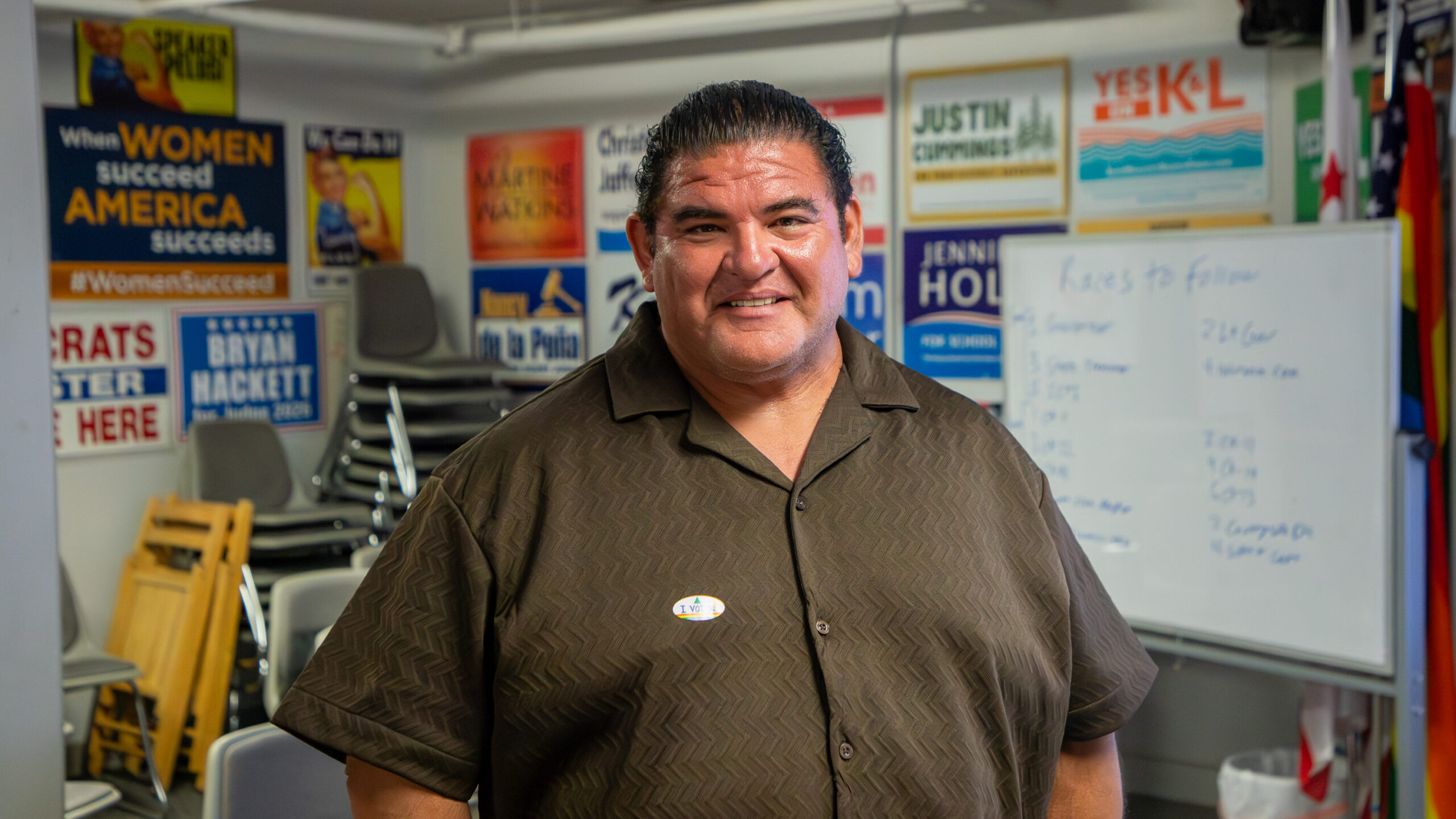
In 2022, the Latino Caucus of California Counties Political Action Committee spent $13,605.73 to support Felipe Hernandez in his run for county supervisor. A closely-related committee spent $20,214 on a campaign against his opponent. (Amaya Edwards — Santa Cruz Local/CatchLight Local)
Cultivating support
Alejo is a beneficiary of the beverage industry’s longstanding strategy to garner the support of Latino lawmakers.
“They’ll give them reasons” to oppose soda taxes, “like, this tax is going to be paid for by poor people in the community, or it’s going to hurt jobs,” Tramutola said. “But clearly it’s the money and the influence” that drive industry-friendly politicians’ positions, he said.
The strategy extends across the California Latino Legislative Caucus. During the 2016 election season, the average member of the California legislature received $2,800 from the American Beverage Association and associated companies, according to a 2017 analysis from nonpartisan group Maplight. Members of the Latino Caucus received $5,200 — nearly twice as much, the analysis found.
The Latino caucus drew attention in 2014 for hosting a reception sponsored by PepsiCo immediately following a vote where several caucus members in the Assembly’s health committee helped defeat a bill that would have required a health warning label on sugary beverages.
That night, Alejo and his chief of staff joined lobbyists at a tapas restaurant in midtown Sacramento, according to a lobbying disclosure. Also in attendance was Assm. Freddie Rodriguez (D-Pomona), one of four Latino Caucus members of the health committee who had skipped the vote on the label warning bill.
Lobbyists covered the $400 meal, though records show Rodriguez later paid back his share of the bill.
In 2016, Alejo left the assembly and was elected to the Monterey County Board of Supervisors. His seat is now occupied by Robert Rivas, who in 2023 was elected Speaker of the Assembly. Rivas’s self-professed “closest advisor” is his brother Rick Rivas, a vice president for the American Beverage Association. Robert Rivas “makes decisions based on what’s best for the people of California and he operates with independence,” a spokesperson wrote in a statement.
The beverage industry’s targeted support of Latinos in the state legislature has not led to unwavering support. Robert Rivas has supported multiple bills opposed by the American Beverage Association, including a bill introduced this year that would add warnings about added sugar to restaurant menus. On June 30 this year, four members of the Latino Caucus in the Assembly’s health committee voted to advance the bill.
The beverage industry’s targeting of Latino legislators extends to other caucuses, including one representing county-level officials. The Latino Caucus of California Counties is sponsored in part by PepsiCo. The caucus’s executive director is a lobbyist whose clients include PepsiCo. The caucus also operates a political action committee with major funding from American Beverage Association, and PepsiCo.
In 2022, the Latino Caucus of California Counties Political Action Committee spent $13,605.73 to support Felipe Hernandez in his run for county supervisor. A closely-related committee spent $20,214 on a campaign against his opponent.
Hernandez said support from the PAC had no bearing on his lack of support for a beverage tax in Watsonville.
The new tobacco
As the soda industry targets Latinos to be legislative allies, it also cultivates the community as a key consumer demographic.
“Their corporate goal is to push as much sugar into the mouths of children over their lifetimes as possible,” said Tony Iton, CEO of San Jose-based nonprofit The Health Trust and longtime health equity advocate. “That’s how they make their money, and they recognize that Black and brown kids are even more vulnerable.”
The publicity campaigns that target those kids “use hip hop artists, use music, use a variety of different kinds of cultural approaches,” he said, to secure lifelong customers.
That PepsiCo specifically backs many of the political contributions doesn’t surprise him. In the 1960s, Pepsi was the first major soda company to advertise itself to Black consumers, creating a lasting association as a civil-rights-supporting brand. Iton, who is Black, recalls seeing Michael Jackson’s famous Pepsi commercials as a young fan.
During Iton’s time as the health officer and health director in Alameda County, he saw tobacco companies try to gain favor from local nonprofits serving people of color with large donations and appearances at cultural events, using a very similar playbook as soda industry leaders.
Those same tactics are employed by some of the same people. The elite law firm Nielsen Merksamer Parrinello Gross & Leoni, has represented both the tobacco and beverage industries in attempts to curb regulation.
“There was very targeted marketing, targeted strategies to reach out to organizations that represented those groups, to try to enlist them to support tobacco,” he said. “The soda industry copied those tactics word for word.”
A Coca-Cola spokesperson said in a statement, “As a total beverage company, we offer a broad range of beverage choices across categories, including water, juice, dairy, sports drinks, coffee, tea, and sparkling beverages, including low- and no-sugar options.”
In Santa Cruz County, the industry’s apparent success in Watsonville was the prelude to a battle that is still playing out in the courts today: the city of Santa Cruz’s soda tax voters approved in 2024.
Monica Camacho contributed to this story. She is an open source investigator who worked at Lighthouse Reports, a nonprofit newsroom specializing in cross-border collaborations.
This investigation was produced in collaboration with Lighthouse Reports, Agência Pública (Brazil), Cuestión Pública (Colombia), Follow the Money (the Netherlands), Il Fatto Alimentare (Italy), L’Espresso (Italy), O Joio e O Trigo (Brazil), Quinto Elemento Lab (Mexico), The Guardian (UK) and The Wire (India).
Questions or comments? Email [email protected]. Santa Cruz Local is supported by members, major donors, sponsors and grants for the general support of our newsroom. Our news judgments are made independently and not on the basis of donor support. Learn more about Santa Cruz Local and how we are funded.

Jesse Kathan is a staff reporter for Santa Cruz Local. They hold a master's degree in science communications from UC Santa Cruz.

Elena DeBre is an investigative journalist at Lighthouse Reports, a nonprofit newsroom specializing in cross-border collaborations.