
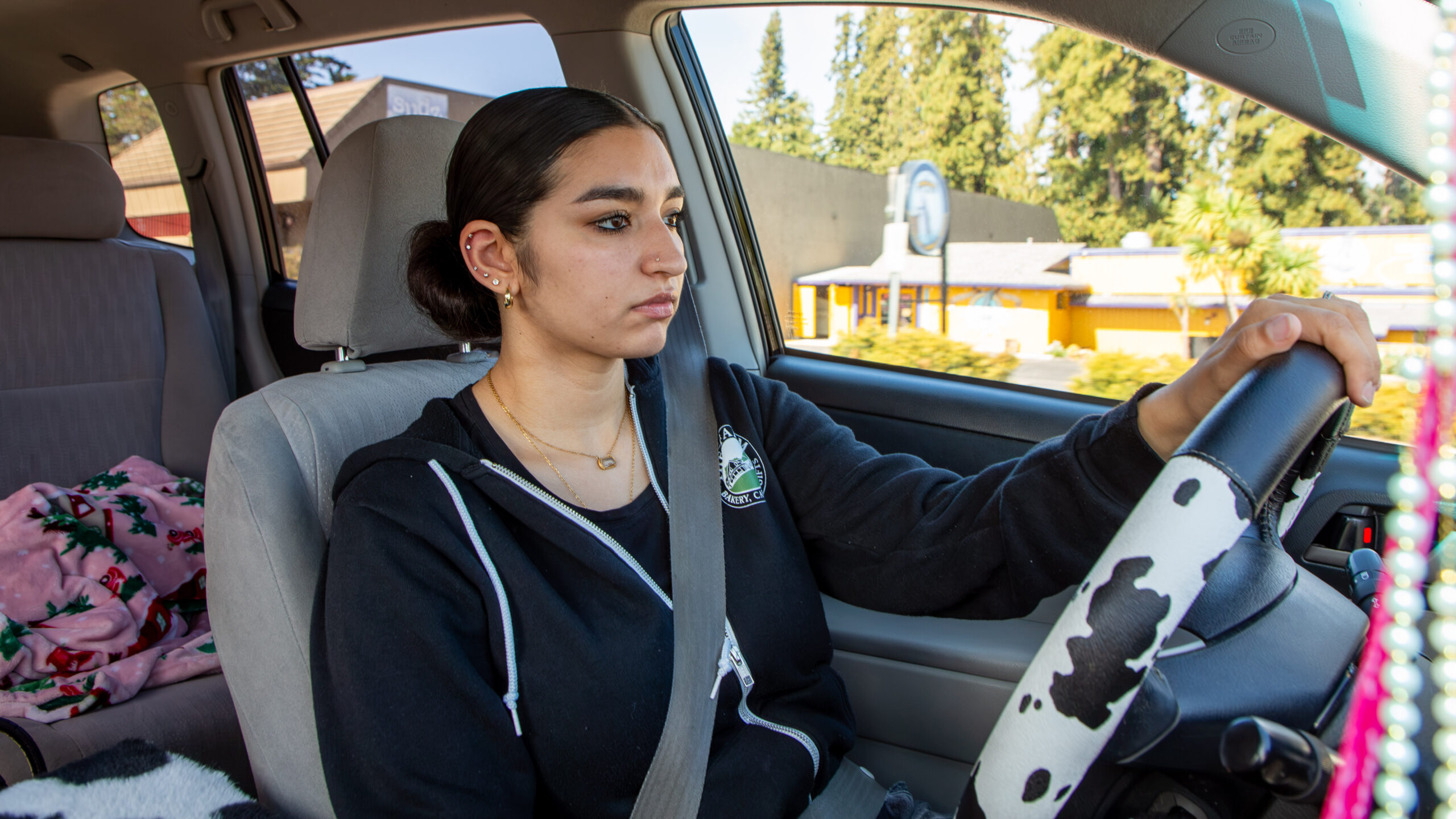

Serenity Smith, who lived at a residential treatment facility in Santa Cruz in 2024, drives to work in Aptos on Monday, Aug. 31. (Amaya Edwards — Santa Cruz Local/CatchLight Local)
Hope Forward-Esperanza Adelante Youth Crisis Center
- Located at: 5300 Soquel Ave., Santa Cruz, CA 95062.
- Call (831)540-4141.
- Behavioral Health Resources Guide
- Local resources for community members who may be experiencing mental health crises or challenges.
- Mobile Crisis Response Team:
- MCRT helps stabilize youth and adults in mental health crises and connect them to ongoing care and resources.
- Services are available 24/7 to all Santa Cruz County residents.
- Call 1-800-952-2335.
SANTA CRUZ >> Born and raised in Sacramento, Serenity Smith was just 16 years old when she came to live alone in Santa Cruz in 2024.
Despite not knowing anyone in town, and having no family or friends close by, Smith would become one of the many children who were, and still are, moved across county lines in order to receive short-term residential treatment, a type of temporary inpatient care designed for children coping with mental health and behavioral issues.
Before coming to Santa Cruz, Smith had been struggling with her mental health, suffering from bipolar disorder and was in between family placements and hospitalizations. Ultimately her adoptive parents decided she needed more intensive help, eventually leading her to the Santa Cruz-based nonprofit Haven of Hope in Aptos — a Short-Term Residential Therapeutic Program, or STRTP, where she lived for a year and a half. The Aptos facility closed last year, along with its other facility in Watsonville.
“Kids in foster care go through so much, and I don’t think people really understand that,” Smith said in an interview with Santa Cruz Local on Aug. 24. “It’s really hard for people to understand, especially if they haven’t gone through it themselves.”
Due to regional bed shortages throughout the state, many youth, like Smith, are left with limited options when it comes to finding inpatient care in their own communities, forcing many children and families to find it beyond county lines.
Santa Cruz County has not had a short-term residential facility since Haven of Hope shuttered. A new long-awaited facility is in the works, but has no scheduled opening date. It will most likely be open within the next year, as it takes approximately 12 to 24 months to become fully licensed.
When it opens, it would allow for more local children in a behavioral health crisis to stay closer to home.
“We had to move youth further away from this area, which is obviously making it more difficult for them to have those weekly visits with grandma, grandpa, mom and dad,” said Davina Polanco, executive director of Haven of Hope. “I think that was a big loss for Santa Cruz County, because they have to go further away.”
Today, many youths are sent to Monterey County to receive residential treatment. As of January, 24 foster youth from Santa Cruz County were receiving residential care outside the county, according to the California Child Welfare Indicators Project.
Many short-term facilities were forced to close their doors throughout the state, amid ongoing staffing issues and inadequate reimbursement rates.
As of June, there are 352 STRTP’s in the state, serving approximately 1,500 children at any given time, according to the state’s department of social services.
A new type of care for Santa Cruz youth
For many counties, the options for local residential treatment for youth are far and few between, but Santa Cruz County is hoping to help bridge that gap in the coming years.
The Crisis Residential Program, or CRP, located in Live Oak at Hope Forward-Esperanza Adelante Youth Crisis Center, will offer boys and girls experiencing mental health crises support. There is no set date for when the center will open.
The 16-bed facility, will help youth, from ages 12 to 17 years old, by providing 24-hour clinical treatment and therapy, for a maximum stay of 10 days. There are currently zero CRPs in Santa Cruz County.
A CRP acts as an alternative to psychiatric hospitalization, with the hopes of placing the youth back with their families or group homes.
They are licensed as a type of STRTP, with the only difference being the length of stay, as a standard STRTP stay ranges between six months to a year. Santa Cruz County Behavioral Health, in partnership with Aspiranet, a California nonprofit that provides residential care and foster services, began the licensing process for the CRP, after the county purchased the site for $7.9 million in 2023. The building itself cost $26.1 million to build, and the CRP is set to have an annual cost of around $5.3 million.
“I think we’re going to do a better job just because we understand the need that’s here,” said Laura Yelland, associate division director of Aspiranet’s behavioral health division. “We understand our social workers and clinical staff, and we really understand how to work with families and the child.”
The facility is currently home to an already-open Crisis Stabilization Unit, also operated by Aspiranet, which helps connect youth to treatment options in a 24-hour time frame, with the purpose of avoiding emergency room visits.
Children who enter the CRP will vary, with many of them being foster youth, or who have had previous group home placements or hospitalizations. In some cases, like Smith’s, who was adopted at 7 years old, children are sometimes placed by their biological or adoptive parents.
“I’ve been on my own since I was 12,” Smith said, who bounced around between family placements in Sacramento and New Mexico, before ending up at Haven of Hope in Aptos. “I had family and houses, but they never helped.”
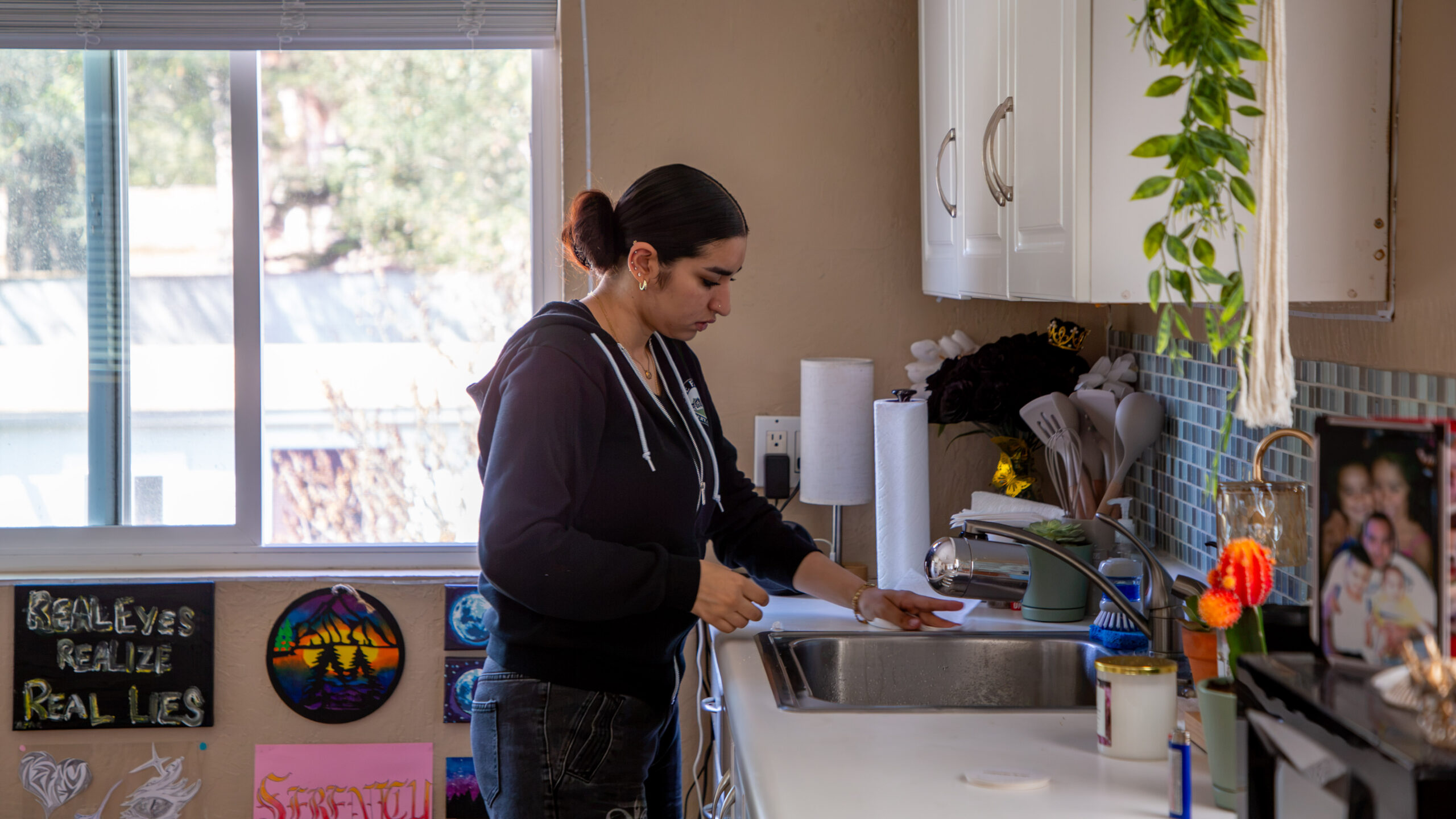
Before coming to Santa Cruz, Serenity Smith had been struggling with her mental health, suffering from bipolar disorder and was in between family placements and hospitalization. (Amaya Edwards — Santa Cruz Local/CatchLight Local)
What is a Short-Term Residential Therapeutic Program and how are they funded?
In 2018, traditional group homes were forced to transition to an STRTP model, after a landmark law was signed in 2015, pushing away from long-term placements for foster youth, and in favor of placing them in a shorter, less restrictive, placement if possible.
STRTP’s are funded by the federal government, state and local county organizations. Each facility is also given a monthly reimbursement rate by the state that covers residential and medical aspects, regardless of the county’s cost of living rate.
All facilities are licensed and inspected by the Community Care Licensing Division, a division of the state’s social services. The facility’s license must also be approved by the Department of Health Care Services.
Polanco shared that the decision to close her two STRTP’s in Aptos and Watsonville ultimately came after licensing made it difficult to operate, amid strict regulations and rising staffing costs.
“You’re dealing with a lot of regulations, extremely high-risk client behaviors and ongoing staffing challenges, it was just cumulative,” Polanco said. “There was so much liability coming from every direction.”
Smith, now 18 years old, calls Santa Cruz her home, a place she was once a stranger to. As for the future of youth who find themselves in group homes or foster care like herself, Smith hopes that they have someone advocating for them.
“I think that a lot of kids in group homes or foster homes just need somebody to listen to, not somebody to talk with,” Smith said. “Just listen.”
Questions or comments? Email [email protected]. Santa Cruz Local is supported by members, major donors, sponsors and grants for the general support of our newsroom. Our news judgments are made independently and not on the basis of donor support. Learn more about Santa Cruz Local and how we are funded.

As government accountability reporter, Erika Zaro brings in-depth, enterprise reporting on local institutions that affect residents’ everyday lives. Her stories examine major government decisions, track the promises of elected officials and investigate wrongdoing.