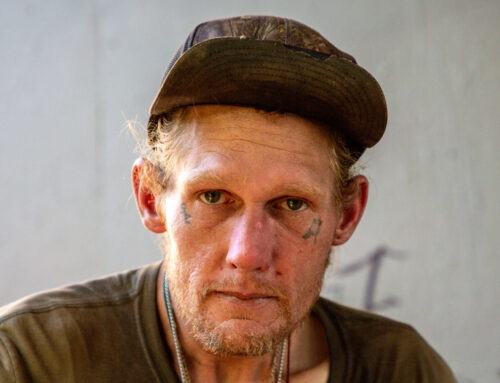

Housing Matters’ Rebele Family Shelter on Coral Street houses the Recuperative Care Center on its second floor. (Amaya Edwards — Santa Cruz Local/Report for America)
SANTA CRUZ >> A shelter for homeless people recovering from illness or injury will be put on indefinite pause come January due to money problems, nonprofit Housing Matters announced late last week.
The recuperative care center provides temporary housing for up to 20 people. Its indefinite closure comes less than a year after the nonprofit cut 20 shelter beds to save money and ended its day services program.
In a statement sent to reporters Oct. 30, Housing Matters CEO Phil Kramer wrote that changes to Medi-Cal reimbursements means the program will be underfunded by at least $600,000 a year. That change, “combined with the program’s existing financial challenges, require us to reassess the RCC’s long-term viability and the role Housing Matters can play in its operation,” Kramer wrote.
“We must honestly assess whether operating a medical respite program under the new requirements is the best use of Housing Matters’ expertise, resources, and organizational capacity,” he said.
Kramer wrote that to continue operating the center, a partner organization would have to step up.
Some worry that the program’s uncertain future will create a critical gap in care for unhoused residents recovering from hospital visits.
“There really is no preparation for going back outside,” said Vanessa Allen, a current resident of the care center. The 49-year-old has been living unhoused in Santa Cruz for eight years and moved into the center in August after breaking her ankle.
Prior to moving in, she said her ankle was not healing properly, in part because she was constantly relocating.
“They’re making everybody move every couple of days and everything,” she said. “I needed somewhere to go where I could heal.”
Now with the closure of the center on the horizon, Allen said her case manager is working to get her a spot in one of Housing Matter’s pallet shelters — or, better yet, a spot in the soon-to-open Harvey West Studios. Still, she worries the changes mean she could be back out on the streets.
“I’m definitely gonna miss having my own shower,” she said. “I just don’t want to go back out to a tent right away, especially with the winter coming.”
In an email to Santa Cruz Local staff on Friday, Housing Matters Chief Impact Officer Mer Stafford said the organization is working on safe exit plans for current care center residents.
“There are a number of options including other shelters or medical facilities. Our goal is to find a safe place for each person depending on their needs,” she wrote.
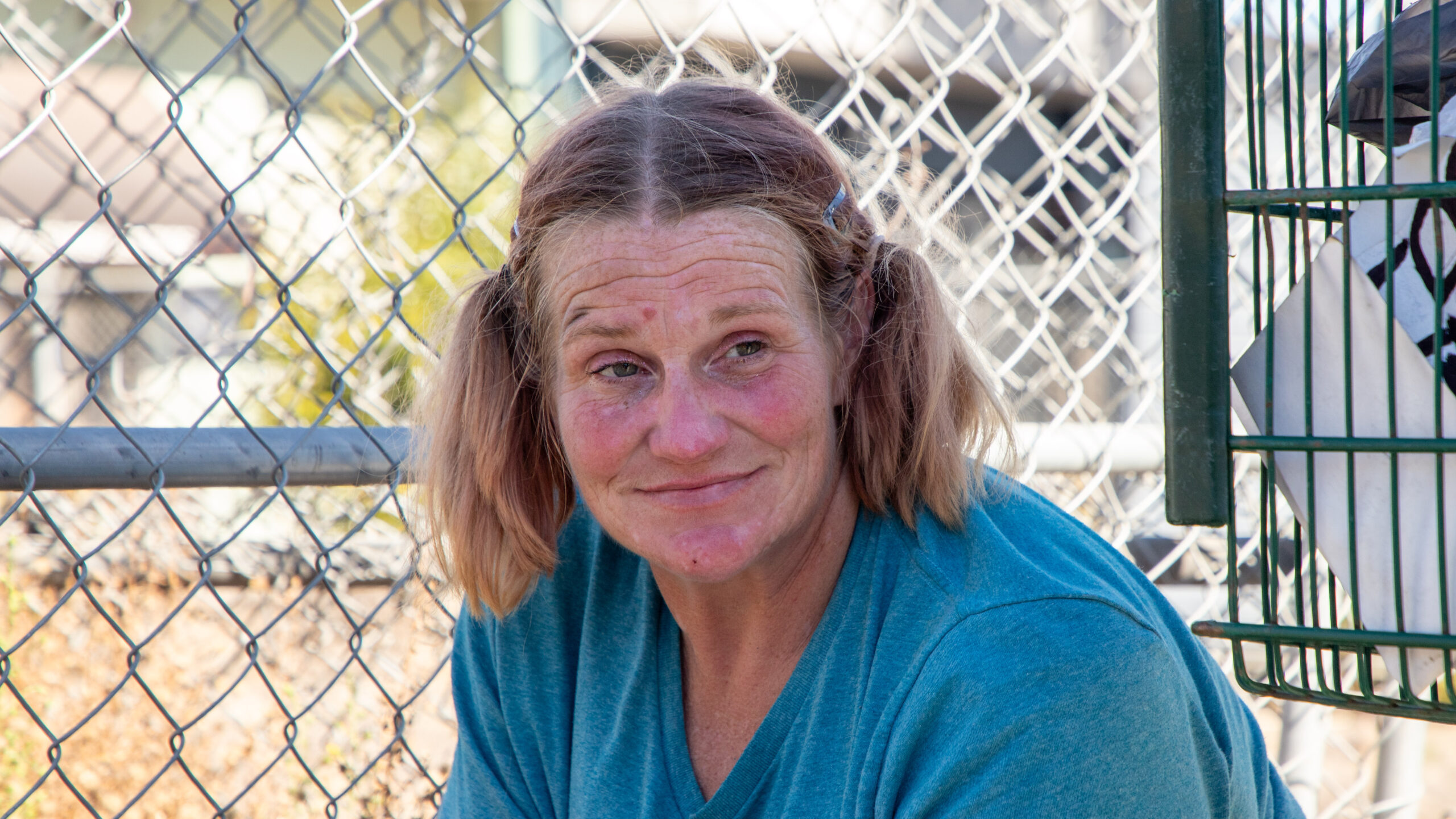
Vanessa Allen talks about staying at the recuperative care shelter. (Amaya Edwards — Santa Cruz Local/Report for America)
‘Literally life or death’
The care center currently relies on federal waivers to get Medi-Cal reimbursements for the program. That waiver expires in December, after which the shelter will be eligible for Medi-Cal funding through a different program that requires more staff and covers fewer costs.
Kramer wrote that the shift will “increase the resources and expertise needed to operate the program” while eliminating reimbursements for maintenance, custodial services, utilities and food.
In an effort to cut costs in May, Housing Matters slashed the recuperative care center down to 20 beds from 30, and reduced its Rebele Family Shelter to 18 beds, down from 28. The two programs were consolidated into one building, which Kramer said would help save $1 million a year. Despite the savings, the new changes to Medi-Cal funding are expected to stretch resources too thin.
“The new reimbursement structure creates a significant gap between the funding available and the actual cost of providing care,” Kramer wrote.
This throws into question whether Housing Matters will be able to continue running the recovery care center, and whether another health care or community organization will be able to take up the mantle.
The decreased funding comes as the federal government has made sweeping cuts to Medicaid and tightened eligibility. Experts say moves like this — as well as things like withdrawing guidance encouraging states to use Medicaid for housing needs — indicate a federal shift away from supportive housing.
“Hospitals have a mandate to not discharge people to the street, but where can they discharge them? And who’s going to pay for that service?” asked Evan Morrison, executive director of local homeless support nonprofit People First of Santa Cruz County. “The question then becomes, what is going to fill this gap?”
Morrison said he worries the reduction in shelter will put the lives of unhoused residents at risk. The shelter “was saving lives, so unless something else steps up to fill that gap, there will be suffering and there will be lives lost. It is literally life or death.”
Questions or comments? Email [email protected]. Santa Cruz Local is supported by members, major donors, sponsors and grants for the general support of our newsroom. Our news judgments are made independently and not on the basis of donor support. Learn more about Santa Cruz Local and how we are funded.

Alonso Daboub joins Santa Cruz Local as a California Local News Fellow. He earned a master’s degree in Science Communication at UC Santa Cruz.