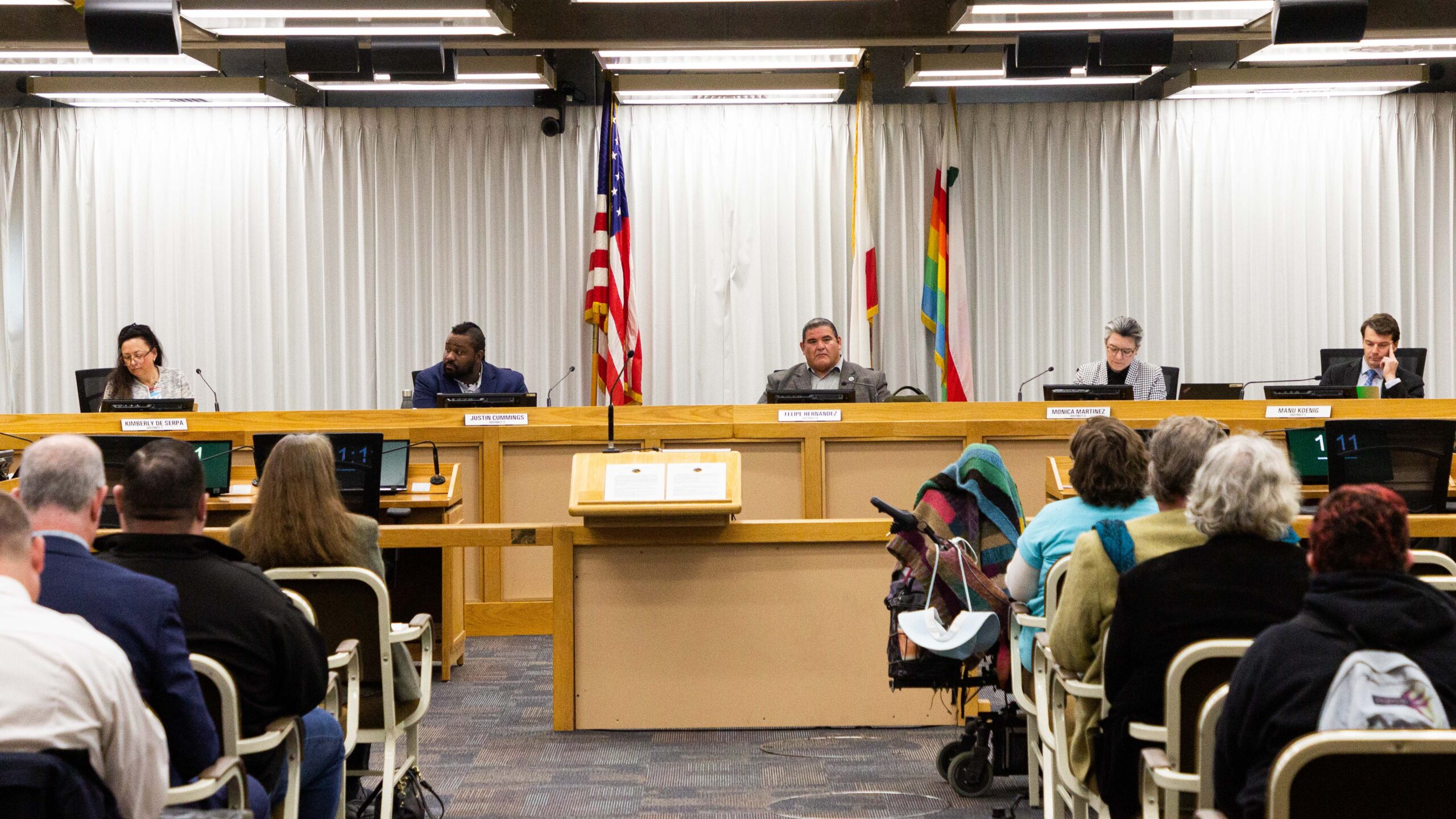
The Santa Cruz County Board of Supervisors is expected to approve the county budget for Fiscal Year 2026-2027 by September. (Marcello Hutchinson-Trujillo — Santa Cruz Local file)
Santa Cruz County Budget Hearings
- 9 a.m. Wednesday, June 10 at 500 Westridge Drive in Watsonville, and on Zoom. Includes budgets for the Health Services Agency, Human Services Department, and Office of the Public Defender. To comment ahead of time, email [email protected] by 5 p.m. Tuesday.
- 9 a.m. Thursday, June 11 at 701 Ocean St., Room 525 in Santa Cruz, and on Zoom. Includes budgets for the Probation Department, Sheriff’s Office, Parks Department, and Community Development and Infrastructure.To comment ahead of time, email [email protected] by 5 p.m. Wednesday.
- Meetings are also streamed on the county website and on Facebook.
SANTA CRUZ COUNTY >> This week, county leaders will consider a $1.29 billion budget for the fiscal year starting July 1. The General Fund, which can be used for any purpose, accounts for about $844 million of the spending. The rest of the budget includes state and federal grants and other money restricted for specific uses.
County staff developed the budget “under one of the most challenging fiscal conditions that I’ve ever faced,” said County Executive Officer Nicole Coburn when the draft budget was first presented at a May 5 meeting of the Santa Cruz County Board of Supervisors. The challenges include rising salary costs and federal funding changes following H.R. 1, the “One Big Beautiful Bill.” The federal budget bill adopted in July 2025 decimated funding for health care, food assistance and other social safety net services — to maintain the programs, local municipalities must now pick up the tab.
To cut costs, the county budget would eliminate the equivalent of close to 60 full-time positions, most of them vacant. It does not include any layoffs. The budget maintains funding for the equivalent of about 2,680 full-time positions.
After the board of supervisors’ budget hearings this week, staff will return with a revised draft budget for approval on June 24. The final budget is expected to be adopted on Sept. 29.
Detailed information about the budget is available on the county’s website and transparency portal. Santa Cruz Local compiled five takeaways on aspects of the budget most relevant to residents.
Dipping into reserves
The budget balances costs and expenses with $30.8 million in General Fund reserves. That drains the reserves, which serve as a savings account for unexpected costs, to 10.4% from 12.5% of the General Fund budget. The county’s target is 15%.
The reserve spending includes:
- $17.1 million for the Health Services Agency to cover salary increases and rising demand for health clinics and mental health services.
- $4.3 million for the Human Services Department, largely to offset increased costs of administering CalFresh and MediCal following H.R. 1. Those costs are expected to compound in coming years, county staff wrote in a report ahead of the budget hearings.
The dip into reserves is a temporary measure, and moving forward the county will either have to cut costs or raise more money, staff wrote. Coburn called the budget a “stopgap” in her budget message.
Sheriff spending
The General Fund reserve spending includes $6 million for the Santa Cruz County Sheriff’s Office to cover salary increases and avoid layoffs. “A large number” of employees have been on extended leaves from work, Coburn said. The county is trying to determine how to bring people back or see if they would permanently leave employment. Two sheriff’s positions to be added for the DNA laboratory are covered by dedicated funding outside of the General Fund.
Ahead of the meeting, some advocates with the group Care not Cages have signed on to a letter urging county leaders to prioritize social services spending over sheriff, probation and jails. The group aims to decrease incarceration, particularly for people with mental illness and substance use disorders.
Public safety “actually looks like being healthy, having access to medical services, having food on the table, having a job to go to,” said Bernie Gomez, who has worked with Care not Cages. Gomez is a programs and leadership coordinator at the MILPA Collective, a Chicano-Indigenous community support and advocacy group.
The sheriff’s department is one of the county’s largest General Fund expenditures. Although more county money goes towards social services, a larger portion of sheriff funding comes from local sources, rather than state and federal grants.
“To provide additional rainy day funds” to the department is “unacceptable during this time of uncertainty,” Gomez said.
Road repair struggles
The county has planned $66 million in spending on roads, including repairs, maintenance and repaving. Most of that money comes from state and federal funds, plus county fees. Measure K sales tax funds contribute $2 million annually.
Last year, the county dipped into the General Fund to allocate a further $1.9 million to road maintenance, meant to make progress on a hefty backlog of deteriorating roads. This year’s budget didn’t include that contribution. However, total spending on road maintenance, including state and federal funds, is set to increase by $2.2 million.
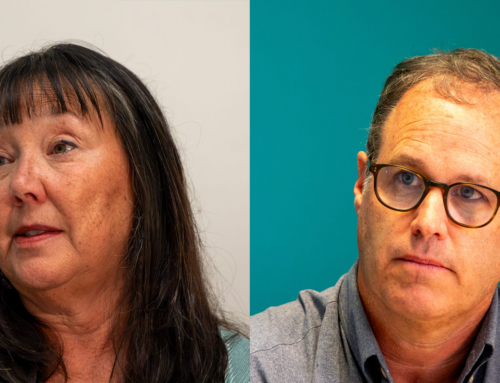
Supervisor Manu Koenig said he was concerned by the lack of General Fund investment in road maintenance. “Anything that we can do for preventative maintenance now, while it’s dry, is ultimately going to save us a lot of money in the long term,” he said at the May 5 meeting.
The county is anticipating an El Niño weather pattern this year, “which gives me heart palpitations,” said Coburn, “because I’m anticipating that it could be very wet, and we could see mudslides, flip-outs, flooding, all the rest of it.”
Climate scientists are predicting a potential “super” El Niño this year that is more intense due to human-fueled climate change. That could mean lots of rain locally.
Storm repairs have been hampered for years by delays in federal disaster money. The county is waiting on $50 million in reimbursements from the Federal Emergency Management Agency, Coburn said. Fifty-seven repair projects are on hold because the county cannot afford the local match required to receive federal funds.
Paid parking pilot
The proposed parks budget includes plans for a paid parking pilot program at some county parks to fill budget gaps. Multiple county supervisors spoke against the idea. “Everybody is so strapped for cash these days, and that would be one more cost to providing access to open spaces,” said Supervisor Felipe Hernandez at the May 5 meeting.
Editor’s note: this story has been updated to reflect the correct budget figure for the 2026-27 fiscal year. It’s $1.29 billion.
Questions or comments? Email [email protected]. Santa Cruz Local is supported by members, major donors, sponsors and grants for the general support of our newsroom. Our news judgments are made independently and not on the basis of donor support. Learn more about Santa Cruz Local and how we are funded.

Jesse Kathan is a staff reporter for Santa Cruz Local. They hold a master's degree in science communications from UC Santa Cruz.