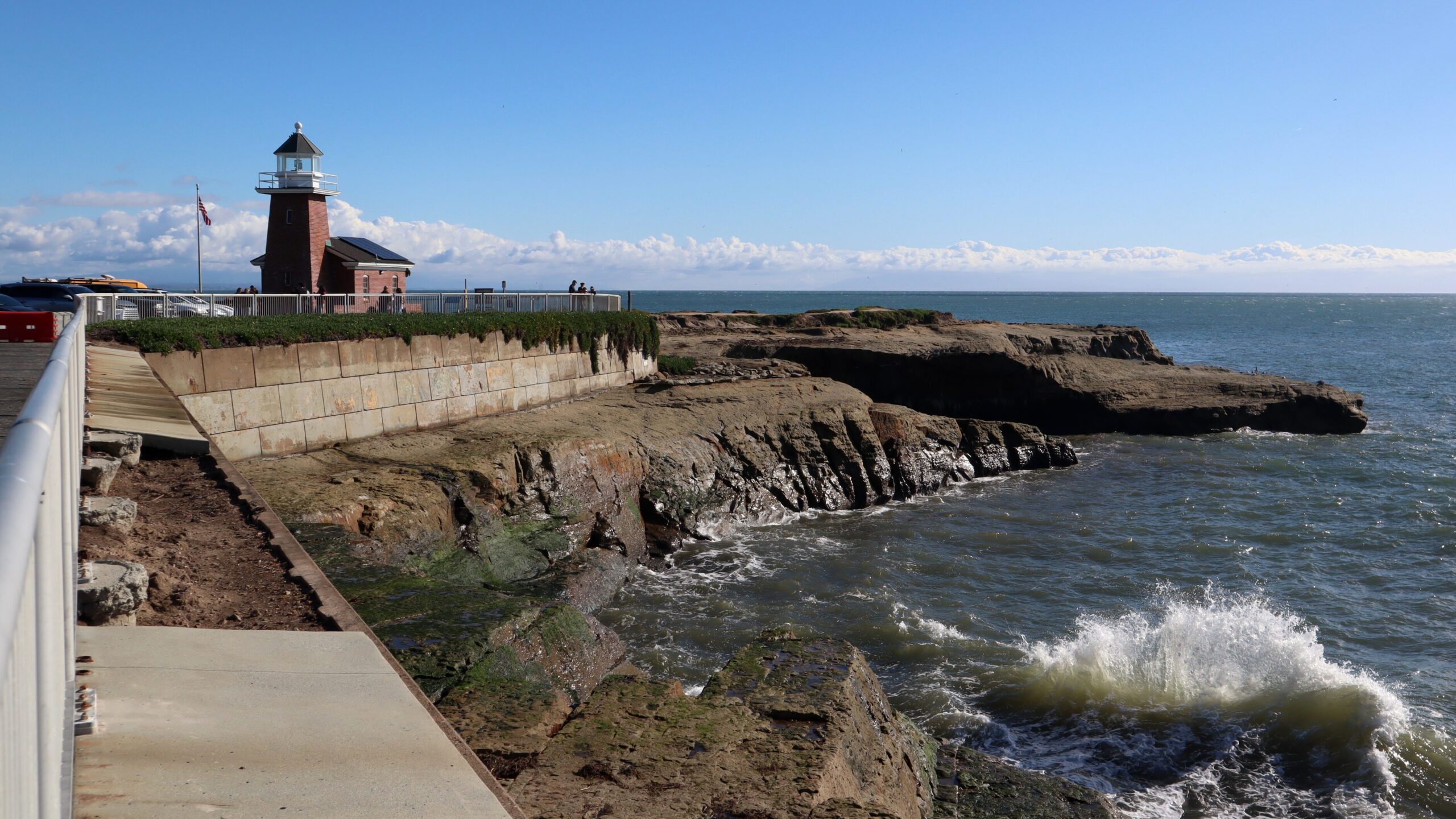
Local advocates and surfers are increasingly concerned about the future of West Cliff and its famous surf breaks. They are pushing the City of Santa Cruz to invest in a study with solutions to preserve the area from continued erosion. (B. Sakura Cannestra — Santa Cruz Local)
SANTA CRUZ >> Bob Pearson has walked West Cliff’s iconic coastline nearly every day since 1964. Whether he’s hearing the waves at his seaside home, surfing local breaks or biking along the rugged coast, West Cliff is an integral part of his life.
“I’m there damn near seven days a week,” he said.
Over the decades, Pearson has watched the cliffs dramatically change. A large chunk fell off near Getchell Street earlier this month, following days of heavy rain. The same thing happened last year and in 2023.
Pearson, owner of acclaimed Pearson Arrow Surfboards, is particularly concerned with the future of Lighthouse Point and the surrounding beaches, home to some of Santa Cruz’s most legendary surf breaks. The O’Neill Cold Water Classic surfing competition has been held at world-renowned Steamer Lane for decades, and residents and tourists alike have crowded the walkway to watch the surfers compete.
Over the past few years, stormy waters and harsh weather have eroded nearby cliffs at an alarming rate, deepening caves by Its Beach and Steamer Lane and changing. Pearson and other residents say the city is losing precious time to save the cliffs from erosion that would forever alter iconic surf breaks — and threaten the city’s multimillion dollar surfing industry. They’re pushing the city to commission a study of the cliffs and commit to potential solutions, and hope the Santa Cruz City Council will greenlight a study as early as next month.
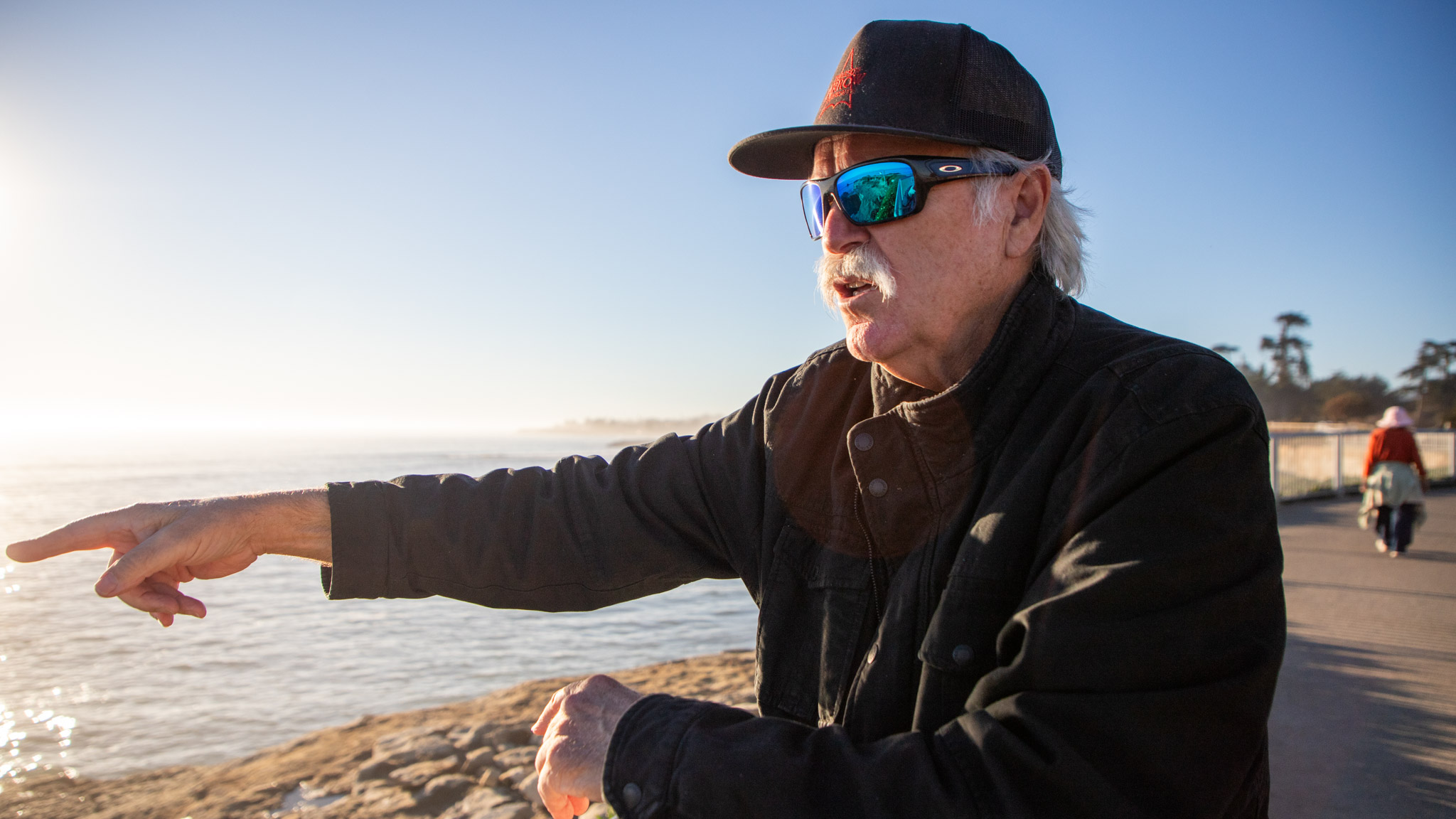
Bob Pearson, of Pearson Arrow Surfboards, points out erosion along Steamer Lane in Santa Cruz. (Amaya Edwards — Santa Cruz Local/CatchLight Local)
If the caves at Its Beach and Steamer Lane connect, then the current’s direction will change, permanently altering the surf break. And when rocks fall from the cliffs into the water, it can alter the seafloor typography and ultimately the way a wave forms, according to a July article by KALW Public Media that reported on the sweeping effects of coastal erosion in Santa Cruz.
“The city has agreed it’s an important asset, they agree it can be fixed and saved, so that’s what we need to do,” Pearson said.
Santa Cruz city staff said they are aware of the looming risks of coastal erosion on West Cliff, and the impacts it can have on the surf community — and economy.
An economics report published last year by Save the Waves found that the surfing industry generates more than $190 million annually in the city, with about $22 million from West Cliff’s surf visitors. Save the Waves is a local nonprofit that aims to protect global surfing ecosystems.
Assistant Public Works Director Kevin Crossley said the area has a long history of erosion, and the city is planning to hire a consultant to research Lighthouse Point’s conditions and maintenance options. Local surfers and environmentalists have been pushing for a renewed study of the area to kickstart plans for preservation, but worry the efforts are coming too late.
“We as staff, as well as everybody else who has an interest in this, should keep an open mind on what the recommendations and outcomes are going to be, and also recognize the more intervention that happens, the more expensive those interventions become,” Crossley said.
A 50-year plan to save West Cliff
A study of Lighthouse Point would be part of the city’s 50-year vision and 5-year roadmap for West Cliff, which set high-level goals for working with nature to protect against increasing erosion and preserve park spaces near the ocean. A committee, made up of Santa Cruz residents, city officials and city staff, advised the creation of the roadmap.
The city commissioned a similar study of West Cliff in 1984 from geologist consultants Rogers Johnson & Associates, which detailed options to combat impacts from the erosion at that time.
Don Iglesias, a member of the committee, said they weren’t aware of the 1984 report initially, as it resurfaced later in the planning phase, but that many of the report’s predicted erosion patterns have proven true.
Addressing and maintaining Lighthouse Point is a priority project in the 5-year roadmap. One option is to relocate Lighthouse Field’s roadway and walking paths, as the cliffs become less stable. Other options include what’s called “hard armoring” by pouring cement into the caves or installing rocks, or more nature-based solutions, such as planting vegetation along the coast.
From managed retreat and hard armoring, each option differs in how it could affect surf breaks, and how much it would cost.
“If the Point goes down, it’ll be a massive loss for our local economy because that surf break will never be the same,” Iglesias said.
Crossley said an updated study with more recent information will show the rate of change, potential solutions and associated costs, and how that may affect the area’s recreational uses.
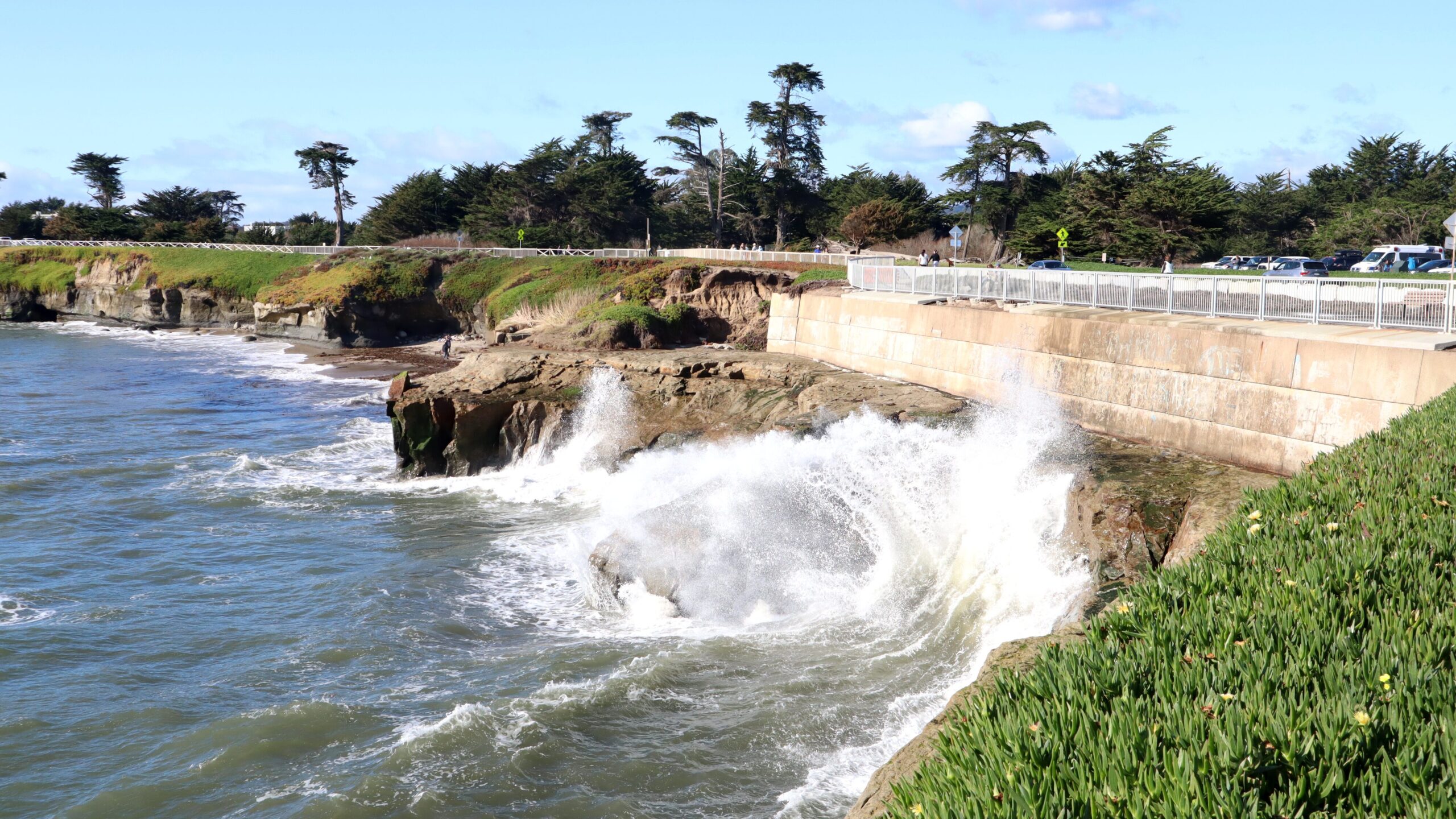
The surf industry is highly lucrative for the City of Santa Cruz, with Lighthouse Point drawing thousands of tourists annually. (B. Sakura Cannestra — Santa Cruz Local)
Loss of surf breaks, loss of revenue
Shaun Burns, the World Surfing Reserves network coordinator for Save the Waves coalition, said the city is highly incentivized to prioritize addressing erosion at Lighthouse Point. On top of threatening many of the local surf breaks, the eroding caves could impact the structural integrity of the Mark Abbott Memorial Lighthouse, home of the Santa Cruz Surfing Museum.
“Everyone’s grappling with this idea of how to manage the coast,” Burns said. “Because West Cliff and the Lane are so special to so many people in Santa Cruz, everybody feels very passionate.”
Pearson said the city initially discussed launching the study in summer 2025, but it’s been delayed. Crossley said resources are stretched thin, since the same employees who would work on the study are also on other major projects, including the Murray Street bridge seismic retrofit. He hopes to bring the contract forward for approval at a city council meeting by the end of February and expects it’ll take about a year to compile.
“We’ve been juggling various priorities and we’re finally getting this study to the top of the list,” Crossley said.
There are many proposed strategies the city could use to stave off the erosion, from installing large boulders along the coast called “rip-rap”, to artificial off-shore reefs and more. If approved by city leaders, Burns said he expects innovative solutions to come out of the study, given how much Santa Cruz residents care about the coast.
“Steamer Lane and the lighthouse is probably the most important place to look after, and it’s probably the lowest hanging fruit for the city,” Burns said. “If the city doesn’t take action on this, it’d be a bummer.”
Questions or comments? Email [email protected]. Santa Cruz Local is supported by members, major donors, sponsors and grants for the general support of our newsroom. Our news judgments are made independently and not on the basis of donor support. Learn more about Santa Cruz Local and how we are funded.

B. Sakura Cannestra is a politics and governance journalist based in San Jose. She previously reported for San José Spotlight and POLITICO California. She graduated from UC Berkeley in 2023 with a Master's of Journalism, where she also got her start as an undergraduate in 2016 covering the university and city of Berkeley for the Daily Californian.