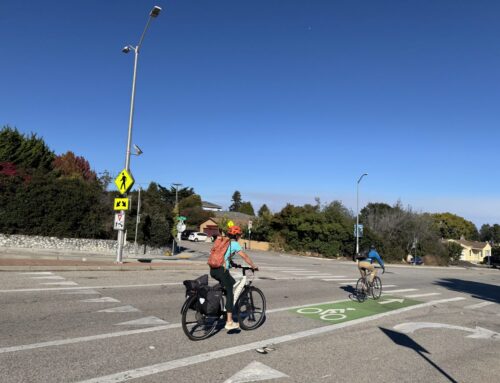
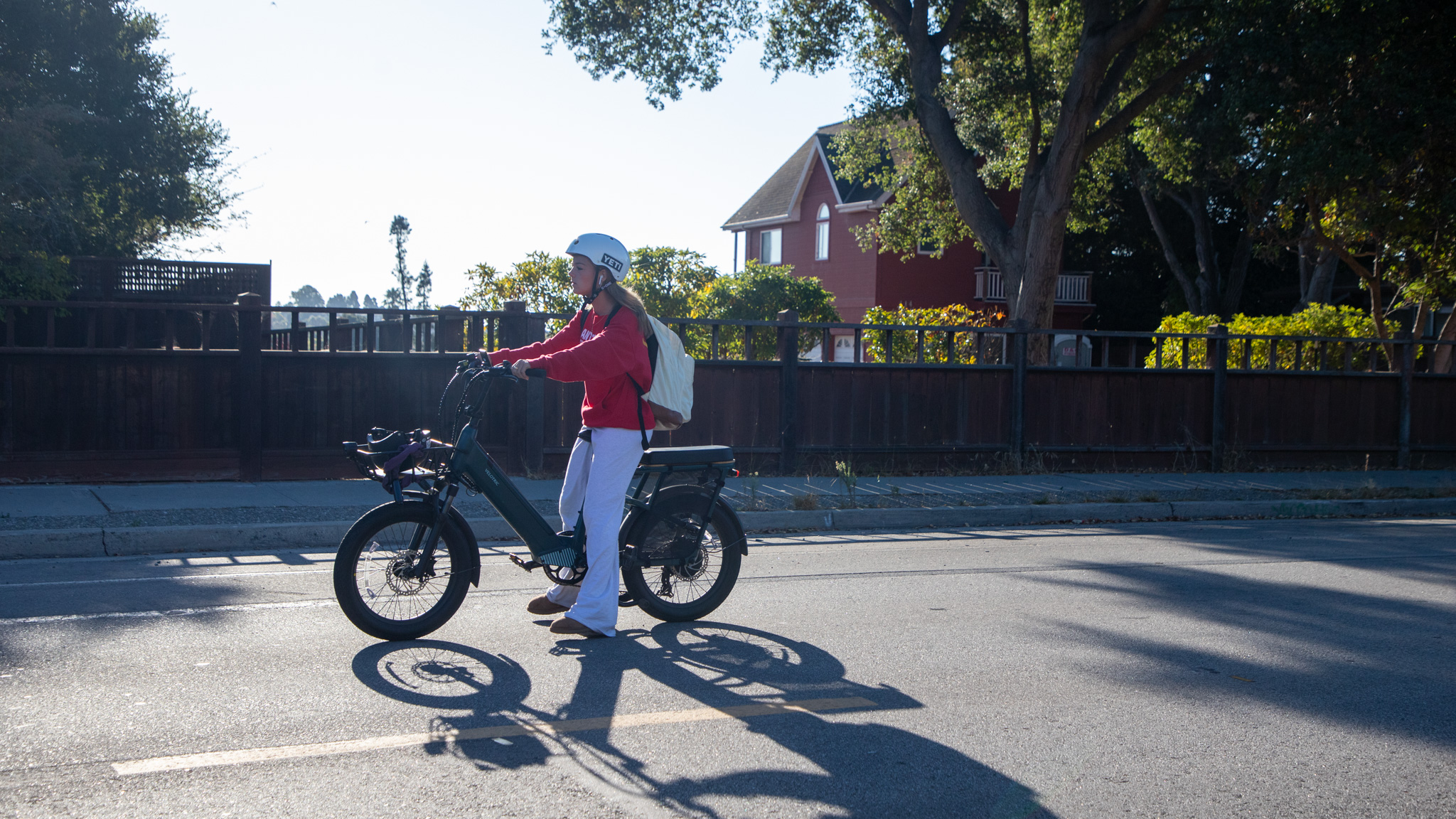
E-bikes have become increasingly popular with youths in Santa Cruz County in the past several years. (Amaya Edwards — Santa Cruz Local/CatchLight Local)
SANTA CRUZ >> The Santa Cruz Police Department is cracking down on what they describe as electric motorcycles, and want residents — especially parents — to know the difference from street legal e-bikes.
As high-powered e-bikes have become increasingly popular with young people in Santa Cruz County, some residents have pushed for measures to keep riders, other cyclists and pedestrians safe.
Electric bikes:
- Can go up to 28 mph, or up to 20 mph with a throttle alone.
- Can use no more than 750 watts.
- Must have pedals.
Electric bikes that go up to 30 mph and don’t have pedals are legally considered electric mopeds, and those that go more than 30 mph are classed as electric motorcycles.
To be used on streets, the Department of Motor Vehicles requires that mopeds and motorcycles have headlights, turn signals and other safety features. They require a motorcycle driver’s license and are restricted to riders at least 15 ½ years old.
But many electric mopeds and motorcycles don’t have those features, and are intended for off-road trails, said Santa Cruz Police Lt. Wes Morrey at a Monday meeting of the Santa Cruz Transportation and Public Works Commission.
Santa Cruz police are taking a “zero-tolerance approach” towards illegal electric motorcycles and mopeds being used on streets, Morrey said. Within the past month, he said, officers have stopped 12 minors riding illegal e-motorcycles on streets and impounded the bikes.
To reclaim the bikes, parents must go to the police department and pay impound fees. They also face a fine for violating a state law against allowing a child to operate a motor vehicle, Morrey said.
Morrey and commission members said there needs to be more education for parents about legal restrictions for e-bikes and e-motorcycles. Most of the illegal electric motorcycles police officers see are being ridden by children, Morrey said.
“This problem doesn’t stop until people know to stop buying these and know that they can’t ride them here and they shouldn’t ride them here,” said Commissioner Ryan Meckel.
Other e-bike rules
E-bikes are categorized into three classes:
- Class 1 e-bikes can go up to 20 mph, and only add speed while the rider pedals.
- Class 2 e-bikes can go up to 20 mph, and can use a throttle and/or pedal assist.
- Class 3 e-bikes can go up to 28 mph with a combination of throttle and pedal assist. Riders must be 16 or older.
All bike and e-bike riders and passengers under 18 years old must wear a helmet. Riders of Class 3 e-bikes of any age must wear a helmet.
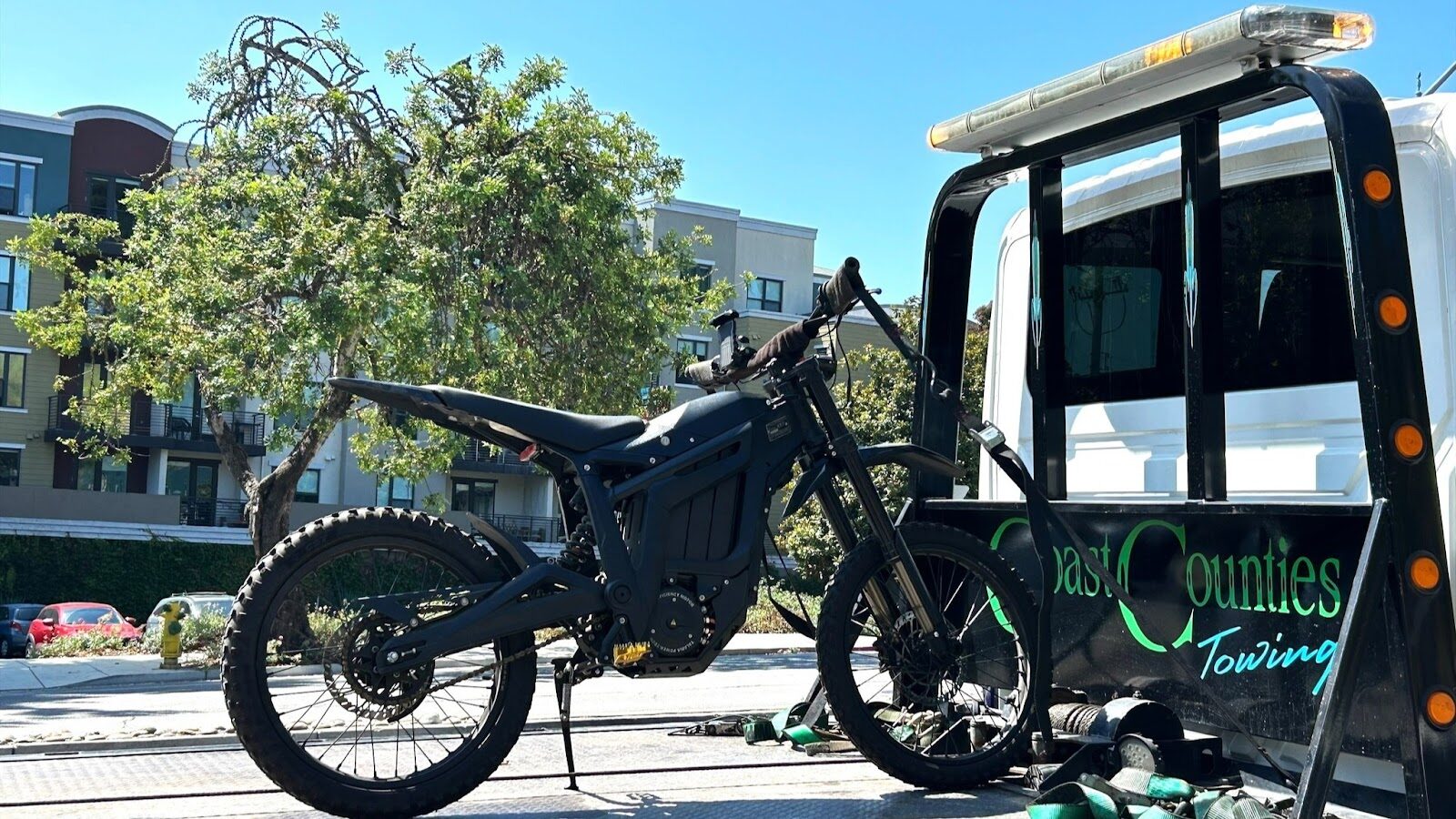
E-motorcycles, which may look similar to e-bikes but often do not have pedals, can be towed and impounded. (Santa Cruz Police Department)
The Transportation and Public Works Commission voted to recommend the Santa Cruz City Council update city laws to align with state rules on e-bikes, including one that requires passengers to have their own seat and footrests.
E-bikes must follow the same rules of the road as bicycles and cars:
- Ride in the direction of traffic.
- Stop at stop signs and stoplights.
- Yield to pedestrians.
- Signal before turning.
- Don’t use a phone while riding.
Riders who violate these rules can be stopped and ticketed. Fees depend on the severity of the violation. While many residents have pushed for new e-bike rules, “the things that people are telling me that they’ve seen that they don’t like,” like running stop signs and not yielding to pedestrians, violate “rules that already exist,” said Santa Cruz Transportation Planner Claire Gallogly.
New regulations possible
In November, the Santa Cruz City Council is set to consider ways to address residents’ concerns about unsafe e-bike riding. That could include new education programs for safe e-bike use and e-bike parking permits for schools that verify the bikes are street legal.
The city council could also lobby state legislators to adopt legislation with specific e-bike restrictions in Santa Cruz, as two state laws have recently done.
- Starting July 1, Marin County banned anyone under 16 years old from riding Class 2 e-bikes, and requires all Class 2 bikers to wear a helmet.
- Another state law allows San Diego County, or cities within the county, to ban anyone under 12 years old from riding Class 1 or 2 e-bikes.
Because traffic rules are generally decided at the state level, state legislation is needed to make changes.
The commission also voted to advise the city council not to pursue new restrictions like speed limits on paved paths, including along the rail trail and in Arana Gulch. Those limits would be extremely difficult to enforce, said Gallogly and Morrey. “It would be more like the honor system,” Gallogly said.
Commission chair Ron Goodman said the city shouldn’t pursue new restrictions on e-bike use, instead suggesting the city should focus on enforcing existing rules and educating riders and parents.
“It’s completely unfair to say to someone who is following the rules on the road ‘you can’t do it,’ because there’s a lot of people” who violate those rules, he said.
What do you think?
Questions or comments? Email [email protected]. Santa Cruz Local is supported by members, major donors, sponsors and grants for the general support of our newsroom. Our news judgments are made independently and not on the basis of donor support. Learn more about Santa Cruz Local and how we are funded.

Jesse Kathan is a staff reporter for Santa Cruz Local. They hold a master's degree in science communications from UC Santa Cruz.