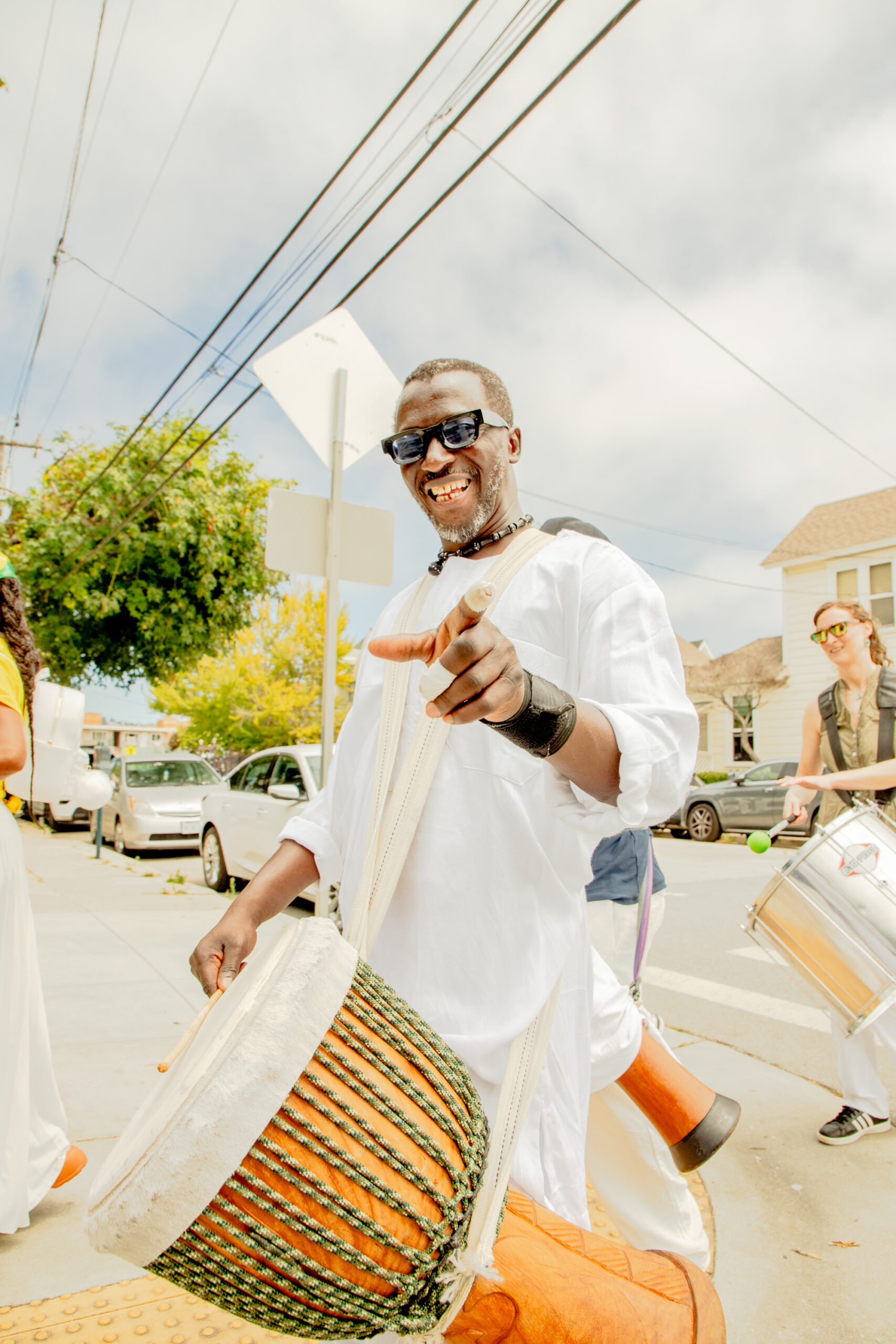
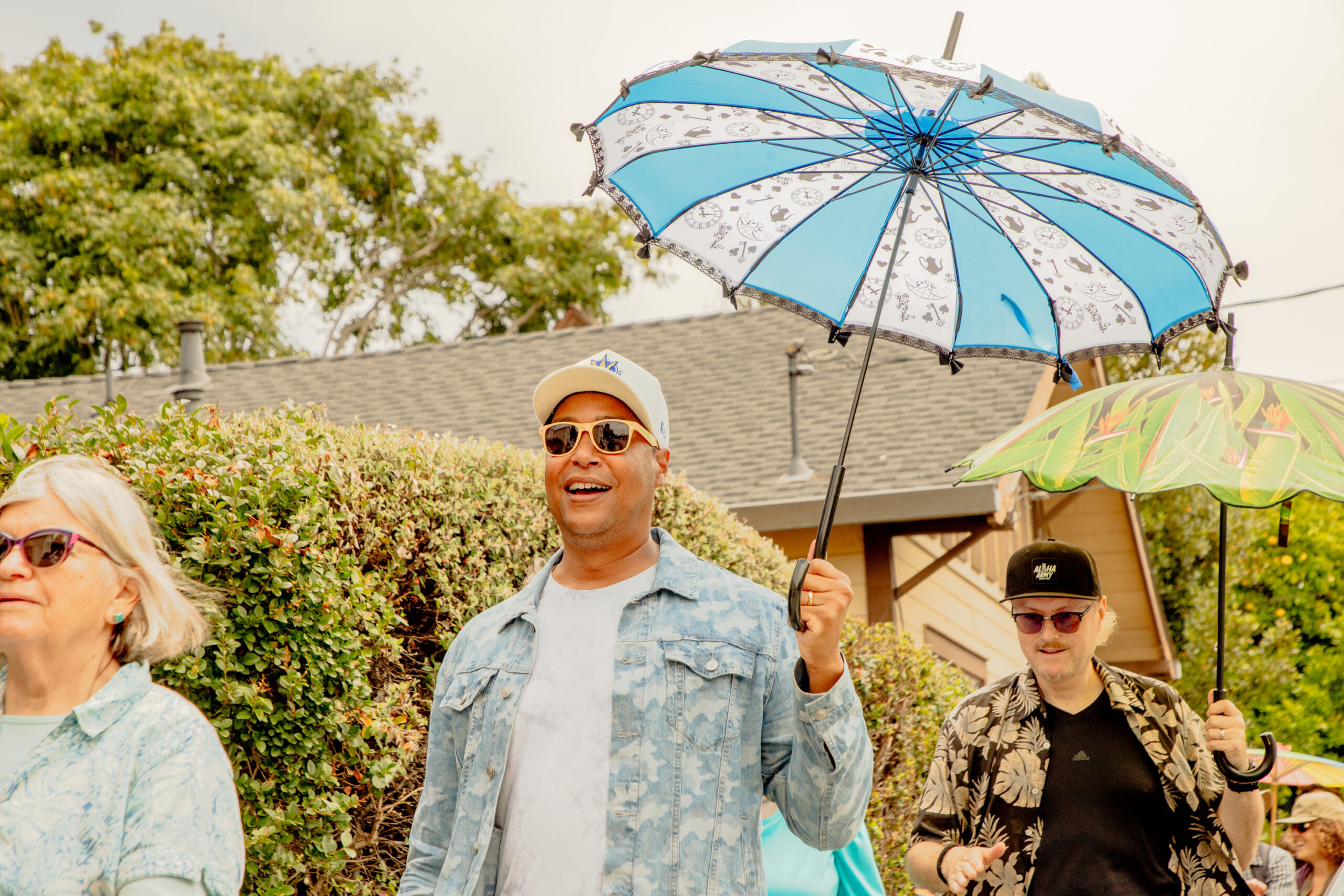
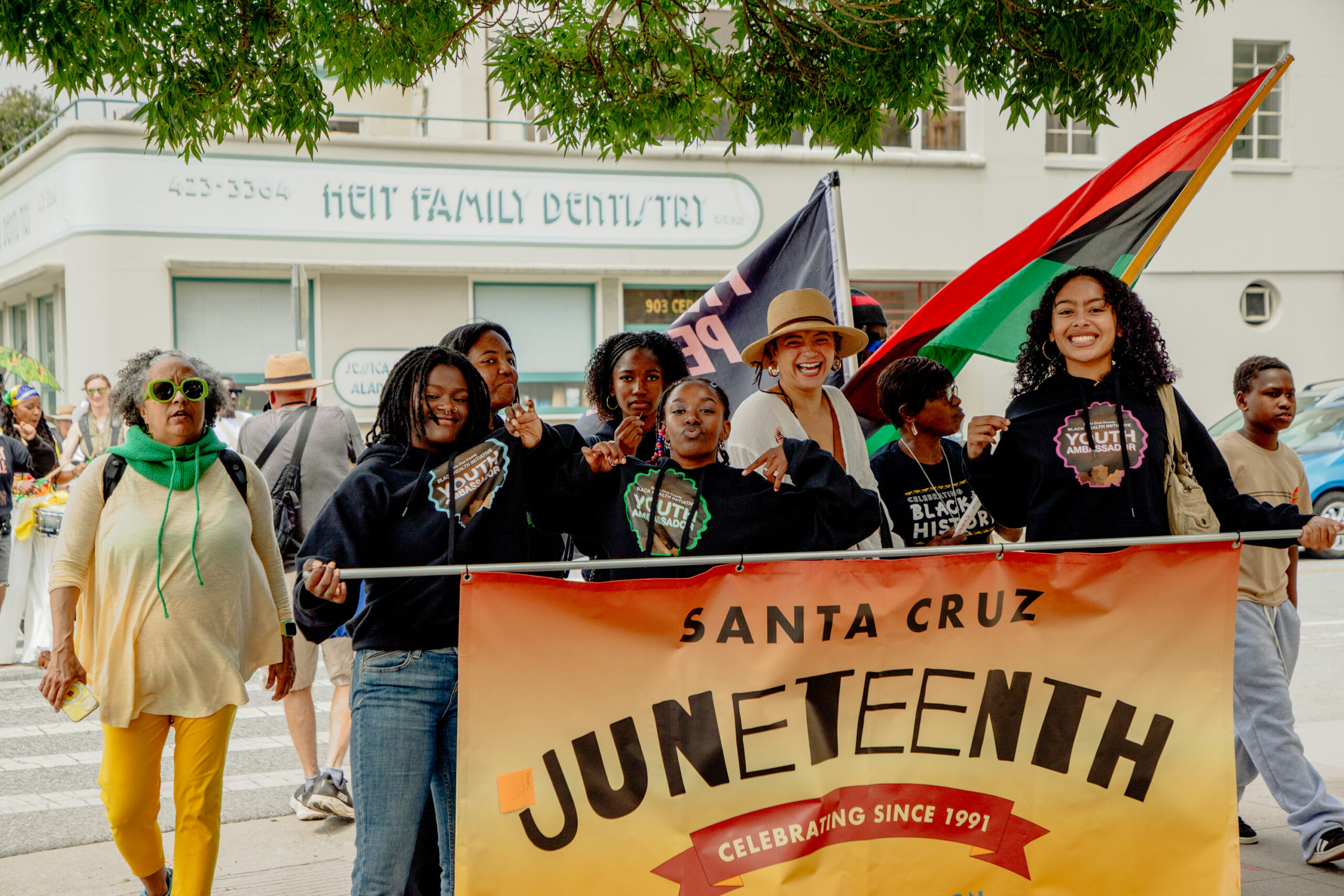
All photos were taken by Amaya Edwards, photo & social media journalist and a fellow with CatchLight Local.
Santa Cruz Local interviewed eight Black community members in honor of Juneteenth. These individuals are leaders and pillars of the community, working each day to make Santa Cruz a more welcoming space for Black people and ensuring their voices are heard.
Reporter Amaya Edwards spent one month capturing this story as part of an enterprise project in collaboration with her fellowship at CatchLight Local. Amaya is a mixed-race Black woman. She shares with readers why she wanted to pursue this story, and why it was especially personal to her.
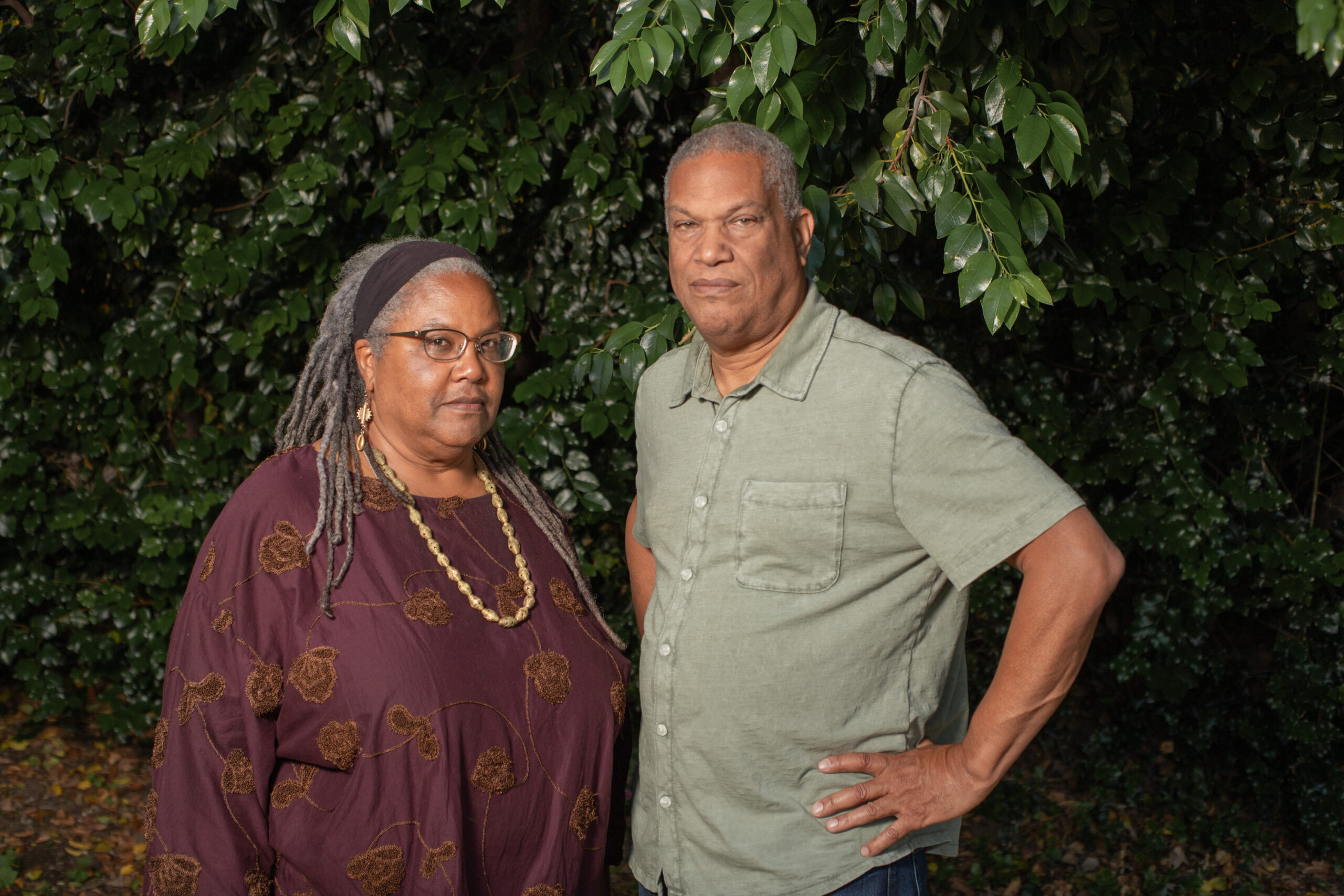
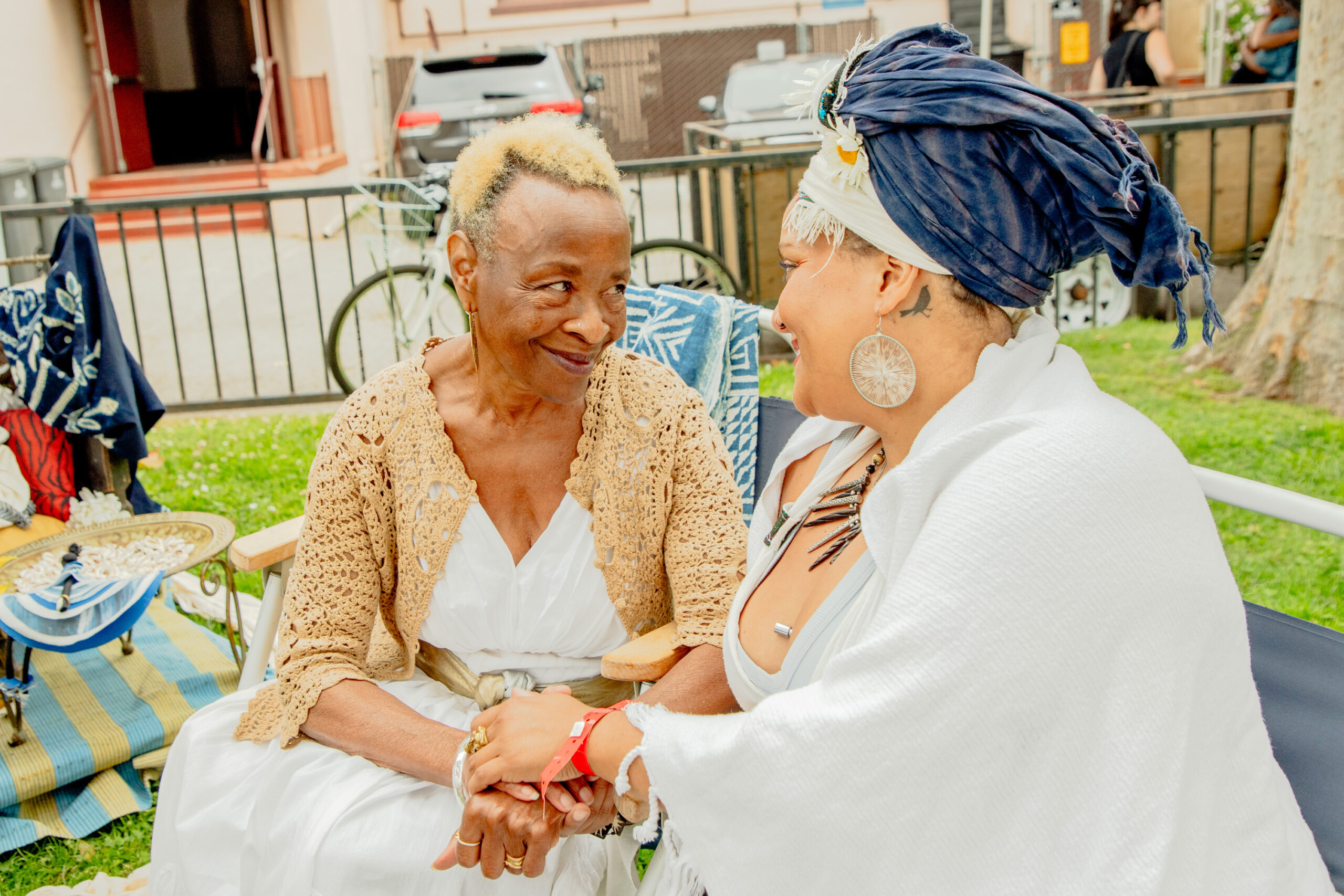
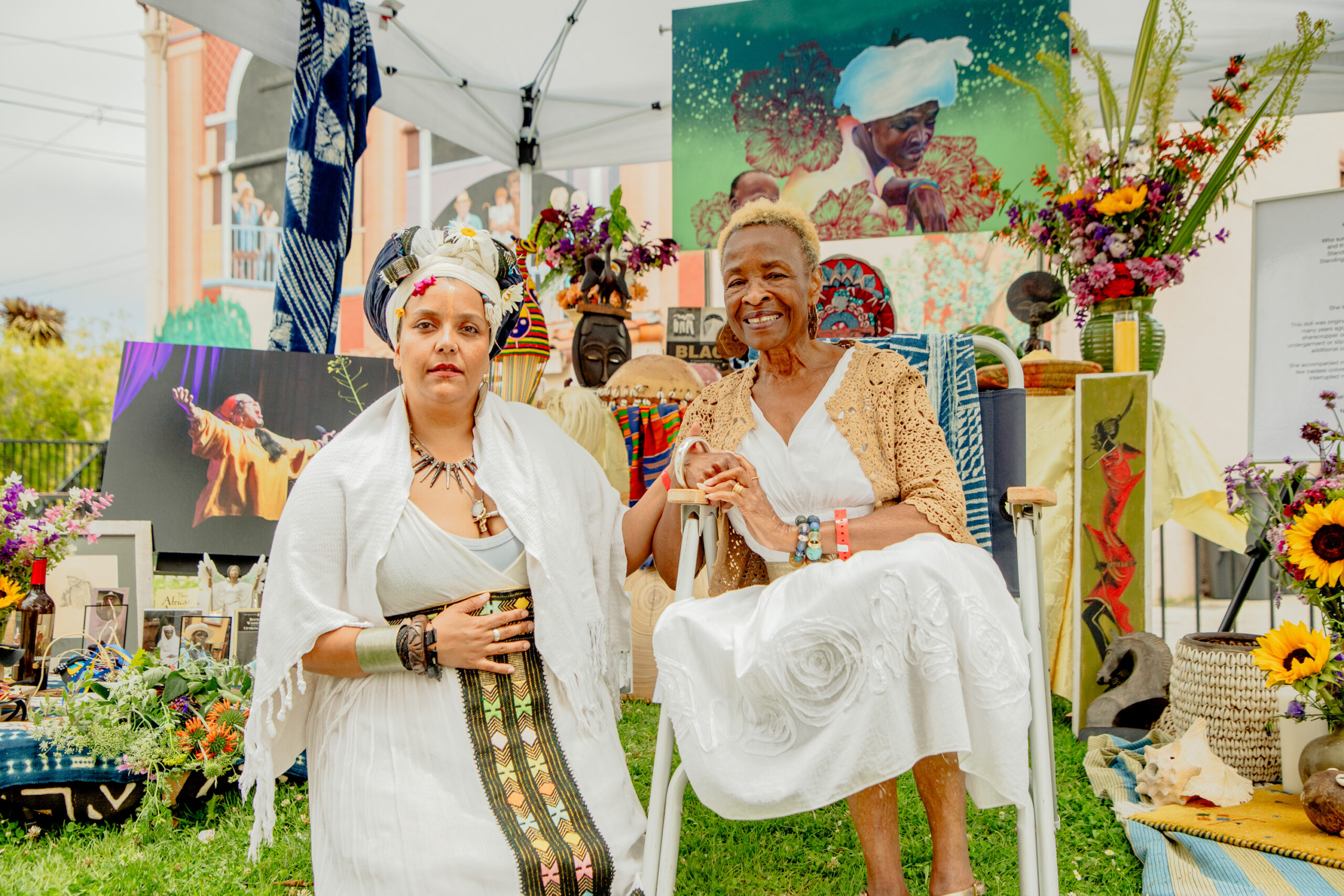
Ana Elizabeth and David Claytor pose for a portrait at the Tannery Arts Center on June 3.
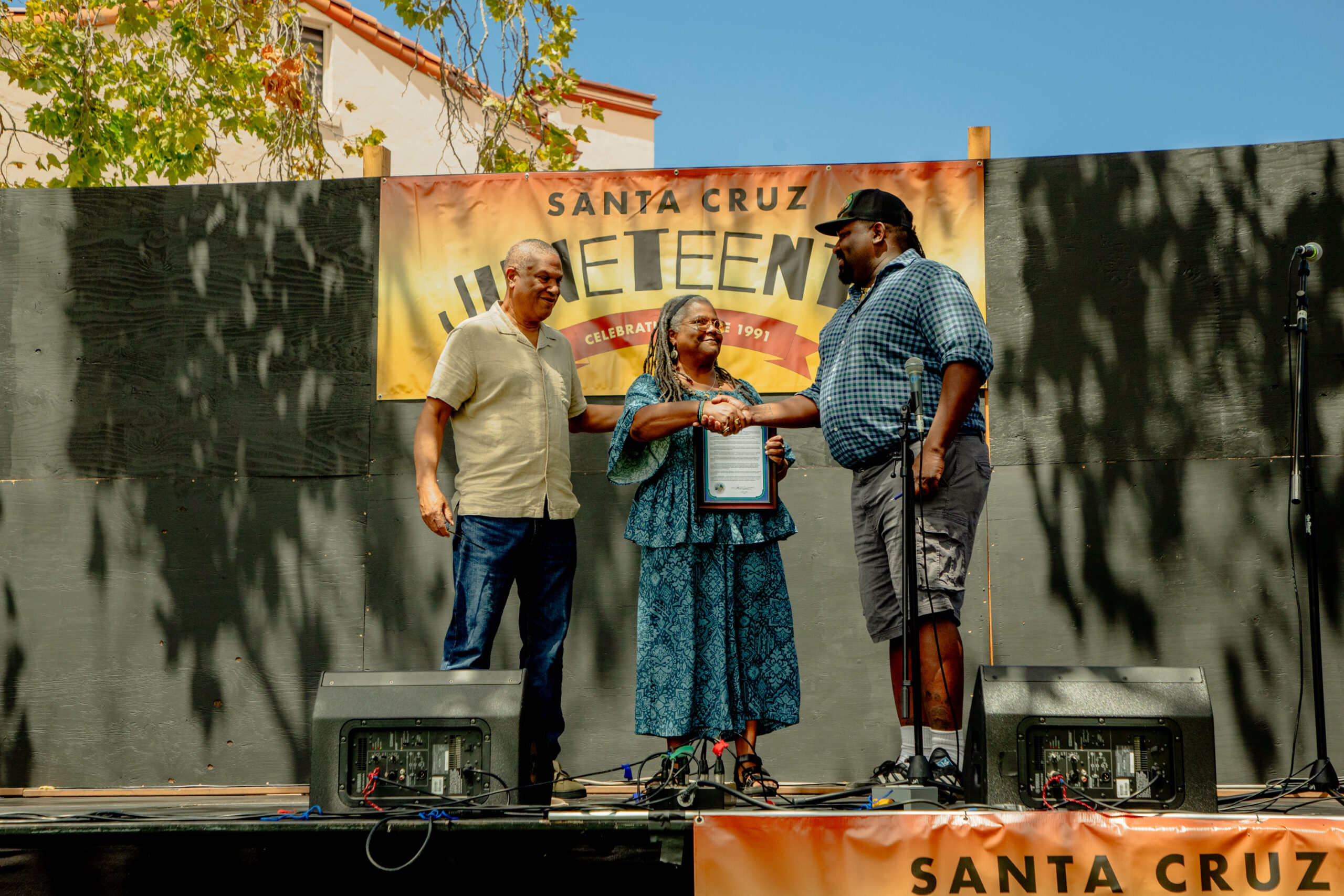
The siblings moved to Santa Cruz from Rochester, New York about 45 years ago. Together, the siblings have been co-producing the annual Santa Cruz Juneteenth celebration for 28 years. Claytor, owner of SURETHING Productions, and Elizabeth, Senior Executive, took over the Juneteenth event when their predecessor Raymond Evans retired.
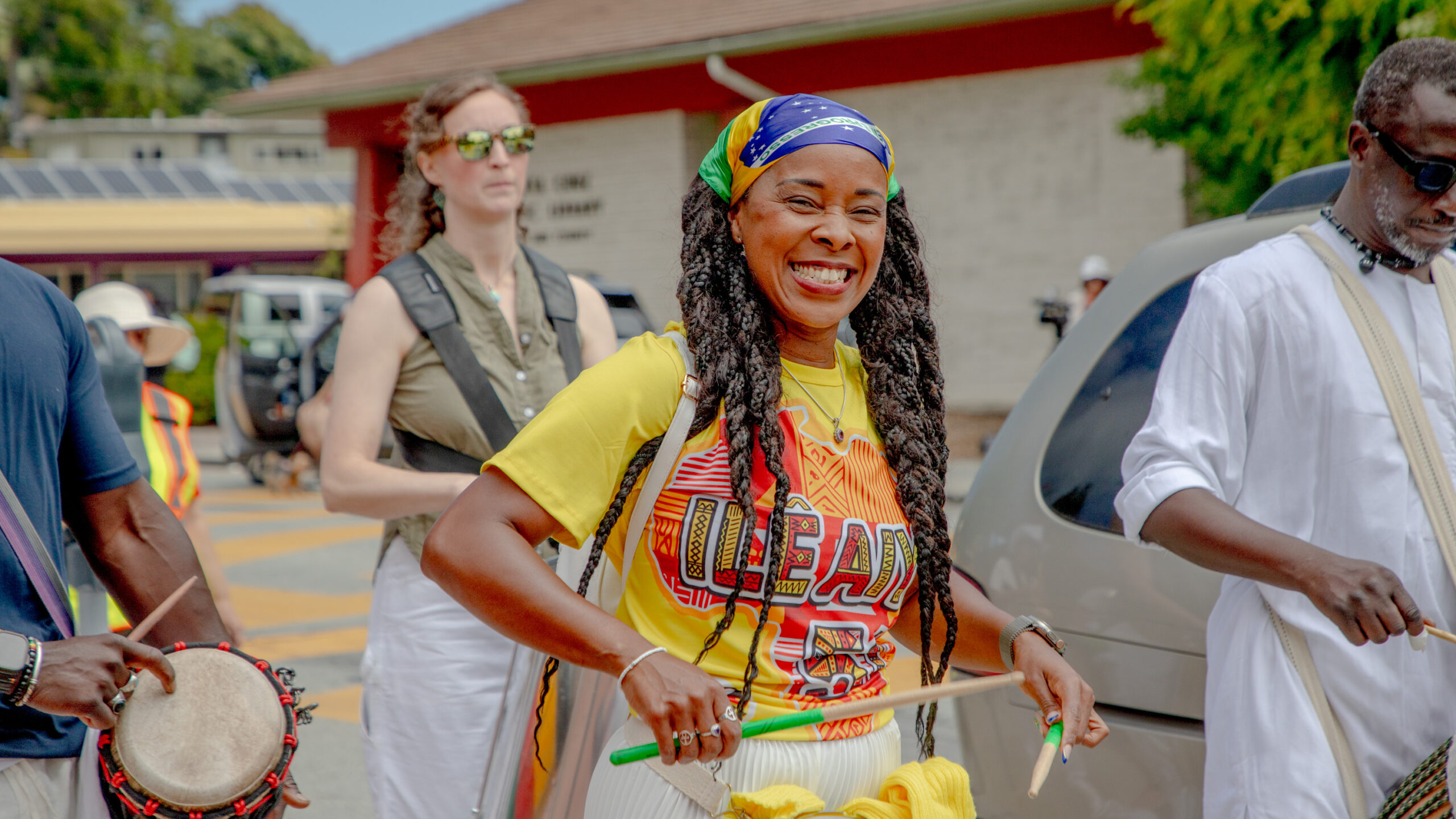
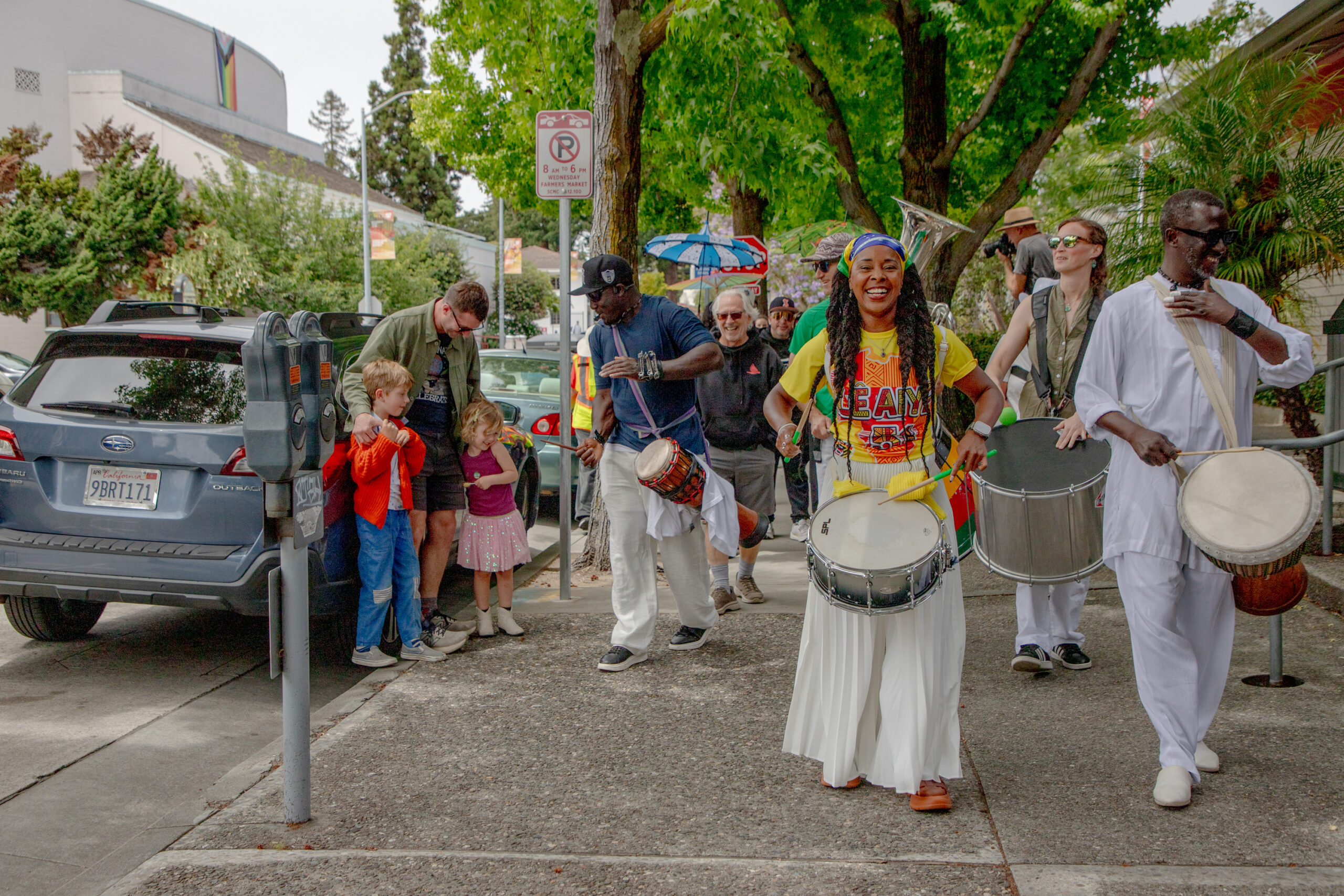
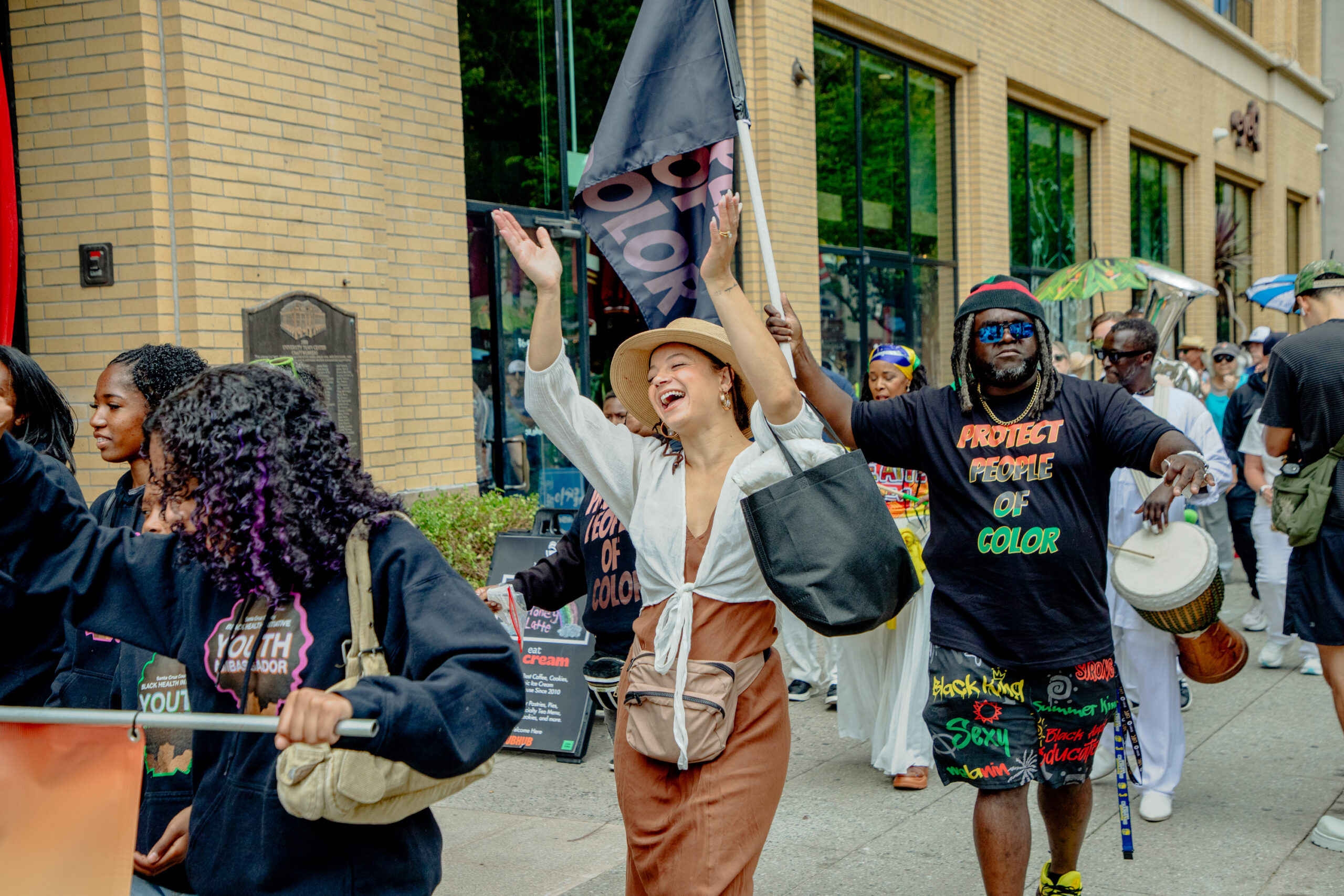
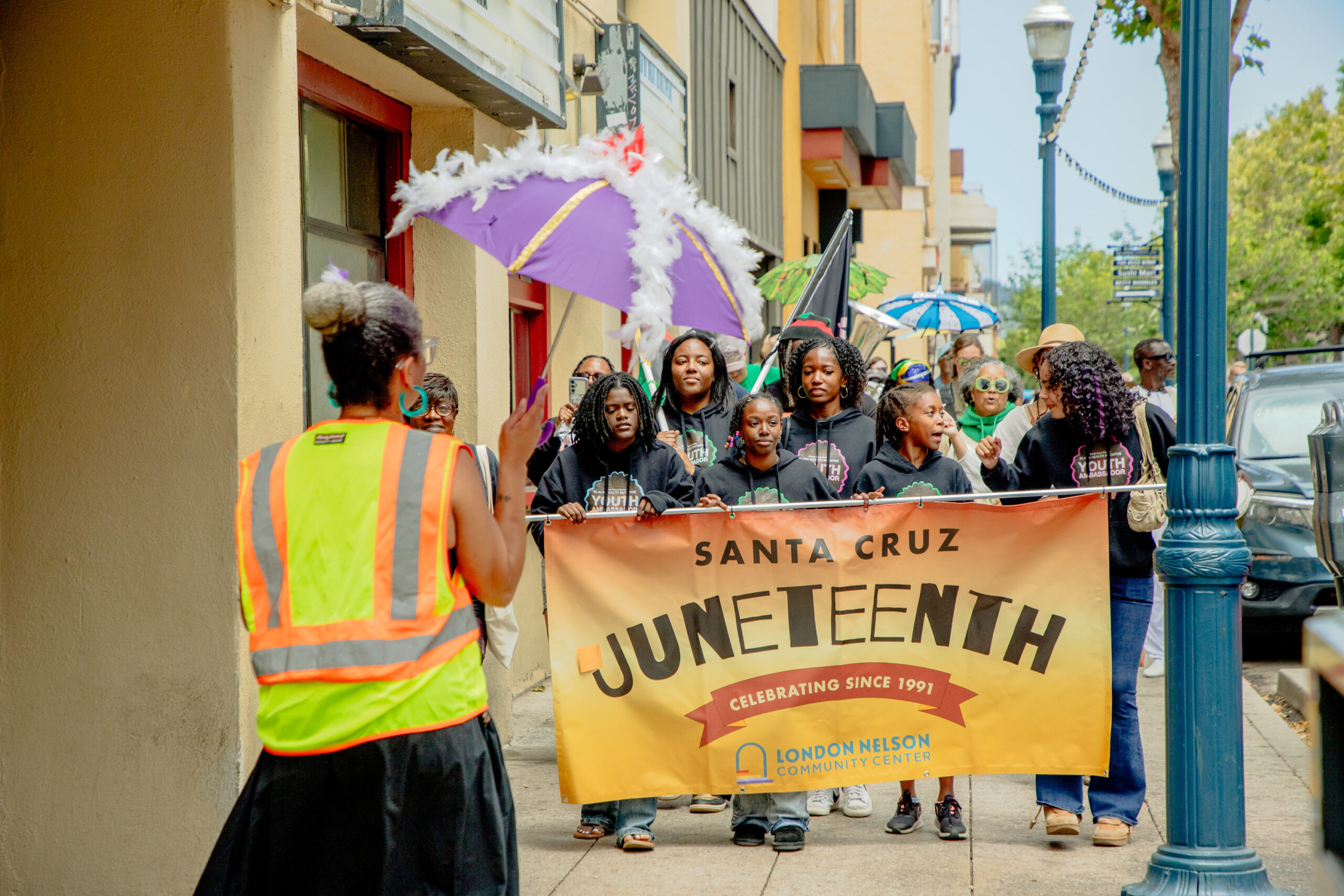
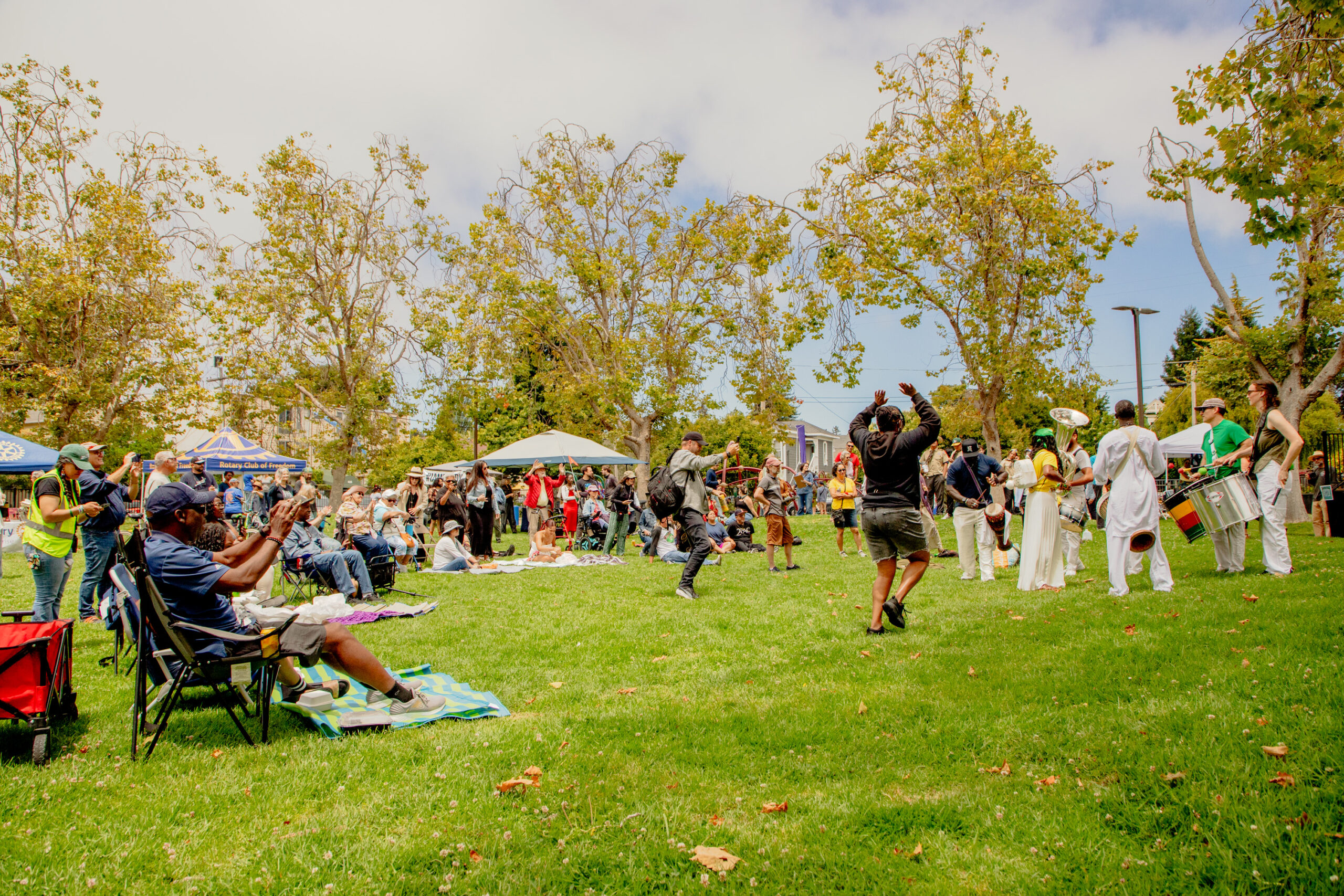
Santa Cruz is home to one of the longest running Juneteenth celebrations in California, with this year marking the 35th annual event. One thing that inspires the sibling pair to keep producing the event is the hope that they will be able to pass down the responsibility to the next generation. This year, teen volunteers as young as 12 shadowed Elizabeth and Claytor as they led the event on Saturday, June 13.
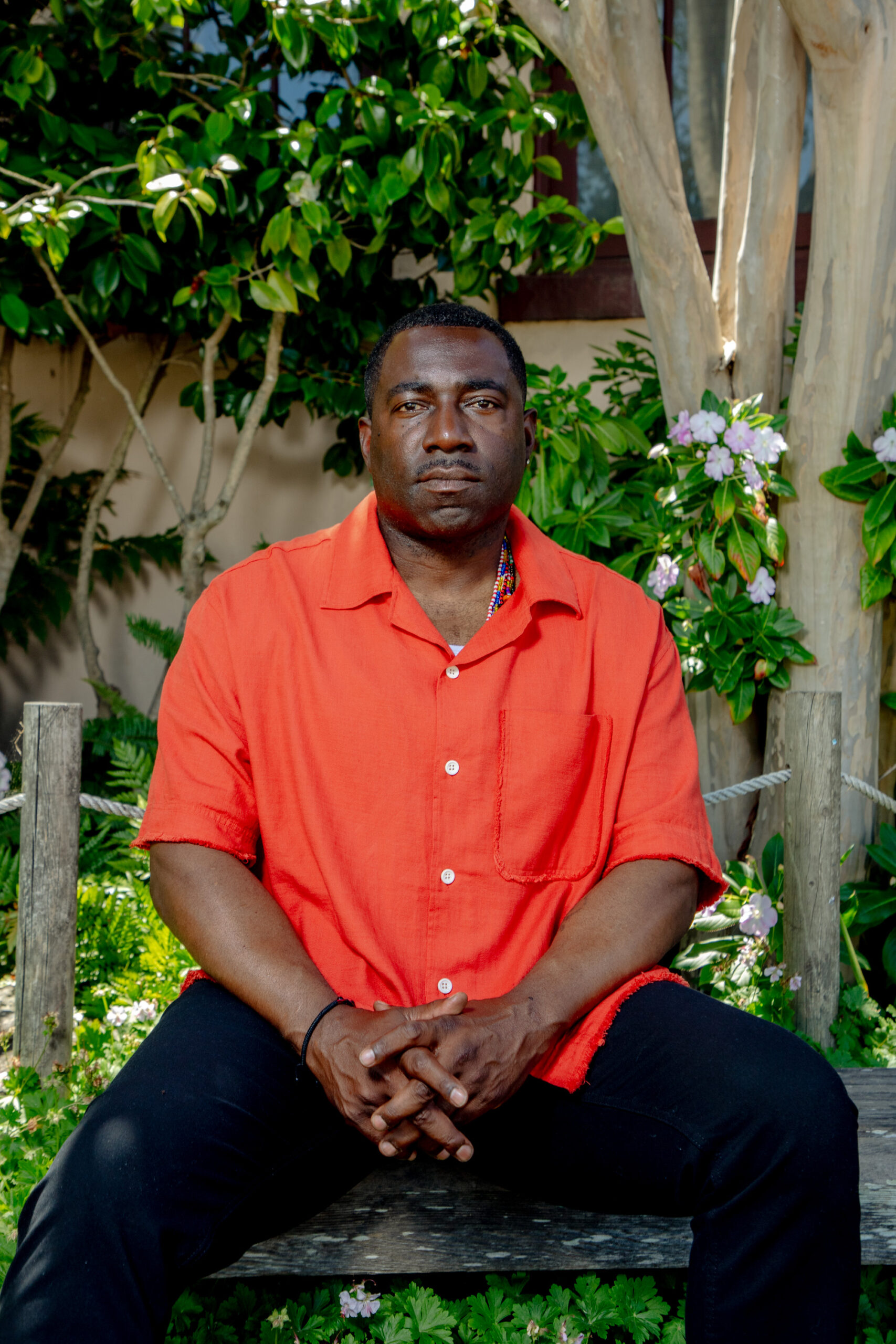
Reggie Stephens poses for a portrait at the London Nelson Community Center on June 9. When Stephens moved from Shreveport, Louisiana to Santa Cruz in 1990, the London Nelson Community Center was one of the first places his uncle brought him.
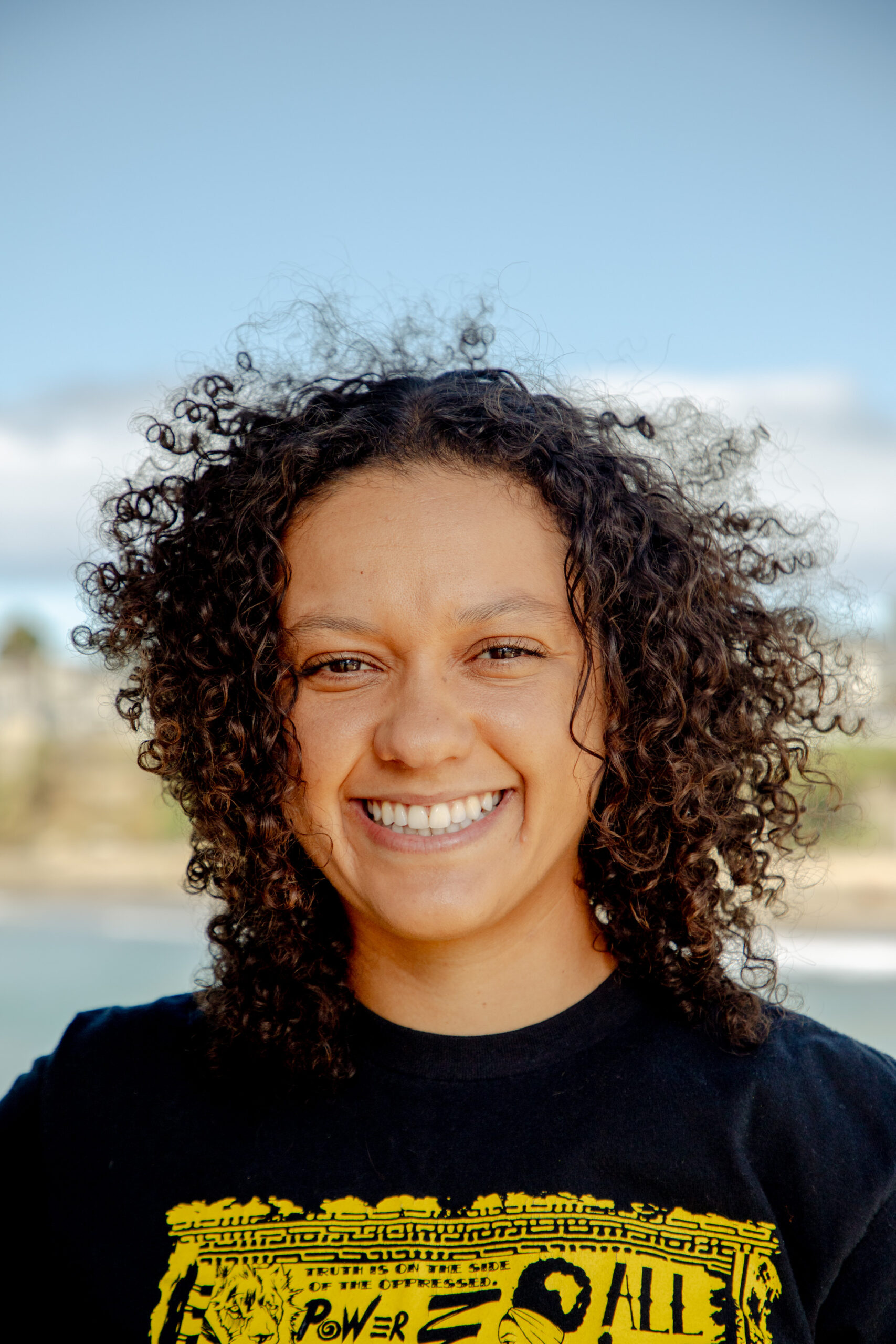
Esabella Bonner, founder and executive director of Black Surf Santa Cruz, poses for a portrait on the Santa Cruz Wharf on June 9. She is the founder of Black Surf Santa Cruz: an organization empowering the Black community to reclaim their space in the ocean.
Reggie Stephens, a former NFL player, started the Reggie Stephens Foundation to give back to the local Black community in the same way local Black leaders helped him.
“I’ve been doing the work for a long time, and I just want people to know what the foundation means: sports, art, education, culture, seek, believe, achieve, you seek it, you believe it. I’ll help you achieve it,” Stephens said.
Stephens is dedicated to helping student athletes get to college. He’s built a partnership with Morgan State University. The Foundation currently has sent 13 students to study at Morgan State. Stephens chooses to celebrate Juneteenth out of respect to his ancestors. In a city where Black people make up just 1.5% of the population, having Black spaces is important, he said.
Santa Cruz was a culture shock for Esabella Bonner when she moved here from the Bay Area in 2005. Bonner is passionate about building community and curating intentional experiences. For her this looks like gathering in outdoor spaces for “Black people to chill out together and just be.”
This is part of the reason why she started her organization, Black Surf Santa Cruz. After organizing her first protest in support of the Black Lives Matter movement, she continued organizing in the community to create spaces for Black and brown people. This came in the form of paddle-outs and more protests. It is because of slavery and racism that Black people’s relationship to water can be so complicated and painful, she said.
On Juneteenth weekend, Black Surf Santa Cruz hosts an annual liberation paddle out.
“I prefer the term commemorating Juneteenth versus celebrating Juneteenth, just because the history is very real and honest, and it’s important to acknowledge and honor that painful truth, so that we can come together and celebrate. We have to, we have to earn the celebration,” Bonner said.
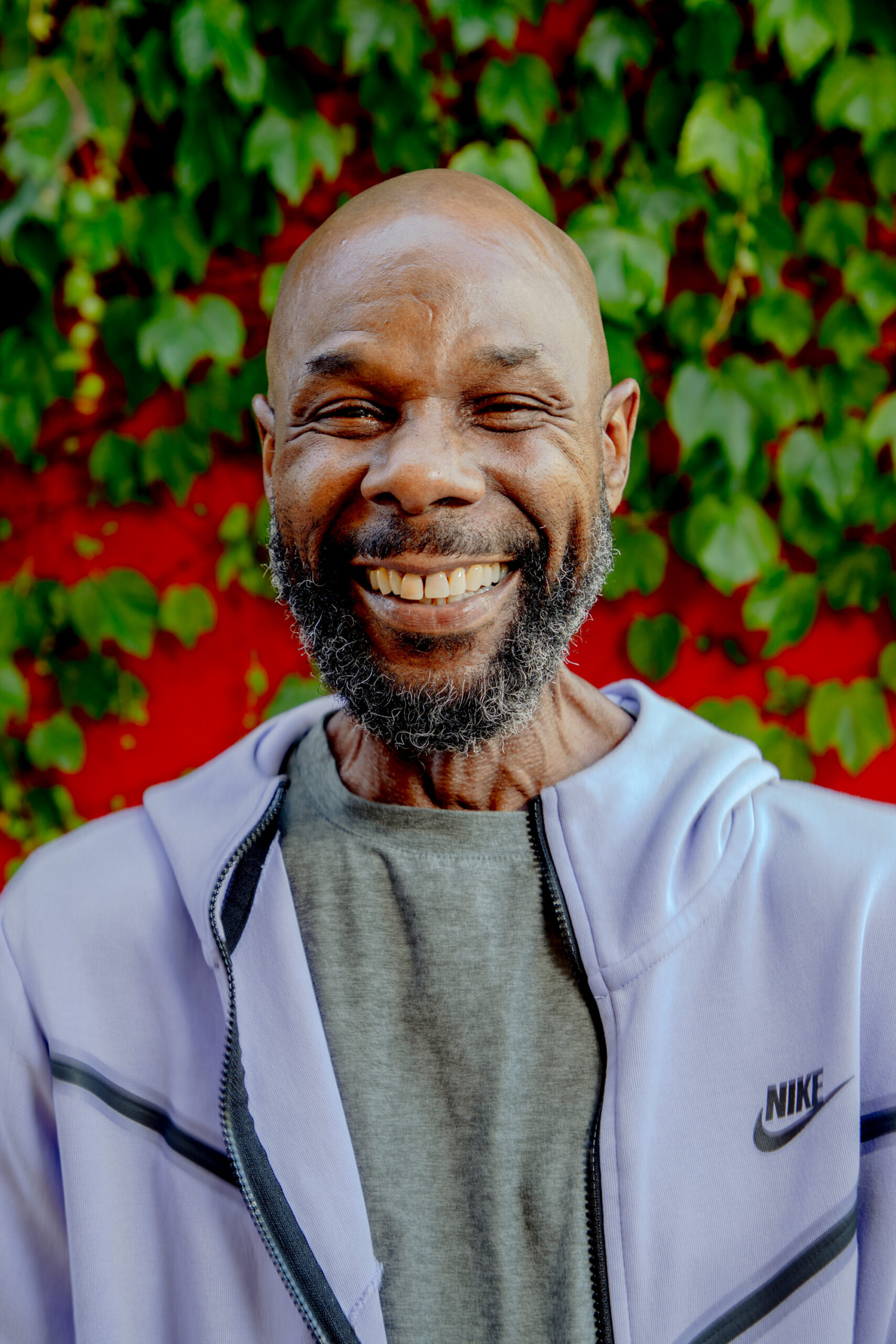
Kelvin Nivens poses for a portrait at Abbott Square on June 11. Nivens drove from North Carolina to California in 1992 and within a week of living in Santa Cruz, he found two jobs and a place to live.
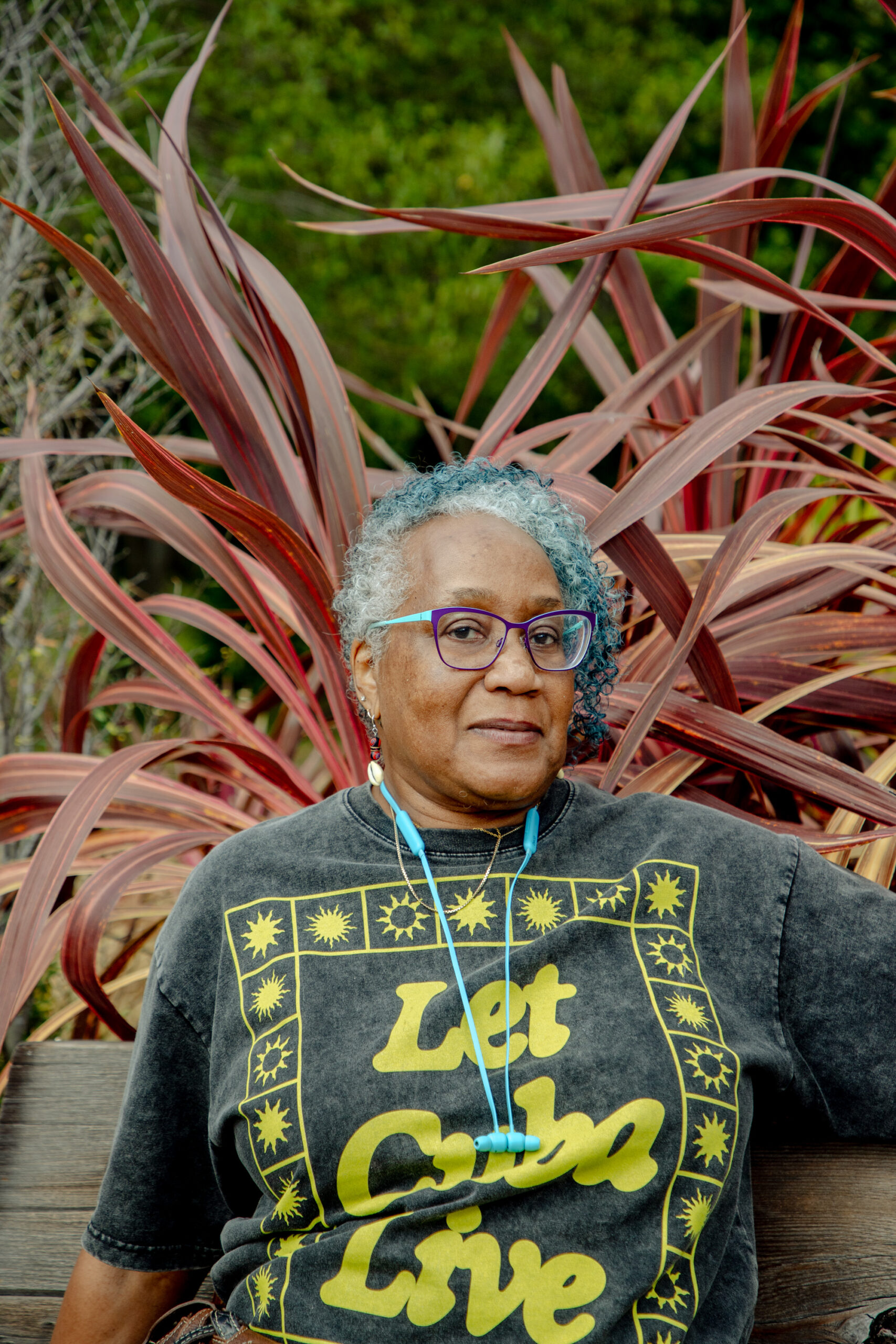
Cheryl Williams, co-founder of Santa Cruz Black poses for a portrait at the University of California Santa Cruz Arboretum on June 14. Santa Cruz Black is a local grassroots organization born from a time Williams’ refers to as the “Black Spring.”
Most people know of Kelvin Niven’s work in the health and fitness industries. For almost 12 years, Nivens was the owner, sole proprietor and operator of a local CrossFit gym. This work led him to creating his non-profit, Project Daraja, which aims to make health and wellness more accessible for underserved, marginalized individuals, and also the broader public in Santa Cruz County. Project Daraja focuses not just on physical wellness but inner strength and inner peace, helping to put people in touch with their own humanity.
Because of his work, Nivens knows the power of community, and how powerful events like Juneteenth are – he said it’s often one of the only times Black residents in Santa Cruz county come together.
The UCSC Arboretum is one of Williams’ favorite places because she studied biology with an emphasis on botany at Boston University before moving to Santa Cruz in 1979. When Williams thinks of Juneteenth, she is reminded that the fight for Black freedom and liberation is continuous. After watching the video of George Floyd’s murder, Williams remembers being numb. It was then that she and other women from a group chat decided they needed to act and they organized a protest.
“We all saw the murder of someone, whether you saw it over the weekend, whether you saw it when you got into work, whatever, whatever time it was weighing heavy on people’s minds. And that is the beginning. And then there were meetings, community meetings, and by the end of 2020 there was a group established, we had a name and a steering committee, and from that steering committee we launched Santa Cruz Black,” Williams said.
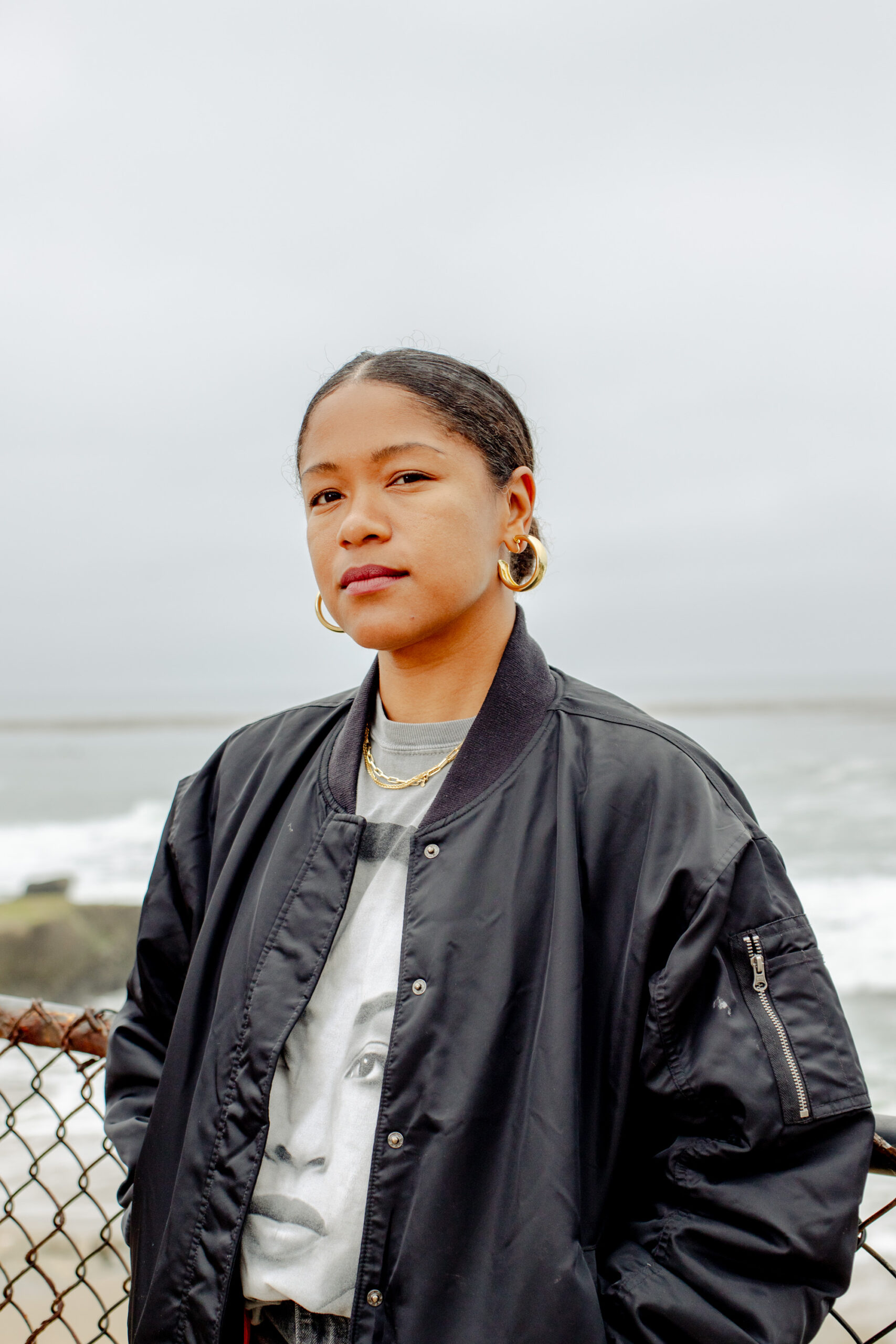
Chelsea Woody poses for a portrait at Rockview Drive County Park on June 4. Woody, a registered nurse and surfer, has been living in Santa Cruz for a decade. She is also the founder of Textured Waves, an organization dedicated to Brown and Black women in surfing.
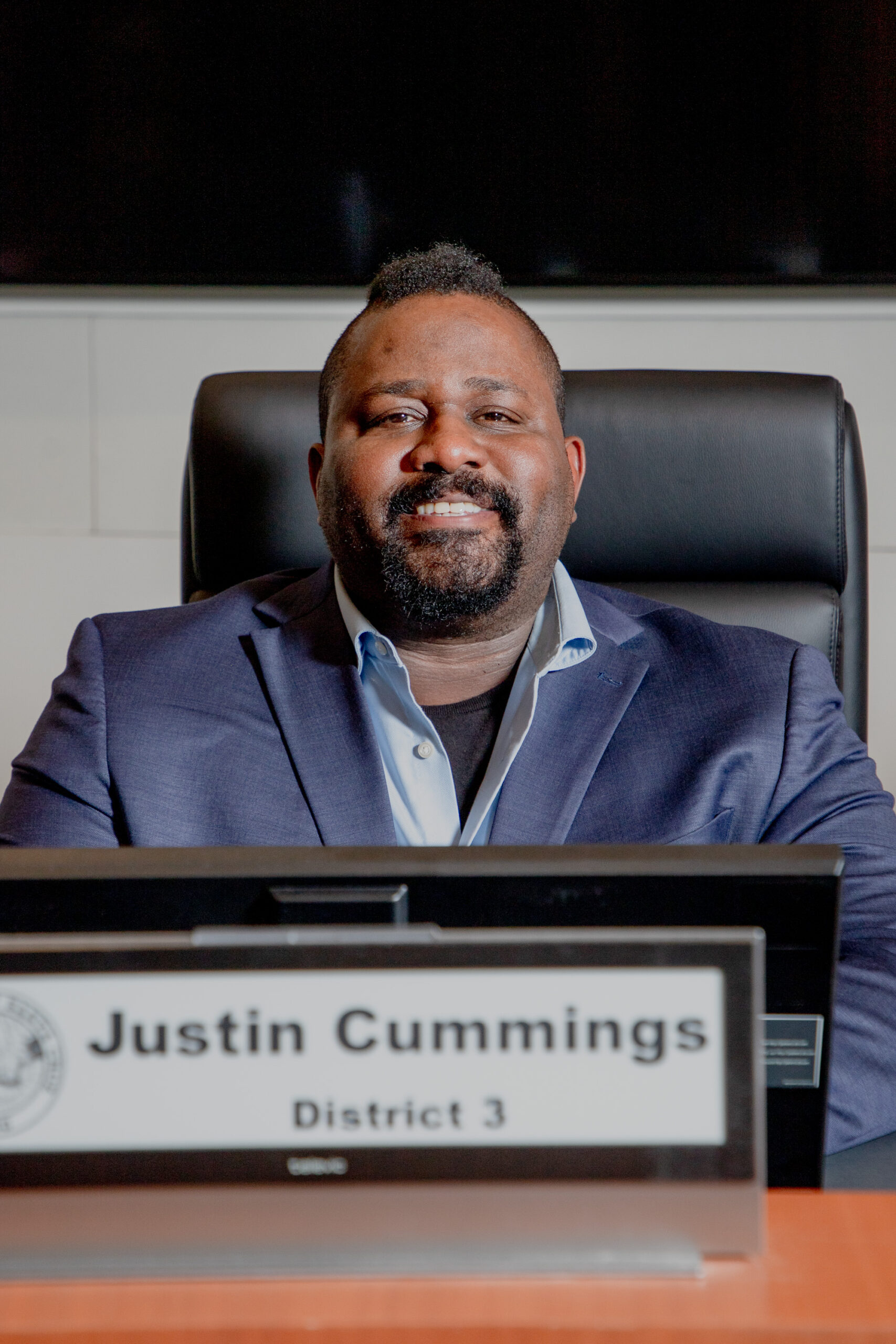
Santa Cruz County Supervisor Justin Cummings poses for a portrait in the supervisors meeting chamber on June 12. Growing up in the Southside of Chicago, Cummings found what he was looking for when he finally moved to Santa Cruz for a UCSC graduate program in 2007.
Santa Cruz County Supervisor Justin Cummings immediately fell in love with the area – the surfing, temperate weather and counterculture were all inviting to him. He went on to help start a nonprofit program focused on increasing diversity and conservation through providing summer outdoor learning experiences. Over time, he also became frustrated with the affordable housing issues and started going to meetings focused on rent control, which eventually led to him getting involved as a public official. Cummings’ work propelled him into local government, making him the first African-American man to be elected Vice Mayor, Mayor and Supervisor in Santa Cruz history.
After working on a ballot measure in 2018, people started asking him if he’d be willing to run for public office.
“So I decided to run for office, and in 2018 I was the highest vote getter in that election, and for the first time in history, myself and Drew Glover became the first two African American men ever to serve on the Santa Cruz City Council,” Cummings said.
Questions or comments? Email [email protected]. Santa Cruz Local is supported by members, major donors, sponsors and grants for the general support of our newsroom. Our news judgments are made independently and not on the basis of donor support. Learn more about Santa Cruz Local and how we are funded.

Amaya Edwards is Santa Cruz Local's Photo and Social Media Journalist. She is a Catchlight Local Fellow.