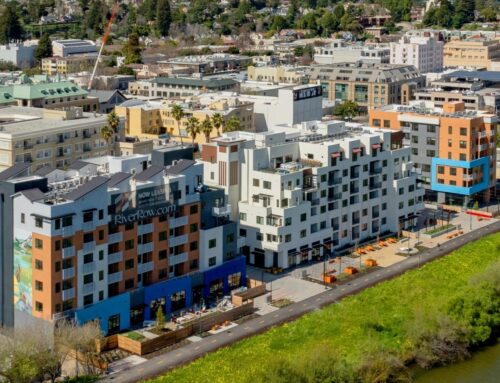
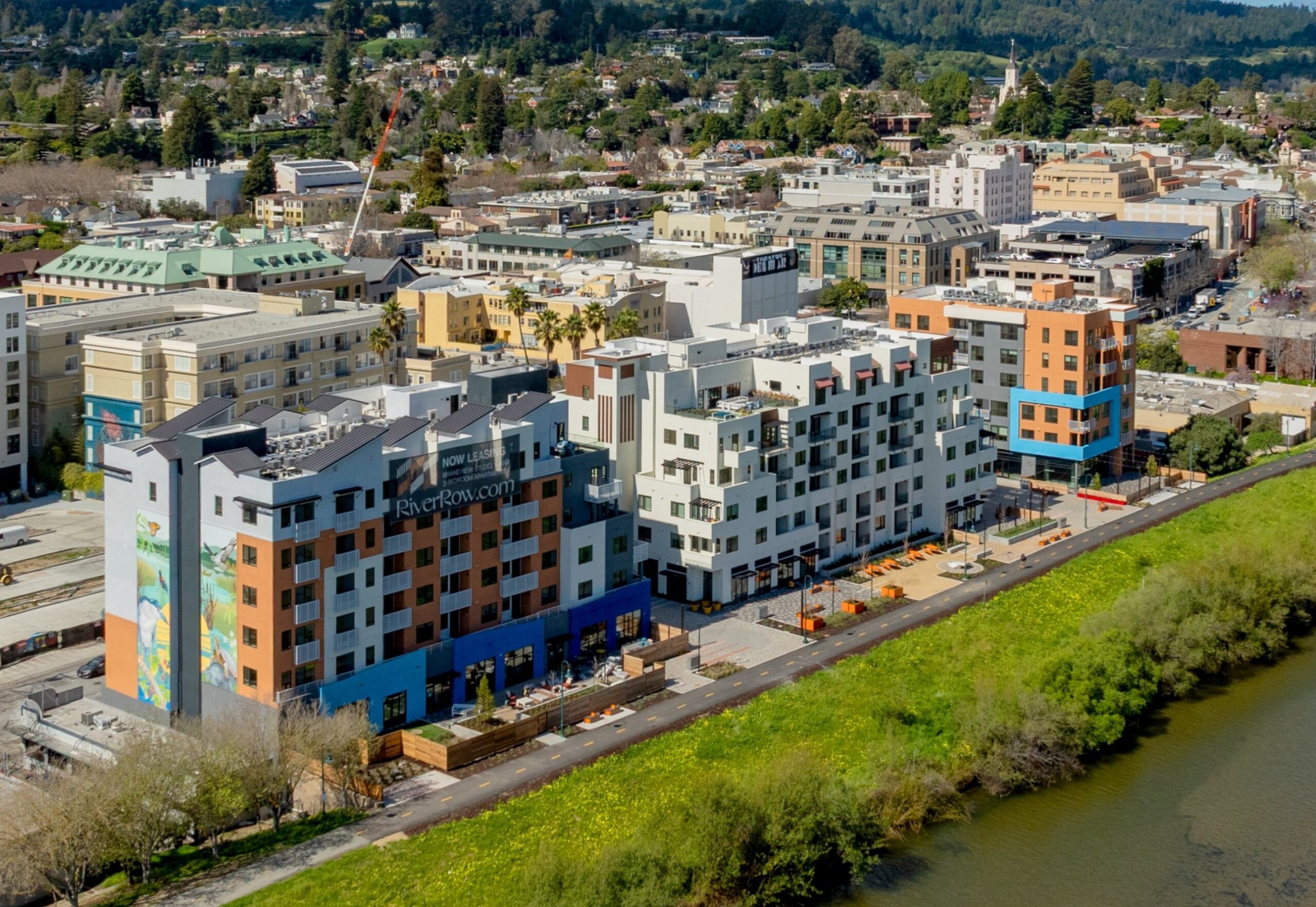
In a draft guide for developers, River Row in Downtown Santa Cruz was included as an example for more architecturally eclectic, less boxy buildings. (Lincoln Property Company)
Santa Cruz City Council
- 12:15 p.m. Tuesday, March 24, Online and at 809 Center St., Santa Cruz.
- To participate: Join on Zoom or call 833-548-0276, meeting ID 946 8440 1344.The meeting will be streamed on the city’s website.
- To comment ahead of the meeting, email [email protected] by 5 p.m. Monday.
SANTA CRUZ >> As state laws severely restrict local elected officials from blocking or changing new housing developments, Santa Cruz planning staff have drafted a guide for developers to build more architecturally interesting buildings — in exchange for a speedy approval process, possibly without a public vote.
The proposal, based on Los Angeles’s Citywide Housing Incentive Program, provides developers with a guide for buildings that differ aesthetically from the monotonous, boxy looks common to new construction. In exchange for following those guidelines, projects could receive “ministerial approval” by city staff, meaning approval without a public hearing by the planning commission or city council.
This proposal differs from prior suggestions to expand the city’s “downtown density bonus,” which aims to entice builders to settle for smaller developments in favor of more flexibility in meeting local affordable housing requirements. But staff noted those incentives haven’t been strong enough to entice builders away from state density bonus laws that allow buildings far taller than city rules allow in exchange for more below-market-rate housing.
Planning staff also suggested that the city overhaul its regulations for preserving big trees from new development, because they have largely been overridden by state housing law.
Separately, the Santa Cruz City Council is set to discuss an annual progress report towards state-mandated housing development goals. Since July 2023, the city has granted building permits for nearly half of the very low income housing required by the end of 2031, and about two-thirds of low income housing. The city has also permitted 13% of required moderate-income homes, and 8% of market rate above-moderate income homes.
Income cutoffs for affordable housing are set annually by the state.
Questions or comments? Email [email protected]. Santa Cruz Local is supported by members, major donors, sponsors and grants for the general support of our newsroom. Our news judgments are made independently and not on the basis of donor support. Learn more about Santa Cruz Local and how we are funded.

Jesse Kathan is a staff reporter for Santa Cruz Local. They hold a master's degree in science communications from UC Santa Cruz.