
Mental health services could see financial cuts and restrictions in the coming year due to Proposition 1. Mental health liaisons from the Santa Cruz County Sheriff’s Office. (Sheriff’s Office — Contributed)
WATSONVILLE >> Santa Cruz County is expected to get about $1.4 million less in state money for mental health services in the coming fiscal year due to Proposition 1. Approved by voters in 2024, Prop 1 will restrict how local health services agencies can use “millionaires tax” revenue, placing a greater emphasis on substance use disorders and homelessness.
The changes could squeeze an already strapped Santa Cruz County Health Services Agency, and mean the county has less money to fund local nonprofits and community groups that provide mental health services. The full impacts of Prop 1 are not yet known, but county leaders are bracing for what’s to come.
The restructuring will give way to new programs and services for residents experiencing homelessness and the Santa Cruz County Board of Supervisors caught a glimpse of how the changes will impact local services at their Tuesday meeting.
“This is not new funding,” said Behavioral Health Director Marni Sandoval at the meeting. “Rather, it’s an actual reduction in the allocations that counties will receive, and a shift of what we can fund based on the addition of new priorities and the elimination of some existing priorities.”
Much of the state budget for mental health comes from a 1% tax on residents earning more than $1 million annually — known as the millionaires tax. The state keeps about 5% of that revenue and under Prop 1, called the Behavioral Health Services Act, the state will now take 10%.
Sandoval said the county is hoping to receive about $26.4 million from the millionaires tax in Fiscal Year 2026-27, though actual revenue depends on how many millionaires live in California. Without Prop 1, the county could have expected to receive about $27.8 million.
The act adds new restrictions on how counties can use the millionaires tax money, dividing the funding into three main categories — housing interventions, full service partnerships and behavioral health services and supports.
It also sets six priority goals that need to be addressed in a new county Behavioral Health Integrated Plan, such as improving access to care and reducing homelessness and untreated behavioral health conditions. Santa Cruz County has added reducing suicides as another priority goal.
But Sandoval said some existing mental health services, such as suicide prevention, will likely be defunded. The state will set aside funding for projects serving specific communities, and she encouraged local organizations to apply for those funds.
“There are existing programs that will not align with the new” requirements, she said. “We are still evaluating this and will communicate any changes directly to the partners providing the services before making this information public.”
Sandoval said they plan to bring a comprehensive update back to the board by June 9, including cuts to services.
Supervisors expressed concern about the potential cuts, but seemed optimistic about focusing on housing solutions.
Supervisor Monica Martinez voiced concerns over how the cuts may impact community-based organizations who rely on county funding, and Sandoval said the department is connecting with partner organizations about the coming changes.
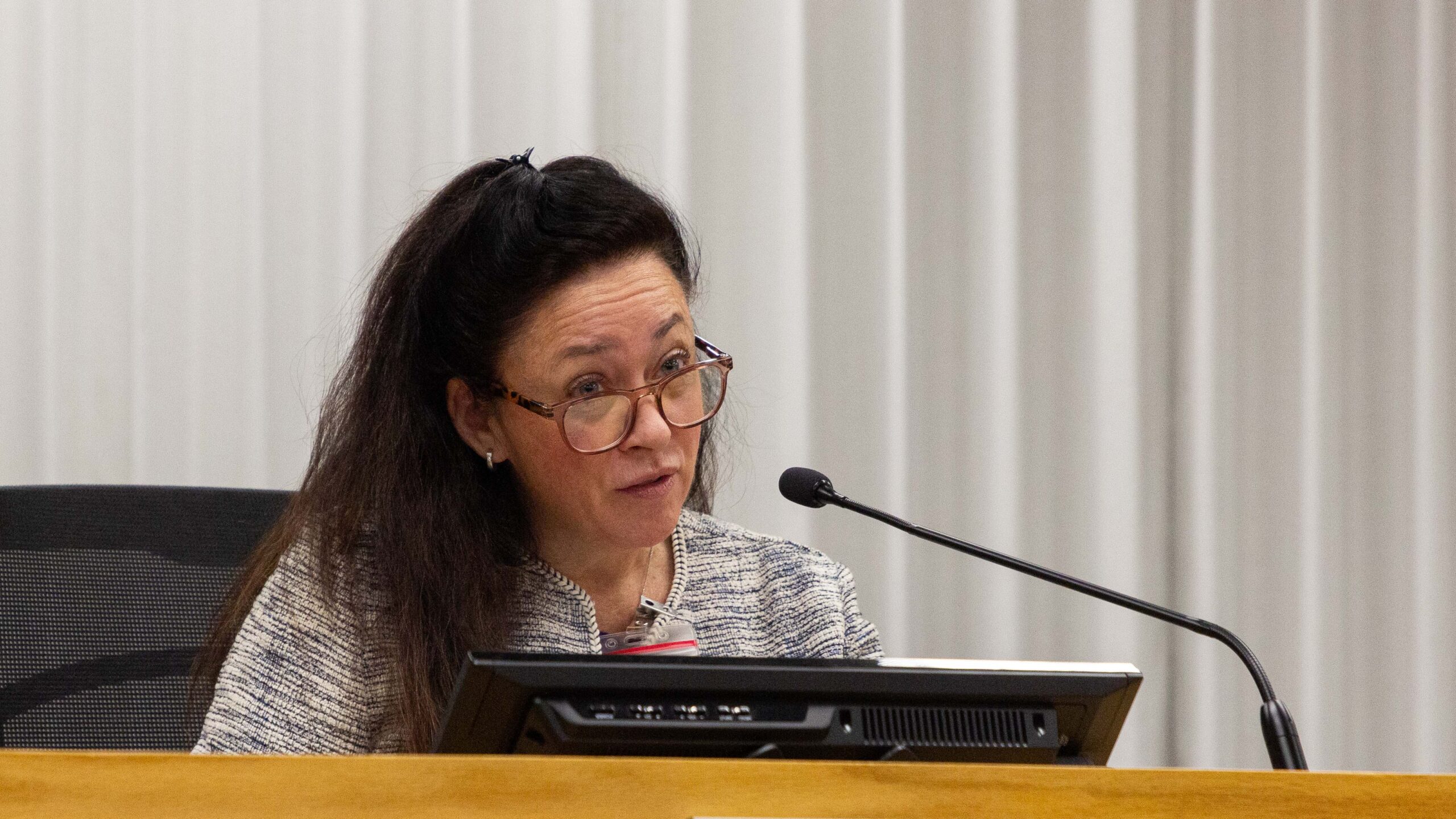
The Santa Cruz County Board of Supervisors are preparing for the changes stemming from Proposition 1, which includes $1.4 million less in state funds for mental health services. Supervisor Kim De Serpa worries about pending cuts to existing services, but says she has hope that the changes will be an improvement. (Marcello Hutchinson Trujillo — Santa Cruz Local)
Supervisor Kim De Serpa, a former county social worker, said the restructuring is overall an improvement, as it paves the way for more facilities for residents with substance use disorders. Part of the additional money kept by the state will be available for grants to build substance use treatment and other facilities. Still, De Serpa said she’s worried that the county will have to cut existing services.
“In general, we’re going to have to find ways to deliver services in a really efficient way,” De Serpa said. “I’ll be interested to hear what some of the creative solutions might be to some of those challenges.”
Questions or comments? Email [email protected]. Santa Cruz Local is supported by members, major donors, sponsors and grants for the general support of our newsroom. Our news judgments are made independently and not on the basis of donor support. Learn more about Santa Cruz Local and how we are funded.

B. Sakura Cannestra is a politics and governance journalist based in San Jose. She previously reported for San José Spotlight and POLITICO California. She graduated from UC Berkeley in 2023 with a Master's of Journalism, where she also got her start as an undergraduate in 2016 covering the university and city of Berkeley for the Daily Californian.