Jessica Scheiner and Monica Lippi are managers at Santa Cruz Housing for Health. They participated at the 2026 Point-in-Time count, which happens annually in cities across the country to help track the homeless population. (Amaya Edwards — Santa Cruz Local/CatchLight Local)
WATSONVILLE >> Jessica Scheiner and Monica Lippi were among the nearly 250 volunteers that woke up at 4 a.m. to help count homeless people in Santa Cruz County last week.
They participated in the Point-in-Time count (PIT) on Jan. 29, an annual attempt at a census of a county’s homeless population which is conducted nationwide on a single day. It’s required by the U.S. Department of Housing and Urban Development to secure federal funding. PIT counts also help inform local policies to connect those living on the streets to housing programs. Volunteers usually conduct the search in the early morning hours before the sun has risen.
Last year’s count identified 1,473 homeless people in Santa Cruz County, a 20% reduction from 2024. The results from the 2026 PIT are not yet finalized.
Lippi and Scheiner, both managers at the county’s Housing for Health Partnership, have volunteered together for the last five PIT counts. This was their first year signing up to help in South County, and spent most of the morning tracking and connecting with people in Watsonville.
Although the count is often criticized for not being an accurate depiction of the true number of homeless people around the nation, Scheiner and Lippi said it’s still an important piece in understanding the trends of homelessness locally and nationally.
Santa Cruz Local reporter Amaya Edwards went with Scheiner and Lippi on Jan. 29 to visually document their experience.

The sun rises in a neighborhood during the annual Point-in-Time count in Watsonville. Trained volunteers work in teams to canvas each of the census tracts within Santa Cruz County. (Amaya Edwards — Santa Cruz Local/CatchLight Local)
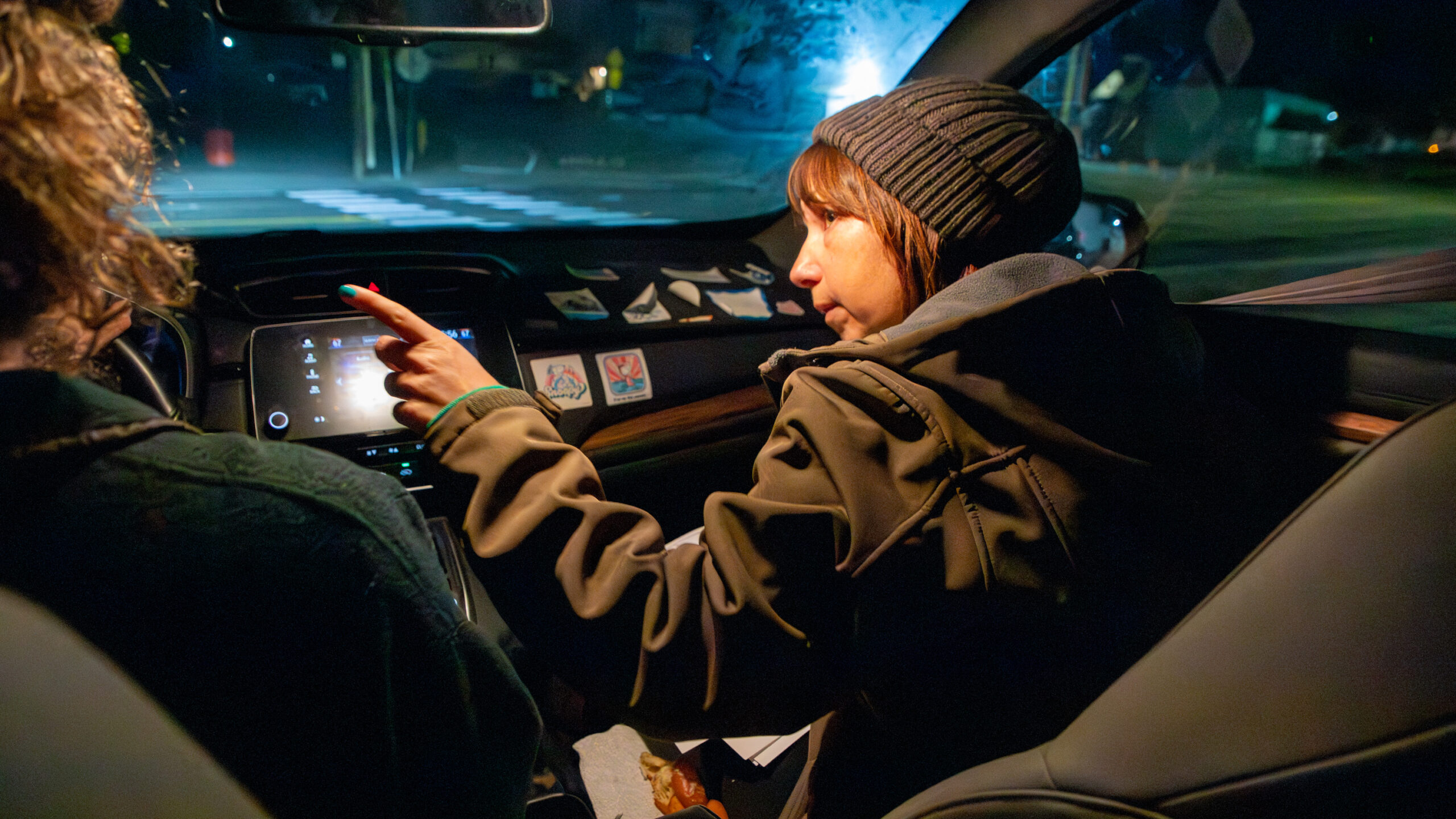
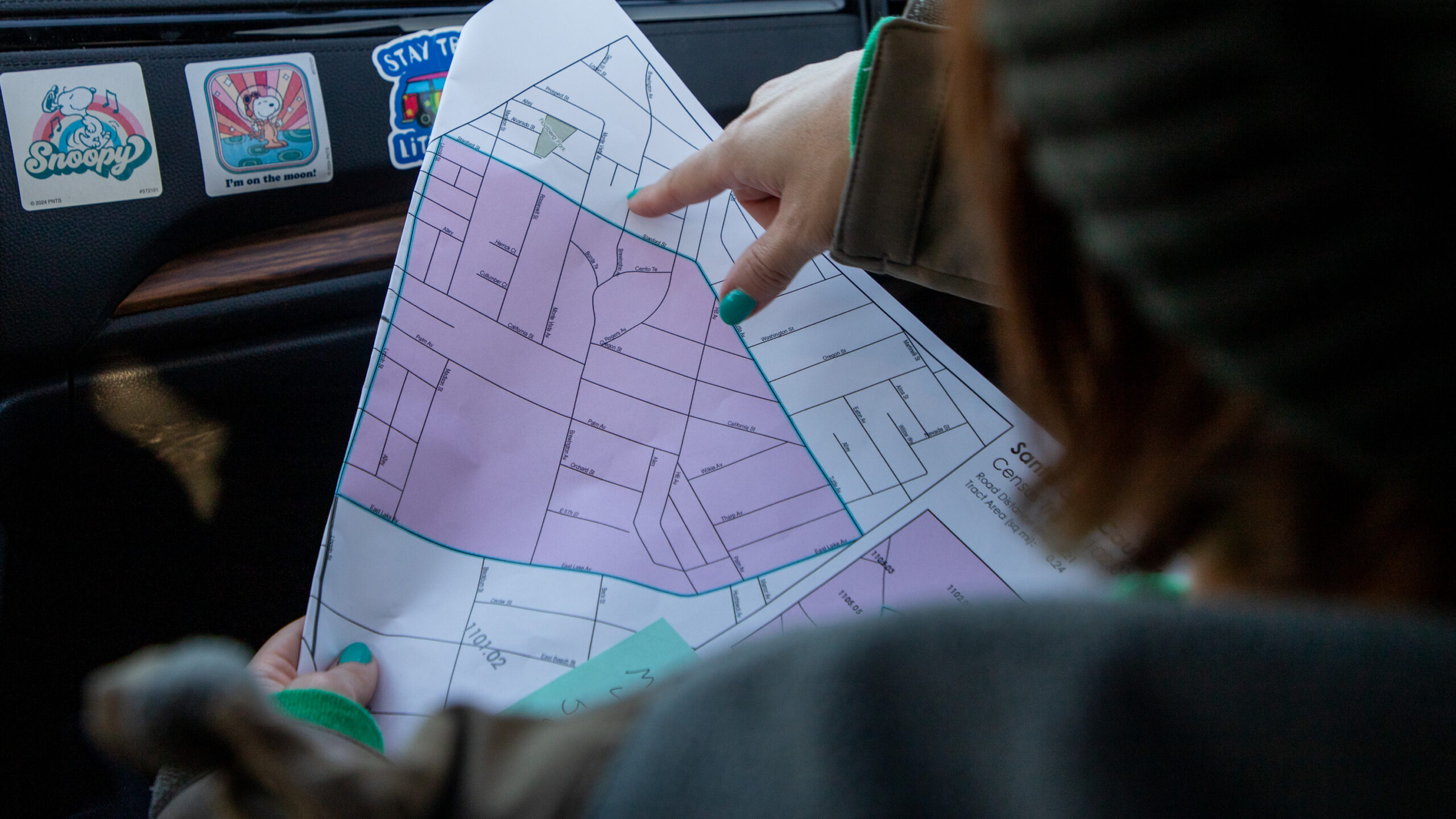
Monica Lippi, right, points out directions for Jessica Scheiner. Though it was an early start to the day, Lippi and Scheiner were alert. While driving from location to location, the two reminisced about memories from previous counts. For the most part, though, they were focused on their surroundings. (Amaya Edwards — Santa Cruz Local/CatchLight Local)
Lippi, right, navigates for Scheiner while driving around Watsonville to select locations where homeless people were known to be living. If Lippi or Scheiner see individuals experiencing homelessness, then they count them in an app. In that same app, individuals are also recorded as either ‘confirmed’ or ‘suspected’ to be experiencing homelessness. (Amaya Edwards — Santa Cruz Local/CatchLight Local)
Lippi is a Housing for Health Partnership manager focusing on connection services. She supports shelters and outreach partners who work with the County of Santa Cruz Human Services Department Housing for Health Partnership division. As part of this role, she leads the Coordinated Entry System. A key factor of her work is connecting unhoused people to local resources with the long-term goal of resolving homelessness.
“It’s our office that is leading the effort, and we want to make sure that it’s a successful operation, and be a part of it. Also, we believe in the need to count everybody. So we want to do our part and try to do our best with it,” Lippi said.

Scheiner looks in her rear view mirror as she drives around designated areas of Watsonville. (Amaya Edwards — Santa Cruz Local/CatchLight Local)
“I feel like a fundamental part of the work that we do is trying to understand who’s experiencing homelessness and where they’re experiencing homelessness. And this is really one of two ways that we get our arms around kind of everybody, or trying to get an understanding of everybody experiencing homelessness. It’s also an opportunity to get away from our desks and to get away from meetings and emails and to actually be doing something out in the community,” Scheiner said.
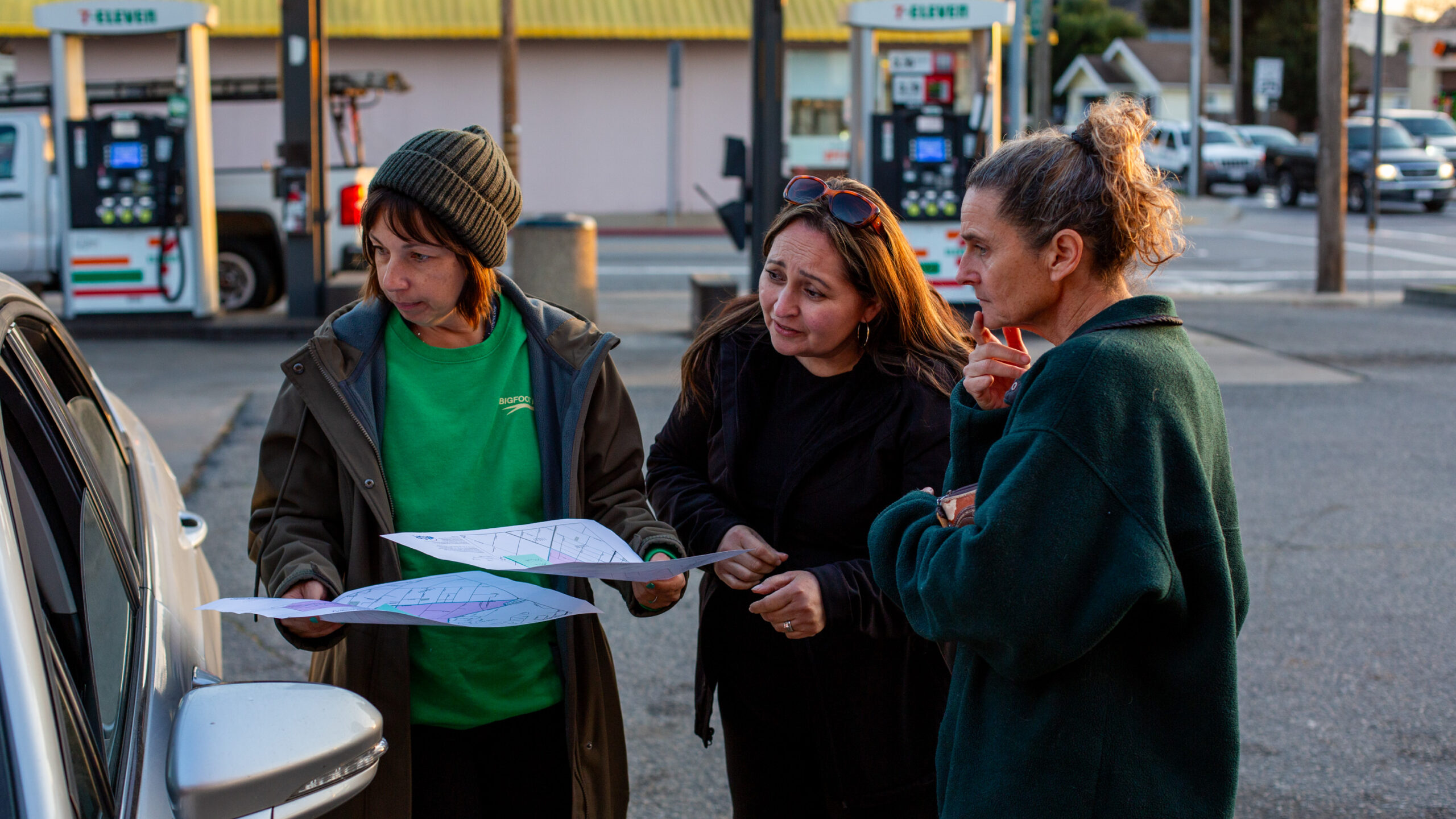
As the sun rises and people begin their commute to work, Adriana Vega, center, speaks with Scheiner and Lippi about how much ground they have left to cover — the clock is ticking. Vega, a Senior Human Services Analyst at Housing for Health Partnership, was in another group that offered to help Lippi and Scheiner finish their assigned coverage area. “I signed us up for too many tracks,” Lippi said. “I was nervous that we were going to miss people.” (Amaya Edwards — Santa Cruz Local/CatchLight Local)
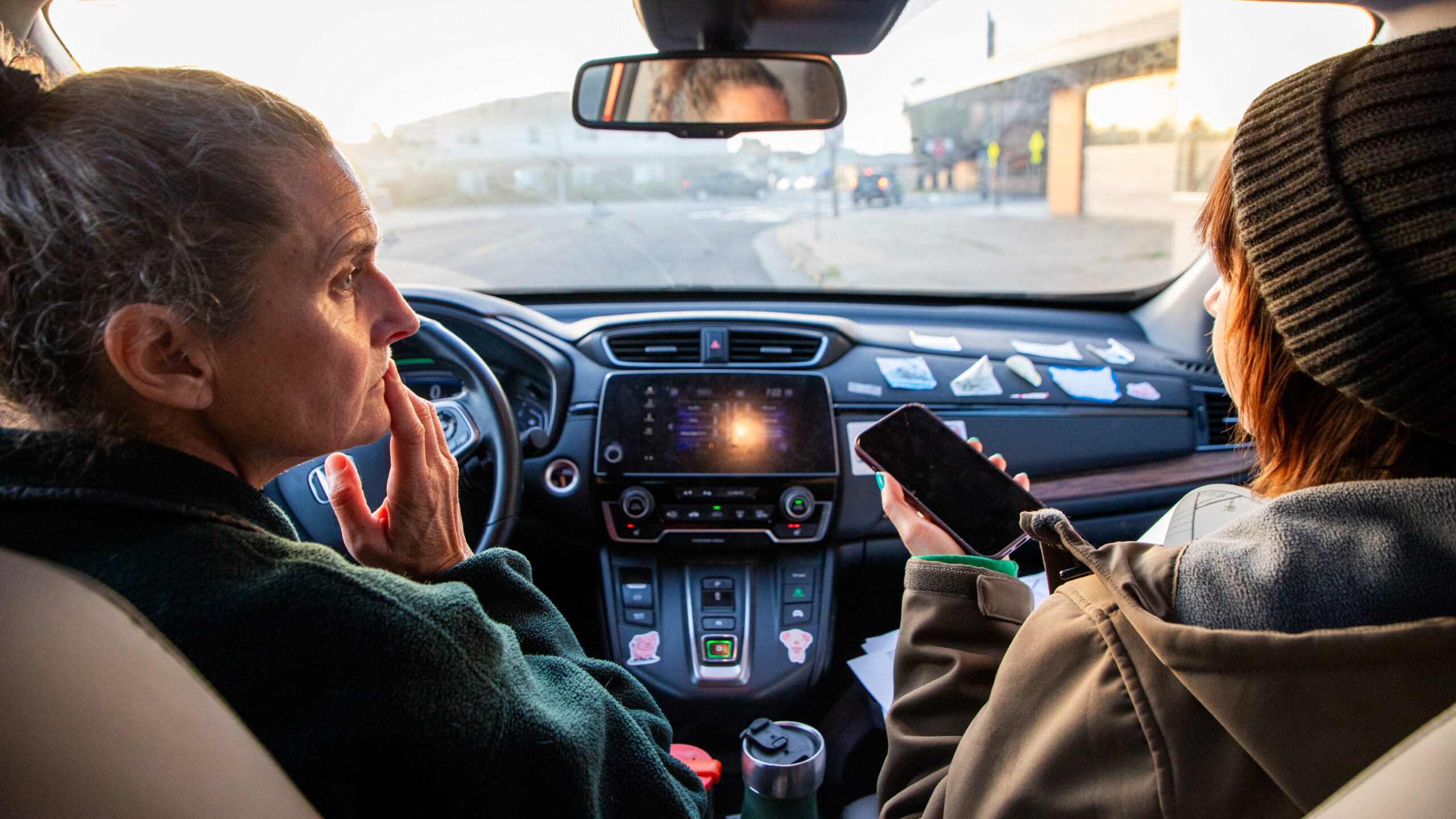
Scheiner, left, and Lippi talk to another counting group over the phone about meeting up and going over the final results. From 5-10 a.m., the pair drove through four different census tracts and counted 17 confirmed or suspected people experiencing homelessness. (Amaya Edwards — Santa Cruz Local/CatchLight Local)
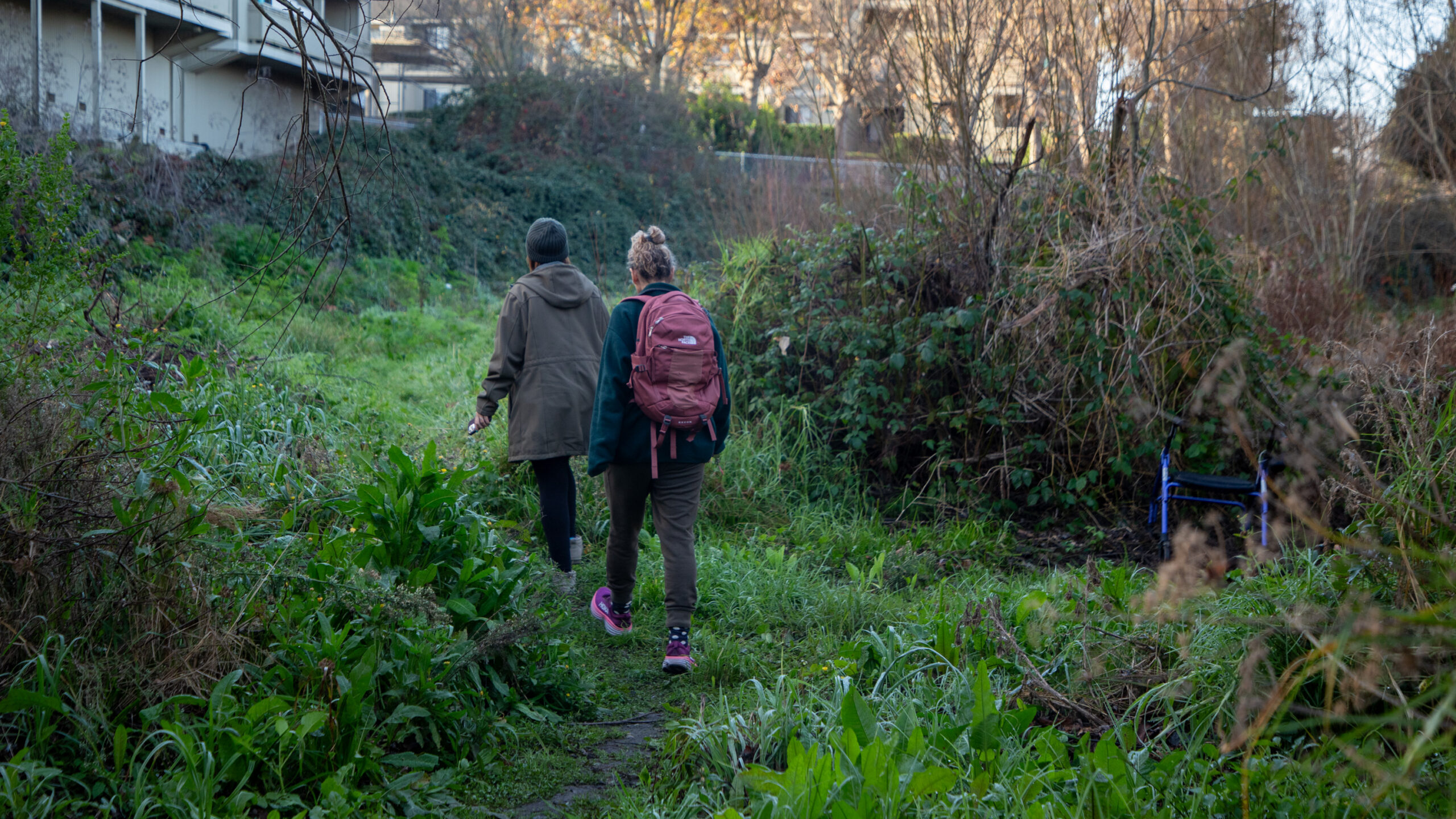
Lippi and Scheiner trek through Watsonville Slough to see if there’s anyone living there. When counting people in the app, they don’t detail specifics about where they are living to protect them, as they are some of the county’s most vulnerable residents. (Amaya Edwards — Santa Cruz Local/CatchLight Local)

Scheiner looks for people to count in an area in the Watsonville Slough. “I think the stress for me is not wanting to miss people and also not wanting to count people that aren’t actually unhoused. And this comes to kind of the whole thing about homelessness, is you don’t know who is actually unhoused. And so there’s all these perceptions in your brain about who is unhoused, and who we think of as unhoused,” Scheiner said. (Amaya Edwards — Santa Cruz Local/CatchLight Local)
Questions or comments? Email [email protected]. Santa Cruz Local is supported by members, major donors, sponsors and grants for the general support of our newsroom. Our news judgments are made independently and not on the basis of donor support. Learn more about Santa Cruz Local and how we are funded.

Amaya Edwards is Santa Cruz Local's Photo and Social Media Journalist. She is a Catchlight Local Fellow.